
Perth Charterhouse
Perth Charterhouse, also known as Domus Vallis Virtutis, was the sole Carthusian monastery established in Scotland, founded in 1429 by King James I. It served as a significant religious center and a royal mausoleum for King James I and his queen, Joan Beaufort, before its destruction during the Scottish Reformation. Although its buildings no longer survive above ground, its historical importance is remembered, with modern sites like King James VI Hospital occupying its former location.
Key Facts
- ›The only Carthusian monastery ever founded in the Kingdom of Scotland.
- ›Traditionally founded in 1429, with authorization granted in 1426.
- ›Served as a royal mausoleum, with interments of King James I and Queen Joan Beaufort.
- ›Destroyed by Protestant reformers in 1559.
- ›Formal suppression occurred in 1569, with final closure in 1602.
- ›No above-ground remnants of the priory buildings survive.
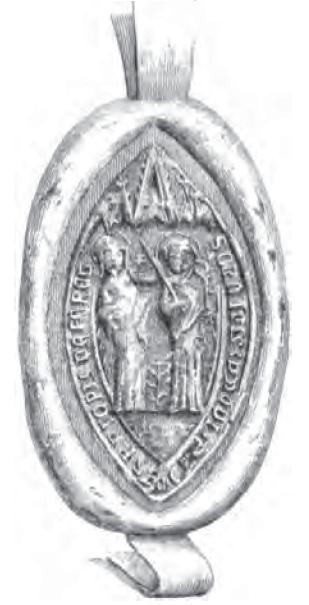
Royal Mausoleum, Site of King James I's Tomb, Site of Queen Joan Beaufort's Tomb
Perth Priory, Domus Vallis Virtutis
King James I of Scotland, Joan Beaufort, Margaret Tudor, Oswald De Corda, John of Bute, Archibald Douglas, 4th Earl of Douglas, Adam Stewart
- Attacked and Destroyed By Protestant Reformers
- Formal Suppression
- Final Actualization of Suppression
About Perth Charterhouse
Perth Charterhouse, also known by its Latin name Domus Vallis Virtutis ("House of the Valley of Virtue"), was the only Carthusian monastery ever established in the Kingdom of Scotland. Its establishment in Perth was a significant event, marking one of the last non-mendicant houses founded in the kingdom. The traditional founding date is 1429, though authorization for the foundation was granted in 1426. The monastery played a crucial role in the religious landscape of Scotland and served an important function as a royal mausoleum.
Foundation and Royal Patronage
The initiative for founding Perth Charterhouse largely came from King James I of Scotland, who provided significant revenue for its construction. He also influenced others to contribute, with John of Bute overseeing the building work. The priory was intended by James I to be his final resting place, and after his death, payments were made for his tomb and its embellishment. His consort, Joan Beaufort, was also buried there in 1445. The Charterhouse even preserved James I's doublet, marked with the dagger holes from his assassination, which was displayed as a relic.
Monastic Life and Development
Following the Carthusian Order's model, the community was intended to consist of one prior and twelve brothers, symbolizing Christ and his apostles. However, records indicate variations in size; for instance, a document from 1478 shows a community of a prior, fourteen choir-monks, two lay brothers, and one novice. By 1529, the house had returned to its standard size, though by 1558, the number of brothers had decreased to ten. As the sole Carthusian establishment in Scotland, Perth's integration into the international Carthusian provincial system was complex, being part of the province of Picardy, with brief periods under the English province and later the province of Geneva.
Reformation and Dissolution
The monastery faced destruction during the Scottish Reformation. On May 11, 1559, Protestant "reformers" attacked and destroyed the Charterhouse, along with other religious houses in Perth. Some monks fled the country, while a few chose to remain. The house remained in nominal operation, held by commendators, until its formal suppression in 1569, which was fully actualized in 1602. King James VI of Scotland granted the buildings and gardens to the burgh of Perth in 1569. Today, none of the priory buildings survive above ground, and excavations have not definitively identified its exact location. Modern sites, such as King James VI Hospital and Perth bus station, occupy parts of its former grounds, with Pomarium Street recalling the location of the house's orchard.
Source: Wikipedia ↗
Frequently Asked Questions
When was Perth Charterhouse founded?
The traditional founding date for Perth Charterhouse is 1429. However, the Prior of La Grande Chartreuse granted authorization for the foundation at Perth on August 19, 1426.
Who was buried at Perth Charterhouse?
King James I of Scotland and his queen, Joan Beaufort, were buried at Perth Charterhouse. King James I intended it to be his mausoleum, and payments were made for his tomb and its upkeep after his death.
What happened to Perth Charterhouse during the Reformation?
On May 11, 1559, the Charterhouse and other religious houses in Perth were attacked and destroyed by Protestant reformers. Some monks fled, while others remained, though the house was eventually suppressed.
Does anything remain of Perth Charterhouse today?
Unfortunately, nothing survives above ground of the priory buildings, which were described as being of 'wondrous cost and greatness.' Excavations have also failed to identify the exact location of the medieval buildings. The name Pomarium Street, near the site, recalls the house's orchard.
What was the significance of Perth Charterhouse?
It was the only Carthusian house in Scotland and one of the last non-mendicant houses founded in the kingdom. King James I also viewed the Carthusians as a model for ecclesiastical reform in Scotland and intended the priory as his burial place.
Related Monasteries
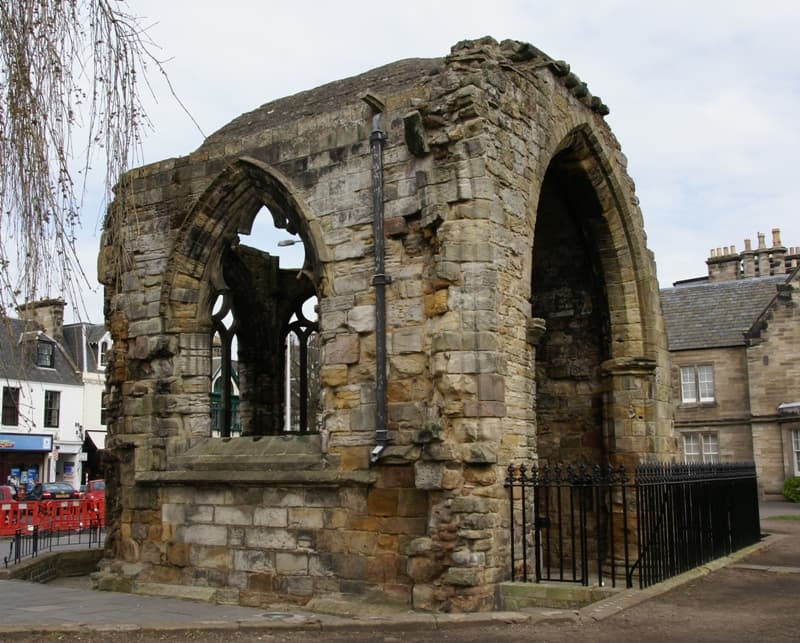
St Andrew's Blackfriars
St Andrew's Blackfriars, originally the Dominican friary of St Mary, was a significant religious institution in St Andrews, Scotland, with its actual foundation likely occurring in the mid-15th century. It served the needs of the University of St Andrews and underwent expansion before being damaged and ultimately destroyed by Protestant reformers during the Scottish Reformation. Today, only the ruins of the friary remain.
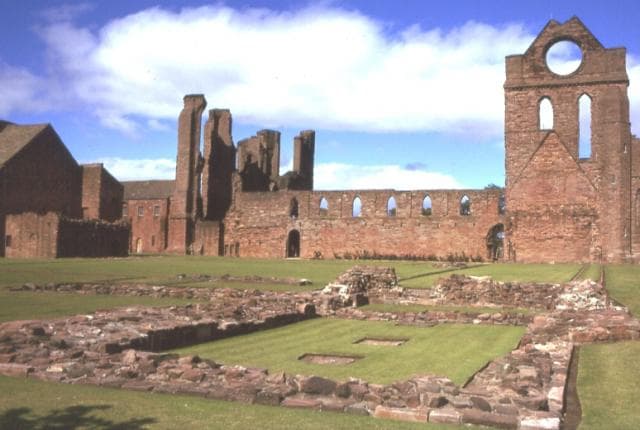
Arbroath Abbey
Arbroath Abbey, a ruined Cistercian monastery located in Arbroath, Scotland, was founded in 1178 by King William the Lion. It is renowned as the site where the Declaration of Scottish Independence was likely drafted in 1320. The Abbey, once the wealthiest in Scotland, is now managed by Historic Environment Scotland and is a popular tourist attraction, notable for its distinctive red sandstone ruins.
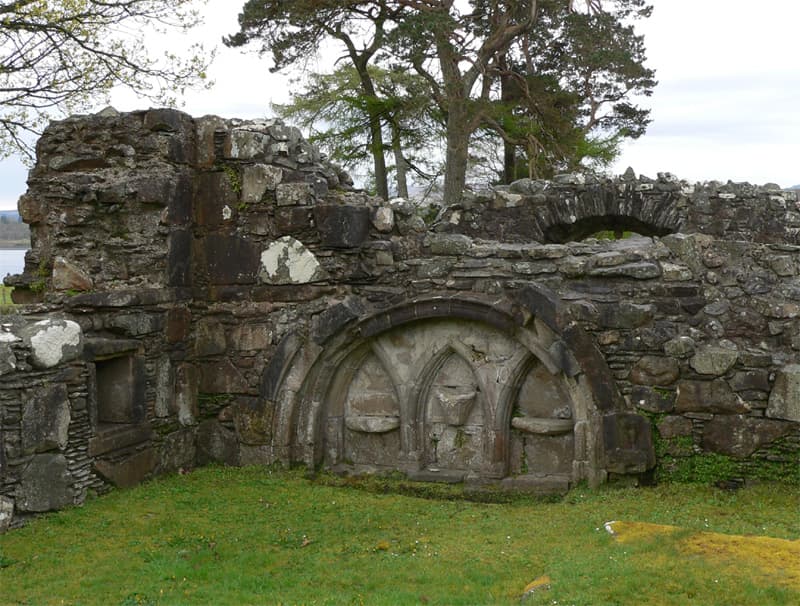
Ardchattan Priory
Ardchattan Priory was a Valliscaulian monastic community established in 1230 by Duncan Macdougall in Ardchattan, Argyll, Scotland. It holds historical significance as the site of a council of local chiefs held by Robert the Bruce in 1308, believed to be the last Gaelic-speaking parliament. Over time, the priory transitioned from its original monastic function, with parts converted into a dwelling and the church eventually falling into disuse and ruin.