
St Albans Abbey
St Albans Cathedral, also known as the Abbey Church of St Alban, is a significant Church of England cathedral with a history stretching back to likely founding in the 8th century. Its present structure is largely Norman, with later Gothic and 19th-century additions. Originally an abbey, it transitioned to a cathedral in 1877 and uniquely serves as both a cathedral and a parish church. The site is historically linked to Saint Alban, Britain's first Christian martyr.
Key Facts
- ›The current building's architecture is predominantly Norman (Romanesque) from the 11th century.
- ›It was founded as an abbey, likely in the 8th century, and became a cathedral in 1877.
- ›The cathedral stands near the traditional site of the martyrdom of Saint Alban.
- ›Much of the building material was sourced from the ruins of the Roman city of Verulamium.
- ›The 11th-century crossing tower is the only one of its kind from that era still standing in England.
- ›It is the only English Pope, Adrian IV, who was associated with the area and attempted to join the abbey.

Norman, Romanesque, Gothic, Victorian
11th-Century Crossing Tower, St Albans Psalter, Writings and Artwork of Matthew Paris, Abbey Gateway
Cathedral and Abbey Church of St Alban, the Abbey
Saint Alban, Saint Amphibalus, King Offa of Mercia, Matthew Paris, Nicholas Breakspear, George Gilbert Scott, Edmund Beckett, 1st Baron Grimthorpe
- Founding of the Abbey By King Offa of Mercia
- Dissolution of the Monasteries
- Conversion To A Cathedral
- Norman Building Work Under Abbot Paul of Caen
- Rebuilding and Extensions Throughout Centuries
- Major Restoration Efforts In the 19th Century
About St Albans Abbey
St Albans Cathedral
St Albans Cathedral, officially the Cathedral and Abbey Church of St Alban and often referred to simply as "the Abbey," is a prominent Church of England cathedral located in St Albans, England. Its history is deeply intertwined with that of Saint Alban, Britain's first Christian martyr, near whose supposed execution site the cathedral stands. Although legally a cathedral church, it uniquely functions as both a cathedral and a parish church, with the dean serving as rector. The present structure is largely a testament to Norman architecture from the 11th century, incorporating elements from subsequent Gothic periods and significant 19th-century renovations.
Early Origins and Martyrdom
The site's religious significance predates the abbey, with a memoria existing from the mid-4th century over the execution spot of Saint Alban. According to tradition, Alban was martyred in the 3rd or 4th century for sheltering a Christian priest. His legend details a miraculous spring and the falling out of the executioner's eyes, emphasizing the sanctity of the place. The nearby river was known as Halywell, and Holywell Hill retains this connection.
Abbey Foundations and Development
King Offa of Mercia is credited with founding a Benedictine double monastery at St Albans in 793, establishing the abbey on Holywell Hill. The Roman city of Verulamium, located nearby, served as a crucial source of building materials, with bricks, tiles, and stone being repurposed for the abbey's construction. The Norman abbey, begun by Abbot Paul of Caen in 1077, established much of the building's current layout and proportions. Notable for its time, the 11th-century crossing tower remains the only one of its kind still standing in England. The monastic scriptorium was a center for producing illuminated manuscripts, including the renowned St Albans Psalter, and the monk Matthew Paris was a significant chronicler and artist.
Transition to Cathedral and Later Centuries
After more than 700 years as an abbey, St Albans was dissolved in 1539, with the church eventually sold to the town to serve as a parish church. The building suffered neglect and damage over the subsequent centuries, necessitating numerous repair efforts funded by public subscriptions and royal grants. The late 19th century saw a concerted push for the abbey to gain cathedral status, which was achieved in 1877 with the creation of the See of St Albans. Major restoration and rebuilding projects, often controversial, were undertaken by architects like George Gilbert Scott and Edmund Beckett, 1st Baron Grimthorpe, shaping the cathedral into its present form.
Source: Wikipedia ↗
Frequently Asked Questions
When was St Albans Abbey founded?
The exact founding date is not definitively known, but it is probably from the 8th century. King Offa of Mercia is credited with founding a double monastery at St Albans in 793, which followed the Benedictine rule.
What is the architectural style of St Albans Cathedral?
The majority of its architecture dates from the Norman period, exhibiting Romanesque characteristics from the 11th century. The building also features Gothic elements from medieval rebuilding and extensions, as well as significant 19th-century additions and restorations.
What is the historical significance of St Albans Cathedral?
The cathedral is historically significant as it is built near the traditional site of the martyrdom of Saint Alban, Britain's first Christian martyr. It also served as a prominent Benedictine abbey for centuries before becoming a cathedral in 1877.
What happened to St Albans Abbey during the Dissolution of the Monasteries?
During the Dissolution of the Monasteries, the abbey surrendered on December 5, 1539. The buildings were looted, and much of the stonework was damaged or broken. The abbey church was sold to the town in 1553 to serve as a parish church.
Is St Albans Cathedral still an active abbey?
No, St Albans Cathedral is no longer an abbey. It ceased to be an abbey following its dissolution in the 16th century and officially became a cathedral in 1877. It currently functions as a cathedral church and also serves as a parish church.
Related Monasteries
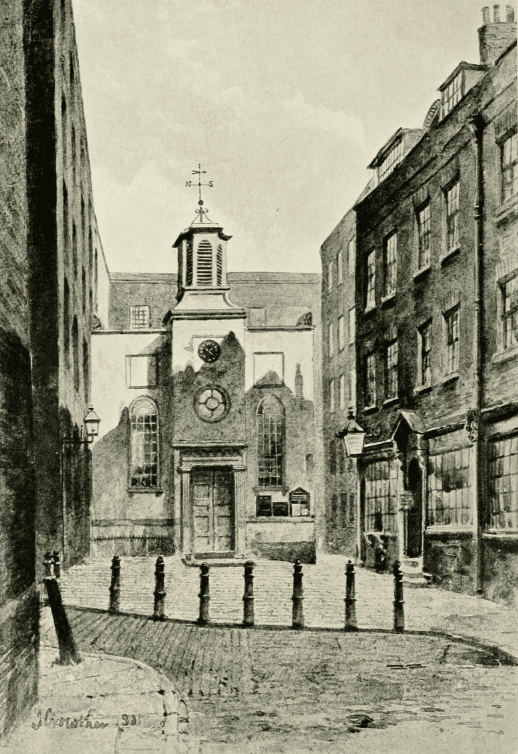
Aldgate Abbey
Holy Trinity, Minories, was a Church of England parish church that originated from the chapel of a medieval nunnery founded in 1293. After the Dissolution of the Monasteries, the chapel was converted into a parish church, serving the area until its closure in 1899. The church building itself was destroyed by bombing during World War II, though parts of its medieval structure survived for a time.

Southwark Cathedral Priory
Southwark Cathedral, originally an Augustinian priory known as Southwark Priory, has been a site of Christian worship for over a millennium. Refounded in 1106, it served as a priory until the Dissolution of the Monasteries in 1538, after which it became a parish church dedicated to St. Saviour. It was elevated to cathedral status in 1905 with the creation of the Diocese of Southwark, and its Gothic structure, largely built between 1220 and 1420, has undergone several reconstructions, notably in the 19th century.

Exminster Monastery
Exminster is an ancient English village with roots as a Saxon minster or religious community founded in the 8th century. It later became a significant seat for the Courtenay family, Earls of Devon, and was the birthplace of Archbishop William Courtenay. The village retains historical landmarks, including the 14th-century St. Martin of Tours parish church and the former Devon County Asylum, now redeveloped into apartments.