
Exminster Monastery
Exminster is an ancient English village with roots as a Saxon minster or religious community founded in the 8th century. It later became a significant seat for the Courtenay family, Earls of Devon, and was the birthplace of Archbishop William Courtenay. The village retains historical landmarks, including the 14th-century St. Martin of Tours parish church and the former Devon County Asylum, now redeveloped into apartments.
Key Facts
- ›Founded as a Saxon minster in the 8th century.
- ›Associated with the Courtenay family, Earls of Devon, in the 14th century.
- ›Birthplace of Archbishop William Courtenay.
- ›Features the Grade I listed St. Martin of Tours parish church.
- ›The former Devon County Asylum is now known as Devington Park.
- ›Exminster Marshes are a significant site for migratory birds.
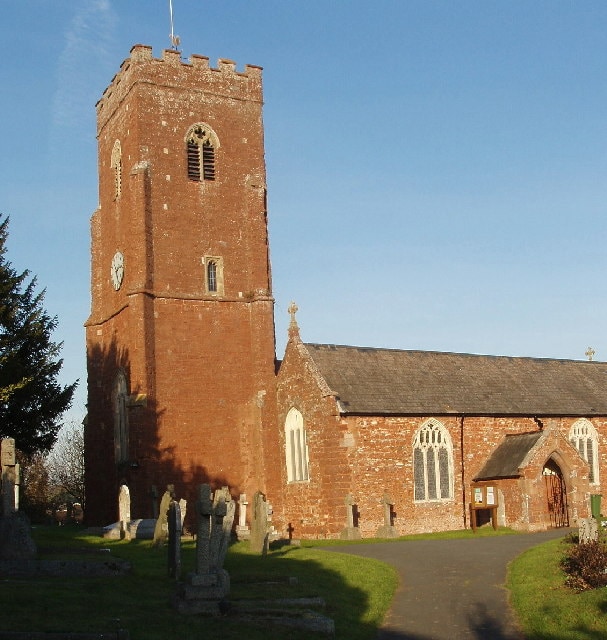
Perpendicular
St. Martin of Tours Parish Church, Peamore Chapel With Plaster Ceiling, Monument To Otho Petre, War Graves In Churchyard, Former Devon County Asylum, Exminster Railway Station Building, Exminster Marshes Rspb Reserve
Aethelweard, William Courtenay, Charles Fowler, George Hennet, Jim Callaghan, Frances Mary Peard, Phil Beer, Robert Kekewich, Otho Petre, Aaron Baker
- Founded As A Saxon Minster In the 8th Century.
- Left By King Alfred the Great To His Son Aethelweard In His Will of 889.
- Seat of the Courtenay Family In the 14th Century.
- Opening of the Devon County Asylum In July 1845.
- Opening of Exminster Railway Station In 1852.
- Closure of Exminster Railway Station To Passenger Traffic On 30 March 1964.
- Closure of Exminster Railway Station To Goods Traffic On 4 December 1967.
- M5 Motorway Re-Routed Around the Village In 1972.
- Opening of the Final Section of the M5 On 27 May 1977.
About Exminster Monastery
Exminster: A Historic Saxon Minster and Village
Exminster is an ancient village located west of the Exeter ship canal and River Exe in Devon, England. Its origins trace back to the 8th century when it was established as a Saxon minster, a type of religious community. This early foundation signifies its long-standing importance in the region. In its later history, Exminster became closely associated with the powerful Courtenay family, who held the title of Earls of Devon during the 14th century, making the village a significant seat for the nobility.
Landmarks and Development
The village retains several notable historical landmarks. The present parish church of Saint Martin of Tours is a significant example of late 14th and 15th-century Perpendicular architecture, having undergone substantial restoration. Within the church, the Peamore chapel features an elaborately decorated plaster ceiling from 1633. Another prominent historical structure is the former Devon County Asylum, a large institution opened in 1845, which has since been converted into residential apartments and townhouses known as Devington Park. The village also saw the establishment of Exminster railway station in 1852, though it is now closed to traffic, its distinctive building remains.
Natural and Modern Features
Beyond its built heritage, Exminster is situated near the Exminster Marshes, a vital area for birdlife, especially migratory species, and is recognized as a habitat for the rare cirl bunting. The village itself provides various amenities, including shops, a primary school, parks, and public houses, serving its resident population. Modern infrastructure, such as the nearby M5 motorway, has also shaped the area. The historical significance of Exminster is underscored by its designation as a former Saxon minster, a testament to its deep historical roots.
Source: Wikipedia ↗
Frequently Asked Questions
When was Exminster founded?
Exminster was founded as a Saxon minster or religious community in the 8th century. This indicates a long and ancient history for the settlement.
What is the significance of the Courtenay family in Exminster's history?
In the 14th century, Exminster was the seat of the Courtenay family, who held the title of Earls of Devon. This family played a notable role in the region's history during that period.
Are there any notable historical buildings in Exminster?
Yes, the present parish church of Saint Martin of Tours is a Grade I listed building, constructed in the late 14th and 15th centuries. Additionally, the former Devon County Asylum, designed by Charles Fowler, is a landmark now converted into residential apartments known as Devington Park.
What is Exminster Marshes known for?
Exminster Marshes, located to the east of the village, are a major site for birds, particularly migratory species. It is noted as a habitat for the rare cirl bunting.
What was the former Devon County Asylum?
The former Devon County Asylum, also known as a 'lunatic asylum', was designed by Charles Fowler and opened in 1845. It housed around 800 beds and closed in the mid-1980s as Exminster Hospital. It has since been converted into apartments and townhouses called Devington Park.
Related Monasteries

St Albans Abbey
St Albans Cathedral, also known as the Abbey Church of St Alban, is a significant Church of England cathedral with a history stretching back to likely founding in the 8th century. Its present structure is largely Norman, with later Gothic and 19th-century additions. Originally an abbey, it transitioned to a cathedral in 1877 and uniquely serves as both a cathedral and a parish church. The site is historically linked to Saint Alban, Britain's first Christian martyr.

Winchcombe Nunnery
Winchcombe Abbey was a significant Benedictine monastery in Gloucestershire, England, with origins tracing back to the late 8th century. Initially founded by Mercian kings, it evolved into a powerful and wealthy institution, becoming a major pilgrimage site due to its association with Saint Kenelm. The abbey played a role in learning and its stonemasons were renowned, contributing to structures like Oxford's Divinity School, before its dissolution and demolition in the 16th century.

Innichen
Innichen is a municipality and village located in South Tyrol, northern Italy, on the border with Austria. Historically a significant monastic center, it was founded in the late 8th century with the establishment of Innichen Abbey, which belonged to the Prince-Bishopric of Freising. Although the abbey was disestablished in the late 18th century, a Franciscan monastery was founded on the site in 1691 and remains active today. The area is also known for its natural beauty, including the Drei Zinnen–Tre Cime di Lavaredo park, and its ski resorts.