
Aldgate Abbey
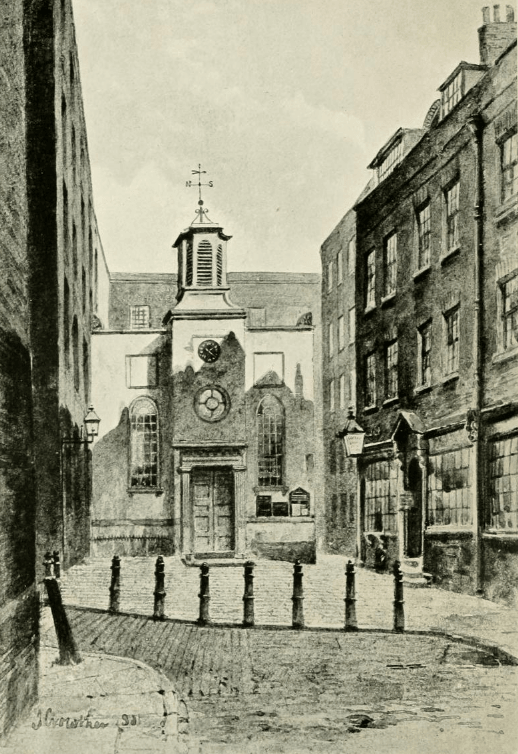
Holy Trinity, Minories, was a Church of England parish church that originated from the chapel of a medieval nunnery founded in 1293. After the Dissolution of the Monasteries, the chapel was converted into a parish church, serving the area until its closure in 1899. The church building itself was destroyed by bombing during World War II, though parts of its medieval structure survived for a time.
Key Facts
- ›Founded in 1293 as the Abbey of the Minoresses of St. Clare without Aldgate.
- ›Converted from a nunnery chapel to a parish church in the 16th century.
- ›Served as a Puritan stronghold in the later 16th century.
- ›Claimed rights of a royal peculiar until 1730.
- ›Destroyed by bombing during World War II.
- ›The medieval north wall survived until the 1950s.
Gothic, Baroque
Medieval North Wall, Chapel Retained As Parish Church
- Abbey of the Minoresses of St. Clare Without Aldgate
- Minoresses
Edmund Crouchback, Blanche of Artois, William Legge, Elizabeth Washington, George Legge, 1st Baron Dartmouth, Henry Grey, 1st Duke of Suffolk, John Field, Thomas Wilcox
Founding of the Abbey, Dissolution of the Monasteries, Conversion To Parish Church, Puritan Stronghold, Claimed Rights of A Royal Peculiar, Rebuilt In Brick, Closed As Parish Church, Destroyed By Bombing
About Aldgate Abbey
Holy Trinity, Minories
Holy Trinity, Minories, was a significant Church of England parish church situated outside the eastern boundaries of the City of London, within the historical Liberties of the Tower of London. Its origins trace back to the Abbey of the Minoresses of St. Clare without Aldgate, an Augustinian monastery founded in 1293 by Edmund Crouchback for a community of French nuns of the Order of St. Clare. These nuns were also referred to as the "Minoresses," a name that eventually gave rise to the district's designation, Minories.
History and Transformation
Following the Dissolution of the Monasteries, the abbey was surrendered to the Crown in 1539. While most of the monastic buildings were repurposed for military use by the Tower of London or later as a workhouse, the nuns' chapel was preserved and converted into a parish church. This transformation occurred sometime after the surrender, with the first recorded dedication to Holy Trinity noted in 1563. The church underwent considerable alterations, including the removal of ancient monuments and the addition of a gallery, new pulpit, pews, and a steeple.
During the late 16th century, Holy Trinity, Minories, became a notable Puritan stronghold, with prominent preachers like John Field and Thomas Wilcox active there. Until 1730, the church held special status as a royal peculiar, exempt from the authority of the Bishop of London and possessing the right to conduct marriages without a license. The church structure itself, though it escaped the Great Fire of London, fell into disrepair and was rebuilt in brick in 1706, retaining the medieval north wall. It housed monuments for notable figures, including members of the Legge family, and famously, a mummified head discovered in its vaults, believed to be that of Henry Grey, 1st Duke of Suffolk.
Closure and Demise
The church's tenure as a parish church concluded in 1899 when it was closed under the Union of Benefices Act 1860 and its parish united with St Botolph's Aldgate. The building continued to serve as a parish room until its destruction by bombing during World War II. While the church structure was lost, the medieval north wall remained standing until the site was cleared in the mid-1950s.
Source: Wikipedia ↗
Frequently Asked Questions
When was the Abbey of the Minoresses founded?
The Abbey of the Minoresses of St. Clare without Aldgate was founded in 1293. It was established for a group of French nuns of the Order of St. Clare.
What happened to the nunnery buildings after the Dissolution of the Monasteries?
The nunnery surrendered to the Crown in 1539. The buildings, with the exception of the chapel, were repurposed for the armory of the Tower of London and later as a workhouse.
When did the chapel become a parish church?
The nuns' chapel was converted into a parish church after the nunnery's dissolution. The first recorded dedication to Holy Trinity dates from 1563, indicating its use as a parish church by that time.
Was the church damaged during the Great Fire of London?
No, the church fortunately escaped damage during the Great Fire of London. However, it fell into disrepair and was rebuilt in brick in 1706.
When was Holy Trinity, Minories closed as a parish church?
The church was closed under the Union of Benefices Act 1860, with its parish united with that of St Botolph's Aldgate. It continued to be used as a parish room until its destruction.
What happened to the church during World War II?
The former church building was destroyed by bombing during World War II. It had been in use as a parish room prior to its destruction.
Related Monasteries

St Albans Abbey
St Albans Cathedral, also known as the Abbey Church of St Alban, is a significant Church of England cathedral with a history stretching back to likely founding in the 8th century. Its present structure is largely Norman, with later Gothic and 19th-century additions. Originally an abbey, it transitioned to a cathedral in 1877 and uniquely serves as both a cathedral and a parish church. The site is historically linked to Saint Alban, Britain's first Christian martyr.

Southwark Cathedral Priory
Southwark Cathedral, originally an Augustinian priory known as Southwark Priory, has been a site of Christian worship for over a millennium. Refounded in 1106, it served as a priory until the Dissolution of the Monasteries in 1538, after which it became a parish church dedicated to St. Saviour. It was elevated to cathedral status in 1905 with the creation of the Diocese of Southwark, and its Gothic structure, largely built between 1220 and 1420, has undergone several reconstructions, notably in the 19th century.
Aconbury Priory
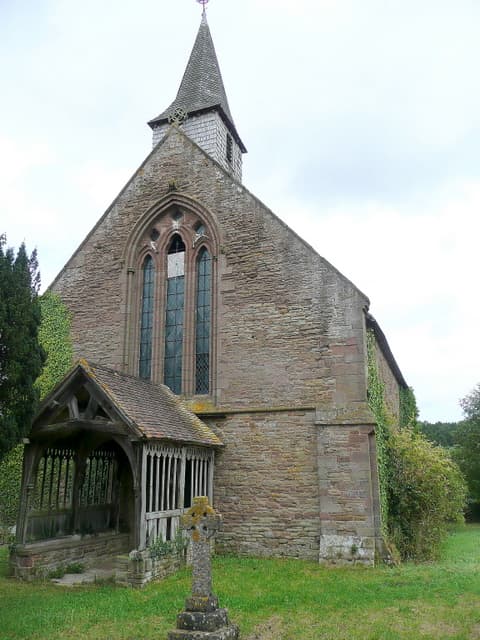
Aconbury Priory was an Augustinian priory located in Herefordshire, England, founded in the early 13th century. The priory's church, still standing today, was initially constructed in 1230. While the conventual buildings have largely vanished, remnants of the east and north walls survived the dissolution.