
Southwark Cathedral Priory
Southwark Cathedral, originally an Augustinian priory known as Southwark Priory, has been a site of Christian worship for over a millennium. Refounded in 1106, it served as a priory until the Dissolution of the Monasteries in 1538, after which it became a parish church dedicated to St. Saviour. It was elevated to cathedral status in 1905 with the creation of the Diocese of Southwark, and its Gothic structure, largely built between 1220 and 1420, has undergone several reconstructions, notably in the 19th century.
Key Facts
- ›Has been a place of Christian worship for over 1,000 years.
- ›Refounded as an Augustinian priory in 1106.
- ›Became a parish church after the Dissolution of the Monasteries in 1538.
- ›Elevated to cathedral status in 1905.
- ›The present building's Gothic structure dates primarily from between 1220 and 1420.

Gothic
- John Gower's Tomb and Memorial.
- Memorial Window and Statue Dedicated To William Shakespeare.
- Harvard Chapel, Commemorating John Harvard.
- Bishop's Chapel, Burial Place of Lancelot Andrewes.
- Stone Altar-Screen Erected By Bishop Richard Foxe.
- Resident Cats, Notably Doorkins Magnificat and Hodge.
- Cathedral and Collegiate Church of St Saviour and St Mary Overie
- Southwark Priory
- St Mary Overie
- St Saviour's
Mary, Swithen, Bishop Odo of Bayeux, Bishop of Winchester, Henry I, John Stow, Bartholomew Linsted, Swithen, Bishop of Winchester, Thomas P. Stevens, William the Conqueror, John Gower, Henry Viii, William Saunders, Queen Mary, John Hooper, Edmund Shakespeare, William Shakespeare, John Fletcher, Philip Massinger, Edward Alleyn, John Harvard, Robert Harvard, Lancelot Andrewes, Wenceslas Hollar, George Gwilt Jun., Robert Wallace, Pugin, Henry Rose, Arthur Blomfield, Sir Frederick Wigan, Madeline Agar, Isabella Gilmore, Nelson Mandela, Desmond Tutu, Jeffrey John, Doorkins Magnificat, Hodge, Richard Dawkins, Colin Slee, David Gedge, Richard Marlow, Chuka Umunna, Ernest Lough, George Thalben-Ball, Alan Young, Jonathan Darbourne, Rollo Armstrong
- Refounded As An Augustinian Priory In 1106.
- Severe Damage In the Great Fire of 1212.
- Rebuilding During the Thirteenth Century.
- Damaged By Fire In the 1390s, Rebuilt Around 1420.
- Dissolved By Henry Viii and Surrendered To the Crown In 1540.
- Became A Parish Church Dedicated To St. Saviour.
- Heresy Trials Held In the Retrochoir During Queen Mary's Reign.
- Burial of Edmund Shakespeare In 1607.
- Baptism of John Harvard In 1607.
- Wenceslas Hollar Drew His 'Long View of London' From the Tower In 1647.
- Restoration of the Tower and Choir By George Gwilt Jun. Between 1818 and 1830.
- Nave Rebuilt By Henry Rose In 1839.
- Nave Rebuilt Again By Arthur Blomfield Between 1890 and 1897.
- Designated As A Cathedral In 1905.
- Damaged By German Bombing During World War Ii.
- Opening of A New Northern 'Cloister' In 2001.
- Hosted A Service For the Lesbian and Gay Christian Movement In 1996.
- Cathedral Announced Welcoming Stance For Same-Sex Couples.
About Southwark Cathedral Priory
Southwark Cathedral, formally the Cathedral and Collegiate Church of St Saviour and St Mary Overie, is a significant Church of England cathedral located in Southwark, London, near the River Thames. It has served as a continuous site of Christian worship for over a millennium. Its history is deeply intertwined with monastic life, transitioning from an Augustinian priory to a parish church, and finally achieving cathedral status in 1905 upon the creation of the Diocese of Southwark. The current structure predominantly showcases Gothic architecture, with its foundational building phases occurring between 1220 and 1420, although notable reconstructions, particularly of the nave, have shaped its appearance over the centuries.
Legendary and Early Origins
While historical evidence points to the refounding of the site as an Augustinian priory in 1106, local tradition, as recorded by 16th-century historian John Stow, suggests earlier origins. These legends speak of a nunnery founded by a maiden named Mary on the profits of a ferry crossing the Thames, later converted into a college of priests by a noble lady named Swithen. Later attempts to rationalize these stories have linked Swithen to Swithun, Bishop of Winchester, in the 9th century. However, concrete proof for a convent founded in 606 AD or a monastery established by St. Swithun in the 9th century remains elusive, with scholarly consensus suggesting such early foundations are unlikely to pre-date the conversion of Wessex or the establishment of the surrounding 'burh'. The earliest verifiable reference to a 'minster' on the site appears in the Domesday Book of 1086.
Monastic Life and Transformation
The establishment of Southwark Priory in 1106 marked a significant period for the site. As an Augustinian priory, it flourished under the patronage of the Bishops of Winchester, whose London seat, Winchester Palace, was situated nearby. The priory church was dedicated to the Virgin Mary and gained the distinguishing soubriquet 'Overie' (meaning 'over the river') to differentiate it from other churches of the same name in the City of London. The church suffered damage from the Great Fire of 1212, necessitating a comprehensive rebuilding during the 13th century, which established its Gothic cruciform plan. Further fires and structural issues in the following centuries led to repairs and alterations, including wooden vaults in the nave after the stone ceiling collapsed in 1469.
Post-Dissolution and Parish Church Era
The dissolution of the monasteries under Henry VIII led to the priory's surrender to the Crown in 1540. The church was subsequently rededicated to St. Saviour and became the parish church for a new parish, absorbing the congregations of nearby churches. The parishioners purchased the church outright in 1614. During this era, the church was a hub of community life and also a site of historical events; heresy trials were held in the retrochoir during Queen Mary's reign. Its connection to the vibrant theatrical scene of Elizabethan London is evident through the burial of Edmund Shakespeare, William Shakespeare's brother, and the presence of dramatists John Fletcher and Philip Massinger. John Harvard, the pivotal figure for Harvard University, was baptized in the church in 1607, and is commemorated by a dedicated chapel.
19th Century Reconstructions and Cathedral Status
The 19th century saw significant efforts to restore and rebuild the church, often with varying degrees of success and criticism. Between 1818 and 1830, restorations were undertaken by George Gwilt Jun., who aimed to revert the church to its 13th-century appearance. Later, in the 1890s, Arthur Blomfield led a more comprehensive rebuilding of the nave, intended to recreate its 13th-century predecessor. The church's proximity to railway infrastructure also presented challenges, with a railway viaduct built only eighteen metres from its southeast corner in 1852, a compromise that prevented the building's complete demolition.
In 1905, the collegiate parish church of St. Saviour was officially designated as a cathedral with the establishment of the Diocese of Southwark. The building continued to face challenges, including damage during World War II bombings. Post-war developments include the addition of a modern 'cloister' complex in 2001, which houses educational and conference facilities, and the cathedral has also become known for its inclusive stance on LGBTQ+ matters.
Notable Features and Resident Felines
Southwark Cathedral boasts several notable features, including the tomb of the 14th-century poet John Gower and a memorial to William Shakespeare. The impressive stone altar-screen, originally erected by Bishop Richard Foxe between 1520-1528, has undergone significant restoration and alteration over the centuries. The cathedral has also gained renown for its resident cats, most famously Doorkins Magnificat, who became a local celebrity and was even immortalized with a stone gargoyle. Her successor, Hodge, continues this tradition of feline companionship within the cathedral walls.
Source: Wikipedia ↗
Frequently Asked Questions
When was Southwark Cathedral founded?
The site has been a place of Christian worship for over 1,000 years. It was refounded as an Augustinian priory in 1106. Legendary origins suggest a nunnery existed on the site even earlier, possibly around 606 AD, though historical evidence for this is scarce.
What was Southwark Cathedral before it was a cathedral?
Before becoming a cathedral in 1905, it was the church of an Augustinian priory known as Southwark Priory from 1106 to 1538. Following the Dissolution of the Monasteries, it served as a parish church dedicated to St. Saviour.
What is the architectural style of Southwark Cathedral?
The present building largely retains the basic form of a Gothic structure built between 1220 and 1420, making it the first Gothic church in London. The nave, however, is a late 19th-century reconstruction.
Are there any famous people associated with Southwark Cathedral?
Yes, many notable figures are linked to the cathedral. The poet John Gower is entombed there, and William Shakespeare's brother Edmund was buried in the church. John Harvard, the namesake of Harvard University, was baptized there, and Bishop Lancelot Andrewes is buried in the 'Bishop's Chapel'.
Has Southwark Cathedral been damaged by war?
Yes, the cathedral sustained damage from German bombing during World War II. Shrapnel damage is still visible on the exterior of the building, a testament to the impact of the bombings in the area.
Related Monasteries

St Albans Abbey
St Albans Cathedral, also known as the Abbey Church of St Alban, is a significant Church of England cathedral with a history stretching back to likely founding in the 8th century. Its present structure is largely Norman, with later Gothic and 19th-century additions. Originally an abbey, it transitioned to a cathedral in 1877 and uniquely serves as both a cathedral and a parish church. The site is historically linked to Saint Alban, Britain's first Christian martyr.
Aldgate Abbey
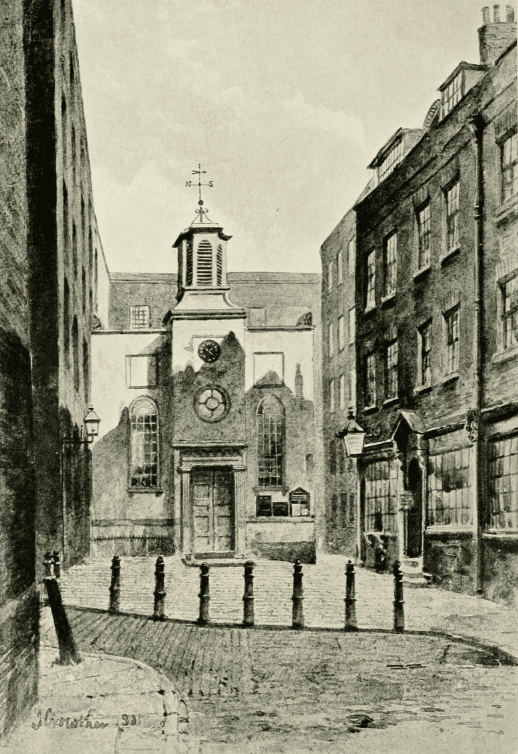
Holy Trinity, Minories, was a Church of England parish church that originated from the chapel of a medieval nunnery founded in 1293. After the Dissolution of the Monasteries, the chapel was converted into a parish church, serving the area until its closure in 1899. The church building itself was destroyed by bombing during World War II, though parts of its medieval structure survived for a time.

Conishead Priory
Conishead Priory is a large Gothic Revival building located on the Furness peninsula in Cumbria, England. Originally founded as an Augustinian priory in the 12th century, it underwent significant transformations and ownership changes throughout its history, serving variously as a hospital, a private residence, a spa hotel, and a convalescent home. Since 1976, it has been home to a Buddhist community and houses the Kadampa Temple for World Peace.