
Conishead Priory
Conishead Priory is a large Gothic Revival building located on the Furness peninsula in Cumbria, England. Originally founded as an Augustinian priory in the 12th century, it underwent significant transformations and ownership changes throughout its history, serving variously as a hospital, a private residence, a spa hotel, and a convalescent home. Since 1976, it has been home to a Buddhist community and houses the Kadampa Temple for World Peace.
Key Facts
- ›Founded as an Augustinian priory in the 12th century, possibly as early as 1167.
- ›The current building is a large Gothic Revival structure designed by Philip William Wyatt and completed by George Webster.
- ›The priory has served multiple functions throughout its history, including a spa hotel and a convalescent home for miners.
- ›Since 1976, it has been occupied by Buddhist communities and is home to the Kadampa Temple for World Peace.
- ›The priory's name translates to "King's Hill Priory".

Gothic Revival
Kadampa Temple For World Peace, Gothic Revival Architecture
King's Hill Priory
Gamel De Pennington, William De Lancaster Ii, Thomas Stanley, 2nd Baron Monteagle, William Paget, 1st Baron Paget, William Sandys, Francis Sandys, Margaret Dodding, Barbara Philipson, George Dodding, Miles Sandys, Sarah Sandys, John Bradyll, Dodding Braddyll, Thomas Braddyll, Wilson Gale, Wilson Gale-Braddyll, Thomas Richmond-Gale-Braddyll, Philip William Wyatt, James Wyatt, George Webster, Henry William Askew, Henry Schneider, John Poole, William Gradwell, Arthur Kellett, Mr. Fisher, William Jones
- Founded As A Hospital Which Developed Into An Augustinian Priory.
- Dissolution of the Monasteries.
- Demolished and Rebuilt As A Gothic Revival House.
- Converted To A Spa Hotel.
- Served As A Convalescent Home For Miners.
- Used As An Emergency Hospital During World War Ii.
About Conishead Priory
Conishead Priory is a significant historical and spiritual site located on the Furness peninsula near Ulverston in Cumbria, United Kingdom. Its name, translating to "King's Hill Priory," hints at its long and varied past.
Origins and Medieval History
The history of Conishead Priory traces back to the 12th century, with its origins as a hospital that evolved into a priory of Augustinian canons. It is believed to have been established around 1167, though ownership claims were also made by William de Lancaster II. The priory flourished until its dissolution. Following this period, the estate passed through numerous hands, including prominent families like the Stanleys, Pagets, and Sandys, with considerable changes to the building itself over the centuries.
The Present Gothic Revival Structure
The current edifice at Conishead Priory is a grand example of Gothic Revival architecture. Construction of the present house began in 1821 under the design of Philip William Wyatt, though the project was later taken over and completed by George Webster. This extensive building project took twenty years and a substantial sum of money, leading to financial difficulties for its owner. The priory has since served as a private residence, a popular spa hotel with its own railway station, and a convalescent home for miners, notably after World War II when it was used to treat wounded servicemen.
Contemporary Buddhist Center
Since 1976, Conishead Priory has found a new purpose as a spiritual home for Buddhist communities. The grounds now host the Kadampa Temple for World Peace, a testament to the site's ongoing evolution and its role in contemporary spiritual life.
Source: Wikipedia ↗
Frequently Asked Questions
What was Conishead Priory before it became a Buddhist center?
Before its current use, Conishead Priory was an Augustinian priory founded in the 12th century. Later, it served as a private residence, a spa hotel, and a convalescent home for miners.
When was the current building at Conishead Priory constructed?
The current Gothic Revival building was constructed starting in 1821, with construction taking approximately 20 years. The design was initially by Philip William Wyatt and completed by George Webster.
What is the religious affiliation of the community currently at Conishead Priory?
Since 1976, Conishead Priory has been home to Buddhist communities. Specifically, the Kadampa Temple for World Peace, a Kadampa Buddhist Temple, is located on the grounds.
What historical significance does Conishead Priory hold?
Conishead Priory has a long history dating back to the 12th century as an Augustinian priory. Its current Gothic Revival structure and its transformation into a Buddhist center mark significant chapters in its history.
Related Monasteries

Kardang
Kardang Monastery, a prominent Drukpa Lineage monastery, holds significant importance in India's Lahaul valley, having once been the administrative capital of the region. This large, white, prayer-flag-adorned structure sits on a ridge overlooking the Bhaga River and the town of Keylong. Rebuilt and renovated multiple times, it houses a rich library of Buddhist scriptures, thankas, musical instruments, and ancient weapons, alongside vibrant frescoes and murals.
City of Ten Thousand Buddhas
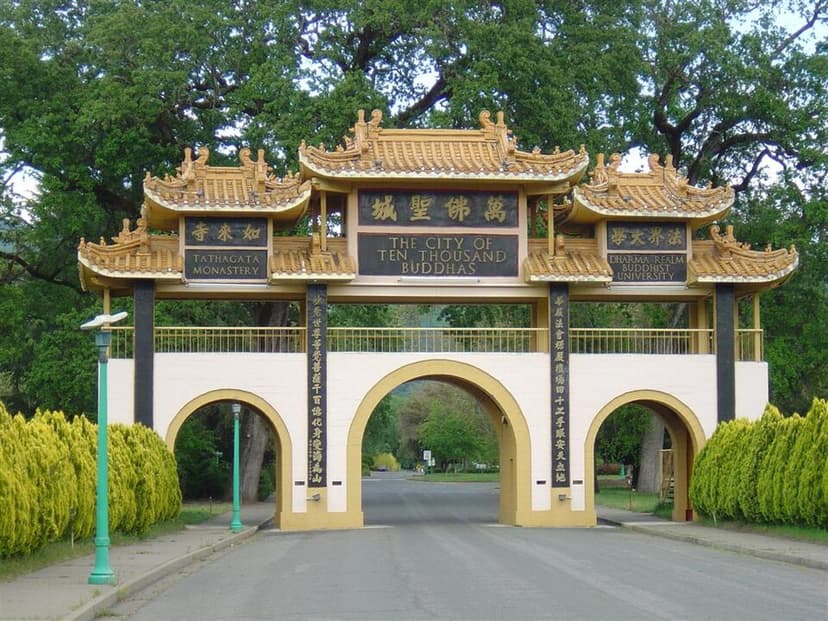
The City of Ten Thousand Buddhas is a significant international Buddhist community and monastery in Talmage, California, founded by the influential figure Hsuan Hua. It was established as one of the first Chan Buddhist temples in the United States and is recognized for its strict adherence to traditional Buddhist monastic codes, including the vinaya. The community encompasses educational institutions, residential facilities, and an organic farm, serving as a major center for propagating Buddhist teachings in the Western Hemisphere.
Deer Park Monastery
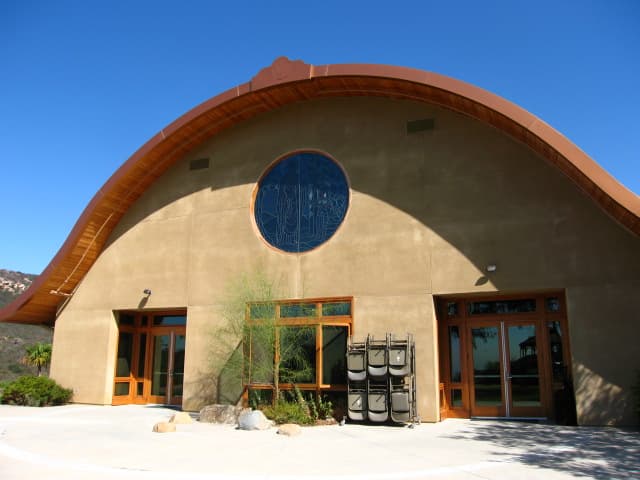
Deer Park Monastery is a 400-acre Buddhist monastery located in Escondido, California, founded in July 2000 by Thích Nhất Hạnh. It adheres to the Vietnamese Thiền tradition within the Plum Village Tradition and serves as a vibrant center for monastic practice and public mindfulness events. The monastery is organized into two hamlets, Solidity Hamlet for monks and laymen, and Clarity Hamlet for nuns and laywomen, fostering a growing community of ordained and lay practitioners.