
Kardang
Kardang Monastery, a prominent Drukpa Lineage monastery, holds significant importance in India's Lahaul valley, having once been the administrative capital of the region. This large, white, prayer-flag-adorned structure sits on a ridge overlooking the Bhaga River and the town of Keylong. Rebuilt and renovated multiple times, it houses a rich library of Buddhist scriptures, thankas, musical instruments, and ancient weapons, alongside vibrant frescoes and murals.
Key Facts
- ›Believed to have been founded in the 12th century.
- ›Houses a substantial library of Buddhist literature, including the Kangyur and Tangyur.
- ›Renovated in 1912 by Lama Norbu Rinpoche, transforming it into an educational establishment.
- ›The new temple was rebuilt between 1999 and 2009 under the guidance of Lama Paljor Larje.
- ›Currently has approximately thirty monks and nuns.
- ›The monastery was featured on the History Channel series 'IRT Deadliest Roads'.

- Library of Buddhist Literature
- Collection of Thankas
- Musical Instruments
- Old Weapons
- Colourful Frescoes and Murals
- Silver Chaitya Preserving Relics
- Eleven-Headed Statue of Avalokitesvara
- Wooden Prayer Wheel
- Huge Prayer Drum With Mantra
- Statues of Various Buddhist Deities and Figures
- Old Cloth Paintings
Kardang Gompa
Lama Norbu Rinpoche, Lama Kunga, Lama Paljor Larje, Lama Apo Rinponche, Khantse Rimponche, Padmasambhava, Tara, Tagden Shakyashree, Buddha Shakjamuni, Buddha Vajradhara, Buddha Amitabha, Maha Sidha Shakya Shri, Marpa, Yogin Malarepa, Gampopa, Buddha Avalokiteshvara, Heruka Deity, Vajrayogini, Yunjin Rinpoche, Rick Yemm
- Renovation In 1912 By Lama Norbu Rinpoche
- Old Monastery Temple Destroyed By Rain In 1998
- New Temple Rebuilt Between 1999–2009
- Featured On History Channel Tv Series Irt Deadliest Roads In 2010
About Kardang
Kardang Monastery, also known as Kardang Gompa, is a significant Drukpa Lineage monastery located in the Lahaul valley of India. Historically, the village of Kardang served as the capital of Lahaul, underscoring the monastery's regional importance. The monastery is characterized by its imposing white structure adorned with prayer flags, perched on a ridge at an altitude of 3,500 meters on the left bank of the Bhaga River, offering views of Keylong town.
History and Renovation
The monastery is believed to have originated in the 12th century. It houses a substantial collection of Buddhist literature, including the Kangyur and Tangyur scriptures in the Bhotia or Sherpa language, alongside fine thankas, musical instruments, and old weapons. The monastery's structure suffered decay, leading to a period of ruin until it was renovated in 1912 by Lama Norbu Rinpoche. Under his and Lama Kunga's guidance, it was re-established as an educational and training institution.
Following the destruction of the old temple by rain in 1998, the current monastery head, Lama Paljor Larje, led the rebuilding efforts for a new temple between 1999 and 2009. Lama Paljor Larje, a master of traditional thangka painting, also painted many of the new works within the temple. The monastery has a tradition where monks have equal rights and can marry, spending summers working in fields before returning for monastic duties in winter.
Contents and Features
Kardang Monastery contains several notable religious and artistic elements. The first room houses a silver chaitya containing the skull and ashes of Lama Norbu, along with statues of Padmasambhava, Tara, and Tagden Shakyashree. The main Prayer Hall features an eleven-headed statue of Avalokitesvara. The third room contains a large wooden prayer wheel. The new temple, rebuilt by Lama Paljor, features a ground floor with statues of Buddha Shakyamuni, Buddha Vajradhara, Buddha Padmasambhava, Buddha Amitabha, Tara, Maha sidha Shakya Shri, Marpa, Yogin Malarepa, Gampopa, and relics of Lama Norbu Rinpoche. It also displays old cloth paintings and traditional compositions on the ceiling, created by Lama Paljor himself.
Modern Recognition
Kardang Monastery gained wider recognition when it was featured on the History Channel's TV series 'IRT Deadliest Roads' on November 7, 2010. A notable event during the episode involved trucker Rick Yemm delivering a large golden Buddha statue to the monastery and being welcomed by Lama Paljor Larje.
Source: Wikipedia ↗
Frequently Asked Questions
When was Kardang Monastery founded?
The monastery is believed to have been built in the 12th century. It underwent significant renovation in 1912 and its new temple was rebuilt between 1999 and 2009.
What significant religious texts are housed at Kardang Monastery?
Kardang Monastery is home to a large library of Buddhist literature, notably including the Kangyur and Tangyur scriptures written in the Bhotia or Sherpa language. It also contains 103 volumes of the Kangyur and 64 tantra books.
What notable figures are associated with Kardang Monastery?
Key figures include Lama Norbu Rinpoche, who renovated the monastery in 1912, and Lama Paljor Larje, the current head lama who oversaw the rebuilding of the new temple and is also a master thangka painter. Previous head lamas like Lama Apo Rinpoche and Khantse Rinpoche are also mentioned.
What kind of art and artifacts can be found at Kardang Monastery?
The monastery features colourful frescoes and murals, a good collection of fine thankas, and various musical instruments. The new temple contains many old statues and paintings, including a 400-year-old painting of the Melorepa story.
What is the current status of the monastic community at Kardang?
Kardang Monastery currently houses about thirty monks and nuns. It is noted that monks have permission to marry and spend summer with their families working fields before returning to the monastery in winter.
Related Monasteries

Hemis
Hemis Monastery is a significant Himalayan Buddhist monastery belonging to the Drukpa Lineage, situated in Ladakh, India. Re-established in 1672 by King Sengge Namgyal, it is renowned for its annual Hemis festival, a major celebration honoring Padmasambhava. The monastery also holds historical interest due to claims by Nicolas Notovitch of discovering a manuscript about Jesus's life within its library, a claim widely disputed by historians.
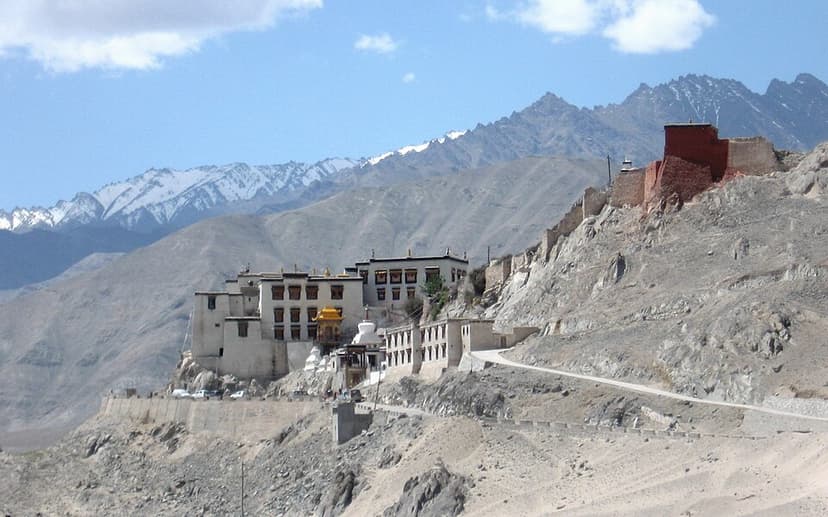
Spituk
Spituk Monastery, also known as Spituk Gompa, is a significant Buddhist monastery located in Spituk, Ladakh, near Leh. Founded in the 11th century by Od-de, it was named 'exemplary' by Rinchen Zangpo due to its anticipated religious community. Initially a Red Hat institution, it transitioned to the Gelugpa (Yellow Hat) sect in the 15th century and is currently home to 100 monks.

Conishead Priory
Conishead Priory is a large Gothic Revival building located on the Furness peninsula in Cumbria, England. Originally founded as an Augustinian priory in the 12th century, it underwent significant transformations and ownership changes throughout its history, serving variously as a hospital, a private residence, a spa hotel, and a convalescent home. Since 1976, it has been home to a Buddhist community and houses the Kadampa Temple for World Peace.