
Hemis
Hemis Monastery is a significant Himalayan Buddhist monastery belonging to the Drukpa Lineage, situated in Ladakh, India. Re-established in 1672 by King Sengge Namgyal, it is renowned for its annual Hemis festival, a major celebration honoring Padmasambhava. The monastery also holds historical interest due to claims by Nicolas Notovitch of discovering a manuscript about Jesus's life within its library, a claim widely disputed by historians.
Key Facts
- ›Belongs to the Drukpa Lineage of Himalayan Buddhism.
- ›Re-established in 1672 by Ladakhi King Sengge Namgyal.
- ›Hosts the annual Hemis festival dedicated to Padmasambhava.
- ›Features a gallery with 17th-century paintings of the Eighty-Four Mahasiddhas.
- ›Historically associated with disputed claims of housing the 'Life of Saint Issa' manuscript.

- Gallery With 17th-Century Paintings of the Eighty-Four Mahasiddhas
- Site of the Annual Hemis Festival
- Location of Disputed 'Life of Saint Issa' Manuscript Claims
Sengge Namgyal, Padmasambhava, Nicolas Notovitch, Swami Abhedananda
- Re-Establishment In 1672
- Nicolas Notovitch's 1894 Claim of Discovering the 'Life of Saint Issa' Manuscript
- Swami Abhedananda's 1921 Visit and Claim of Seeing the Manuscript
About Hemis
Hemis Monastery
Hemis Monastery is a prominent Himalayan Buddhist monastery (gompa) belonging to the Drukpa Lineage. It is situated in Hemis, on the banks of the Indus River in Ladakh, India, approximately 45 kilometers from the city of Leh. The monastery was re-established in 1672 by King Sengge Namgyal of Ladakh, though historical accounts suggest its existence predates the 11th century.
History and Significance
The monastery is most widely known for its annual Hemis festival, a major cultural and religious event held in early June. This festival honors Padmasambhava (Guru Rinpoche), a revered figure in Tibetan Buddhism, believed to be a reincarnate of Buddha. The festivities include elaborate ceremonies, traditional music, and mystic mask dances (chams performances) performed by monks, which are integral to the Tantric Vajrayana teachings followed at the monastery.
Hemis Monastery also gained notoriety in the late 19th century due to claims made by Russian journalist Nicolas Notovitch. Notovitch asserted that he discovered a manuscript known as the 'Life of Saint Issa, Best of the Sons of Men' within the Hemis library, which purportedly detailed Jesus Christ's 'lost years' spent in India. However, this account is widely disputed by historians, who view Notovitch's claims as fabricated. Swami Abhedananda later claimed to have seen a similar manuscript in 1921, but subsequent inquiries suggested the documents had disappeared.
Artistic and Cultural Features
Within the monastery's courtyard, a gallery houses a collection of paintings depicting the Eighty-Four Mahasiddhas, dating back to the 17th century. These artworks are created using ground mineral pigments and represent a significant aspect of the monastery's artistic heritage. The Hemis festival itself, with its masked dances and rituals, is a vibrant display of Ladakhi Buddhist culture and Tantric traditions.
Source: Wikipedia ↗
Frequently Asked Questions
When was Hemis Monastery re-established?
Hemis Monastery was re-established in 1672 by the Ladakhi king Sengge Namgyal. However, historical records indicate that the monastery existed even before the 11th century.
What is the significance of the Hemis Festival?
The Hemis Festival, also known as Hemis tshe-bcu, is a major annual celebration dedicated to Lord Padmasambhava (Guru Rinpoche). It is believed that observing the sacred rituals during this festival provides spiritual strength and good health.
What are the notable artistic features of Hemis Monastery?
Within the monastery's courtyard, there is a gallery displaying paintings of the Eighty-Four Mahasiddhas, created in the 17th century using ground mineral pigments. These artworks are a significant part of the monastery's heritage.
What is the claim regarding a manuscript about Jesus at Hemis?
In 1894, Nicolas Notovitch claimed to have found a manuscript called the 'Life of Saint Issa' in the Hemis library, which he asserted detailed Jesus's travels to India. However, historians widely regard this claim as fabricated, with Notovitch himself allegedly admitting to inventing the story.
Where is Hemis Monastery located?
Hemis Monastery is situated in Hemis, on the bank of the Indus River in Ladakh, India. It is located approximately 45 km from Leh.
Related Monasteries

Kardang
Kardang Monastery, a prominent Drukpa Lineage monastery, holds significant importance in India's Lahaul valley, having once been the administrative capital of the region. This large, white, prayer-flag-adorned structure sits on a ridge overlooking the Bhaga River and the town of Keylong. Rebuilt and renovated multiple times, it houses a rich library of Buddhist scriptures, thankas, musical instruments, and ancient weapons, alongside vibrant frescoes and murals.
Spituk
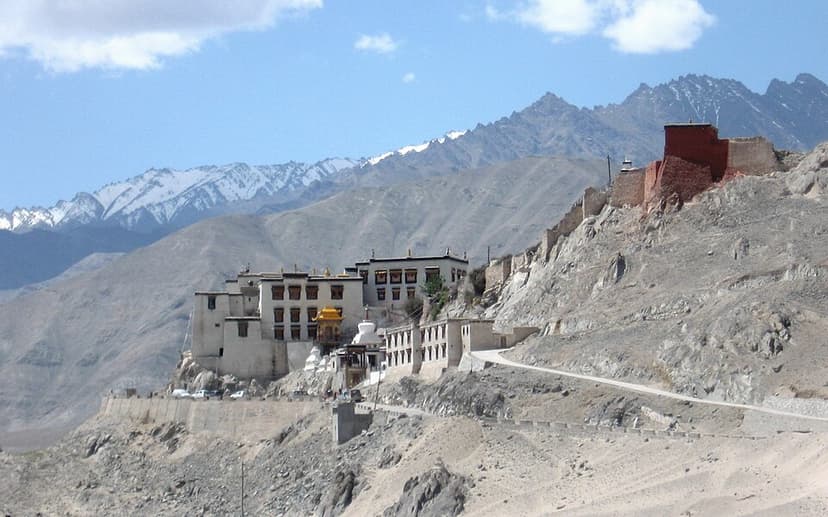
Spituk Monastery, also known as Spituk Gompa, is a significant Buddhist monastery located in Spituk, Ladakh, near Leh. Founded in the 11th century by Od-de, it was named 'exemplary' by Rinchen Zangpo due to its anticipated religious community. Initially a Red Hat institution, it transitioned to the Gelugpa (Yellow Hat) sect in the 15th century and is currently home to 100 monks.
City of Ten Thousand Buddhas
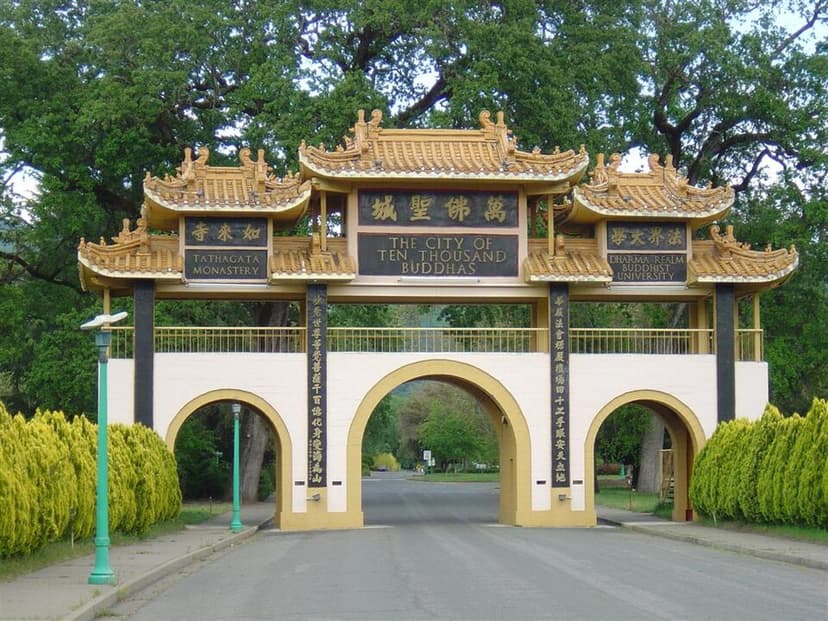
The City of Ten Thousand Buddhas is a significant international Buddhist community and monastery in Talmage, California, founded by the influential figure Hsuan Hua. It was established as one of the first Chan Buddhist temples in the United States and is recognized for its strict adherence to traditional Buddhist monastic codes, including the vinaya. The community encompasses educational institutions, residential facilities, and an organic farm, serving as a major center for propagating Buddhist teachings in the Western Hemisphere.