
Hemis Monastery
Hemis Monastery is a significant Himalayan Buddhist monastery belonging to the Drukpa Lineage, located in Ladakh, India. It was re-established in 1672 by King Sengge Namgyal and is renowned for its annual Hemis festival, which honors Padmasambhava and features elaborate mask dances.
Key Facts
- ›Re-established in 1672 by Ladakhi King Sengge Namgyal.
- ›Home to paintings of the Eighty-Four Mahasiddhas dating back to the 17th century.
- ›Hosts the annual Hemis Festival, a major extravaganza honoring Padmasambhava.
- ›Features mystifying mask dances (chams performances) as part of its Tantric Vajrayana teachings.
- ›Situated on the bank of the Indus River, 45 km from Leh, India.

Important Relationships
- Sengge Namgyal
Paintings of the Eighty-Four Mahasiddhas, Mask Dances
Re-Establishment In 1672, Annual Hemis Festival
About Hemis Monastery
Hemis Monastery is a prominent Himalayan Buddhist monastery (gompa) situated in Hemis, Ladakh, India, along the banks of the Indus River. It is a significant institution of the Drukpa Lineage and plays a vital role in the region's religious and cultural landscape.
History and Establishment
The monastery's history predates the 11th century, indicating its long-standing presence in the Himalayas. Hemis Monastery was notably re-established in 1672 under the patronage of the Ladakhi king Sengge Namgyal. This period marked a resurgence and consolidation of its importance.
The Hemis Festival
The monastery is most widely recognized for its annual Hemis Festival, also known as Hemis tshe-bcu. This vibrant celebration takes place in early June and is dedicated to Lord Padmasambhava (Guru Rinpoche), who is revered as a spiritual master and believed to be the second Buddha. The festival commemorates his birth, predicted to occur on the tenth day of the fifth month of the Monkey year in the Tibetan calendar. The observance is considered to bestow spiritual strength and good health upon attendees. The festivities are held in the monastery's courtyard and feature traditional music, elaborate rituals, and the renowned mystic mask dances, known as chams performances.
Artistic and Cultural Significance
Within the monastery's courtyard lies a gallery housing a collection of paintings depicting the Eighty-Four Mahasiddhas. These artworks, created with ground mineral pigments, date back to the 17th century and offer insight into the region's artistic heritage and Buddhist iconography. The chams performances, integral to the Tantric Vajrayana teachings followed by the monks, are a unique aspect of Hemis Monastery's cultural practices.
Historical Claims and Controversies
In the late 19th century, Russian journalist Nicolas Notovitch made a controversial claim that Hemis Monastery was the origin of the 'Life of Saint Issa,' a gospel he alleged detailed Jesus Christ's 'lost years' in India. Notovitch asserted that he saw the manuscript in the Hemis library. However, this account has been widely discredited by historians, who consider Notovitch's claims to be fabricated. Later, Indian Pandit Swami Abhedananda also claimed to have read a similar manuscript at Hemis in 1921, though reports suggest the documents later disappeared.
Source: Wikipedia ↗
Frequently Asked Questions
When was Hemis Monastery re-established?
Hemis Monastery was re-established in 1672 by the Ladakhi king Sengge Namgyal. However, historical records indicate that the monastery existed even before the 11th century.
What is the significance of the Hemis Festival?
The Hemis Festival, also known as Hemis tshe-bcu, is dedicated to Lord Padmasambhava, revered as a representative reincarnate of Buddha. The festival is a major observance held once every 12 years to honor his birth and life mission.
What are the notable features of the Hemis Festival?
The festival includes elaborate ceremonies, traditional music played by musicians, and spiritual performances. A key highlight is the mystic mask dances, known as chams performances, which are part of the Tantric Vajrayana tradition.
Is there any historical controversy associated with Hemis Monastery?
Yes, Russian journalist Nicolas Notovitch claimed in 1894 to have discovered a gospel called the 'Life of Saint Issa' in the Hemis library, detailing Jesus' travels to India. However, historians widely regard this claim as fabricated.
What kind of art can be found at Hemis Monastery?
In the monastery's courtyard, there is a gallery displaying paintings of the Eighty-Four Mahasiddhas. These artworks date back to the 17th century and are created using ground mineral pigments.
Related Buddhist Temples
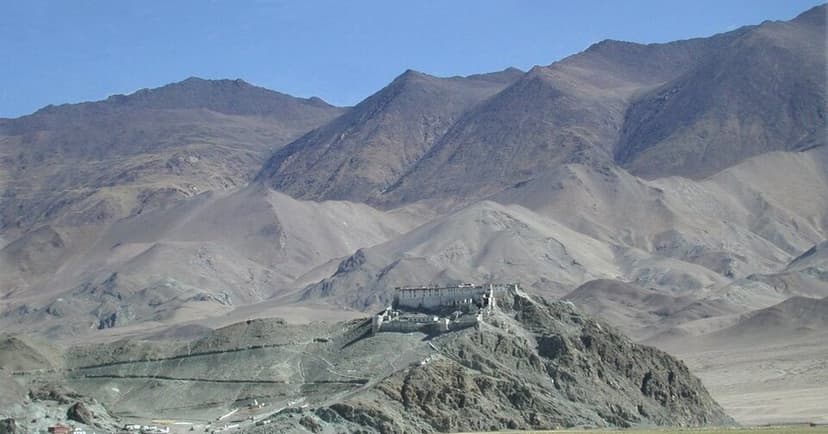
Hanle Monastery
Hanle Monastery is a significant 17th-century gompa belonging to the Drukpa Lineage of Tibetan Buddhism, located in Ladakh, India. It was established under the patronage of Ladakhi King Sengge Namgyal and played a crucial role in the region's religious landscape, serving as a rival to the Gelug school. The monastery is notable for its proximity to the Indian-Chinese border and also houses the Indian Astronomical Observatory.

Kardang Monastery
Kardang Monastery is the most significant Drukpa Lineage monastery in the Lahaul valley, India, with its associated village once serving as the region's capital. Perched on a ridge overlooking the Bhaga River, this large white structure is adorned with prayer flags and houses a vast library of Buddhist scriptures and art.

Korzok Monastery
Korzok Monastery is a significant Tibetan Buddhist monastery of the Drukpa Lineage, situated on the northwestern bank of the sacred Tso Moriri lake in Ladakh, India. Founded approximately 300 years ago by the third Korzok Rinpoche, the monastery serves as a spiritual center for the local nomadic Changpa herdsmen and is home to about seventy monks. It holds a prominent place in the region, having historically been the headquarters of the Rupshu Valley and remaining an active monastic community today.