
Rongbuk
Rongbuk Monastery is a Tibetan Buddhist monastery of the Nyingma sect located near the north side of Mount Everest. Founded in 1902, it served as an important pilgrimage site and was visited by early Everest expeditions. Despite being destroyed during China's Cultural Revolution, it has since been renovated and continues to host monks and nuns.
Key Facts
- ›Founded in 1902 by Lama Ngawang Tenzin Norbu.
- ›Located at an altitude of 4,980 meters (16,340 ft) near Mount Everest.
- ›Served as a pilgrimage site for Sherpas and visitors from Nepal and Mongolia.
- ›Was completely destroyed during China's Cultural Revolution in the 1970s.
- ›Has undergone renovation since 1983, with new murals noted.
- ›Currently houses a community of monks and nuns, though numbers have varied significantly.

- Large, Round, Terraced Chorten Containing A Reliquary In Front of the Monastery
- Hermitage Meditation Caves Dotting Cliff Walls
- Mani Stone Walls Carved With Sacred Syllables and Prayers
- Dramatic Views of the North Face of Mount Everest
Lama Ngawang Tenzin Norbu, Namgyal Wangdi
- Founding of the Monastery
- Destruction During China's Cultural Revolution
- Renovation Efforts Since 1983
About Rongbuk
Rongbuk Monastery
Rongbuk Monastery is a significant Tibetan Buddhist monastery belonging to the Nyingma sect. It is situated in Basum Township, Dingri County, within the Shigatse Prefecture of Tibet, at an impressive altitude of 4,980 meters (16,340 ft) above sea level. Its location near the north side of Mount Everest has made it a focal point for both spiritual seekers and mountaineers.
History and Significance
The monastery was founded in 1902 by Lama Ngawang Tenzin Norbu, known also as the Rongbuk Lama or Zatul Rinpoche. The area was already in use for meditation by communities of nuns since the 18th century, with numerous hermitage caves dotting the surrounding cliffs. Rongbuk served as a vital pilgrimage destination for people from as far afield as Nepal and Mongolia, hosting annual ceremonies that drew spectators from across the Himalayas. Early expeditions to Mount Everest in the 1920s and 1930s also made visits, with the Rongbuk Lama providing assistance despite viewing the climbers as "heretics."
Destruction and Reconstruction
Tragically, Rongbuk Monastery was completely destroyed during China's Cultural Revolution, a period of intense upheaval from 1966 to 1976, leaving it in ruins by 1974. The monastery's extensive collection of books and costumes, which had been moved to Tengboche for safekeeping, was lost in a fire in 1989. Since 1983, significant renovation work has been undertaken, and the monastery now features new murals. The monastery is reported to house a community of Buddhist monks and nuns, though the exact numbers have fluctuated significantly from historical figures of around 500.
Modern Accessibility and Features
Rongbuk Monastery is now accessible by road, offering a two- to three-hour drive from the Friendship Highway. Visitors are rewarded with dramatic views of Mount Everest's north face, a sight that deeply impressed early explorers like John Noel. In front of the monastery stands a large, round, terraced chorten containing a reliquary, and paths are lined with mani stone walls carved with prayers. The monastery was recognized for its unique atmosphere, being ranked at the top of CNN's 'Great Places to be a Recluse' in 2011.
Source: Wikipedia ↗
Frequently Asked Questions
When was Rongbuk Monastery founded?
Rongbuk Monastery was founded in 1902 by the Nyingmapa Lama Ngawang Tenzin Norbu. It was established in an area that had previously contained meditation huts and caves used by nuns since the 18th century.
Where is Rongbuk Monastery located?
The monastery is situated in Basum Township, Dingri County, in the Shigatse Prefecture of Tibet. It lies near the north side of Mount Everest at an elevation of 4,980 meters (16,340 ft) above sea level.
What is the religious tradition of Rongbuk Monastery?
Rongbuk Monastery belongs to the Nyingma sect of Tibetan Buddhism. It remains an active site for Buddhist teachings and pilgrimages.
Was Rongbuk Monastery always active?
The monastery was active with Buddhist teachings and pilgrimages for many years. However, it was completely destroyed during China's Cultural Revolution in the 1960s and 1970s, leaving it in ruins. Renovation efforts began in 1983.
What is the significance of Rongbuk Monastery to Mount Everest expeditions?
Rongbuk Monastery was regularly visited by early expeditions to Mount Everest in the 1920s and 1930s. Modern expeditions attempting to summit Everest from the north side often establish their Base Camp near the Rongbuk Glacier, about 8 km south of the monastery.
Is Rongbuk Monastery open to visitors today?
Yes, the monastery is accessible by road. Visitors can reach it via a drive from the Friendship Highway. The location offers dramatic views of Mount Everest's north face.
Related Monasteries

Gonchen Monastery
Gonchen Monastery, also known as Derge Monastery, is a significant Sakya Tibetan Buddhist monastery situated in the town of Derge, within the Kham region of Sichuan, China. Founded by the renowned polymath Thang Tong Gyalpo, it is recognized for its unique architectural design and its association with the historic Derge Parkhang printing house, which continues to produce Buddhist scriptures using traditional methods. Though largely destroyed during the Cultural Revolution, the monastery was restored in the 1980s and remains a vital center for Tibetan Buddhism.
Jokhang Temple
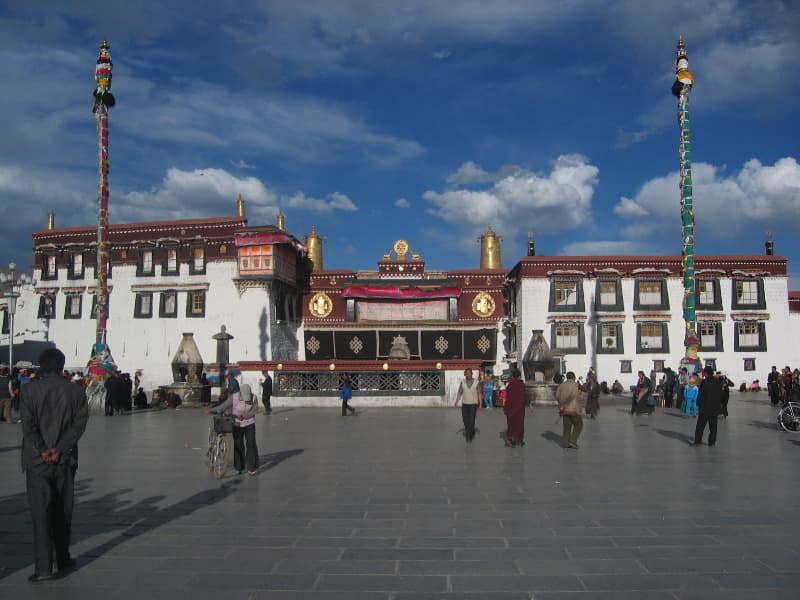
The Jokhang Temple, also known as Rasa Trulnang or Zuglagkang, is a Tibetan Buddhist temple complex and monastery in Lhasa, considered the spiritual heart of the city. Constructed around 640 CE by King Songsten Gampo, it was built to house the Jowo Mikyo Dorje statue. Over centuries, it has undergone expansions and renovations, most notably by the Fifth Dalai Lama in 1610, and was designated a UNESCO World Heritage Site in 2000 as an extension of the Potala Palace.
Kumbum Monastery
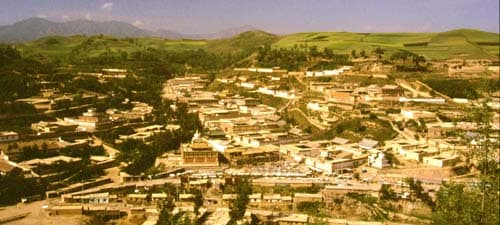
Kumbum Monastery, also known as Ta'er Temple, is a significant Tibetan Buddhist monastery founded in 1583 in Lusar, Qinghai, China. It holds a prominent place in Tibetan Buddhism, second only to Lhasa's Drepung Monastery. The monastery is renowned for its origins tied to Je Tsongkhapa, the founder of the Gelug school, and the miraculous "Tree of Great Merit" that grew from his birthplace.