
Putna Monastery
Putna Monastery is a significant Romanian Orthodox monastery in Bukovina, established by Stephen the Great in the 15th century as a testament to his military victories and a center of religious and artistic life in medieval Moldavia. It is renowned for housing the tombs of Stephen the Great and several family members, and its art, including icon veils and tombstones, is considered exemplary of Moldavian art from that era. The monastery also serves as the starting point for the Via Transilvanica long-distance trail.
Key Facts
- ›Founded by Stephen the Great on July 10, 1466, after his victory at the Battle of Kilia.
- ›Dedicated to the Virgin Mary.
- ›Houses the tombs of Stephen the Great and several of his family members.
- ›Considered one of the most important cultural, religious, and artistic centers of medieval Moldavia.
- ›The present church was largely rebuilt between 1653 and 1662.
- ›Serves as the starting point for the Via Transilvanica long-distance trail.

Moldavian Gothic, 17th Century Architecture
- Tombs of Stephen the Great and Family Members
- Icon Veils and Tombstones
- Starting Point of the Via Transilvanica Long-Distance Trail
Stephen the Great, Metropolitan Teoctist, Euphima, Euprasijka, Vasile Lupu
- Founded After Stephen the Great Conquered the Kilia Citadel.
- Consecrated On September 3, 1470.
- Rebuilt Between 1653 and 1662.
About Putna Monastery
Putna Monastery is a significant Romanian Orthodox monastery situated in Bukovina, Romania. Founded by Stephen the Great, a pivotal figure in Moldavian history, its establishment in 1466 marked a period of important cultural, religious, and artistic development in medieval Moldavia. The monastery was conceived as a thanksgiving offering following Stephen's military successes, particularly his conquest of the Kilia citadel, and was dedicated to the Virgin Mary.
History and Significance
The construction of Putna Monastery began shortly after Stephen the Great's victory at Kilia, with work commenced on July 10, 1466. The church was completed within three years, though its formal consecration by Metropolitan Teoctist, attended by Stephen and his family, did not occur until September 3, 1470, following further military engagements. The site was consecrated, establishing it as the preeminent religious center in the region. Historical records indicate the presence of prior eremitic life on the location, with burials found beneath the foundations of the earliest structures. Stephen the Great also endowed the monastery with land and revenue from the village of Vicovu de Sus, which he acquired specifically for this purpose.
Architecture and Art
The current church structure of Putna Monastery largely reflects its rebuilding between 1653 and 1662 by Vasile Lupu and his successors. While it adheres to the fundamental layout of 15th and 16th-century Moldavian churches, the rebuilt edifice showcases numerous architectural and decorative elements characteristic of 17th-century styles. The monastery is celebrated for its artistic treasures, including icon veils and tombstones, which are considered prime examples of Moldavian art from Stephen the Great's era. An early piece of embroidery, an epitaphion made with silk and gold thread by the Serbian nun Euphima and her daughter Euprasijka, dates back to the late 14th century, predating the monastery's founding but indicative of the artistic traditions in the region.
Burials and Legacy
Putna Monastery holds profound historical importance as the burial site for Stephen the Great, whose tomb is now a destination for pilgrims. Several of his family members are also interred here, including Bogdan III the One-Eyed, Maria of Mangup, Maria Despina, Maria Voichița, Teoctist I of Moldavia, Zoe Dumitrescu-Bușulenga, and Alexandrina Cernov. Beyond its religious and historical significance, the monastery also serves as the starting point for the Via Transilvanica, a long-distance hiking trail, further connecting it to modern cultural and recreational pursuits.
Source: Wikipedia ↗
Frequently Asked Questions
When was Putna Monastery founded?
Putna Monastery was founded by Stephen the Great on July 10, 1466. Construction was completed in three years, and it was consecrated on September 3, 1470.
Who is buried at Putna Monastery?
Putna Monastery is the burial place of Stephen the Great and several of his family members, including Bogdan III the One-Eyed, Maria of Mangup, and Maria Voichița.
What is the significance of Putna Monastery?
It is one of the most important cultural, religious, and artistic centers established in medieval Moldavia. It served as a place of thanksgiving for military victories and houses significant historical tombs and artworks.
What architectural styles are present at Putna Monastery?
While the church follows the ground plan of a typical 15th and 16th-century Moldavian church, the present structure, rebuilt between 1653 and 1662, incorporates many architectural and decorative features characteristic of 17th-century architecture.
Is Putna Monastery a pilgrimage site?
Yes, Putna Monastery is a place of pilgrimage, particularly due to it housing the tomb of Stephen the Great.
Related Monasteries

Bistrița Monastery
Bistrița Monastery is a Romanian Orthodox monastery located near Piatra Neamț, dedicated in 1402. It was originally founded by Voivode Alexandru cel Bun, whose remains are interred within the church. The monastery is noted for its Byzantine architecture, intricate frescoes, and the preservation of historically significant artifacts, including the miraculous icon of Saint Anne. It also served as a vital cultural center for scribes and chroniclers.
Comana Monastery
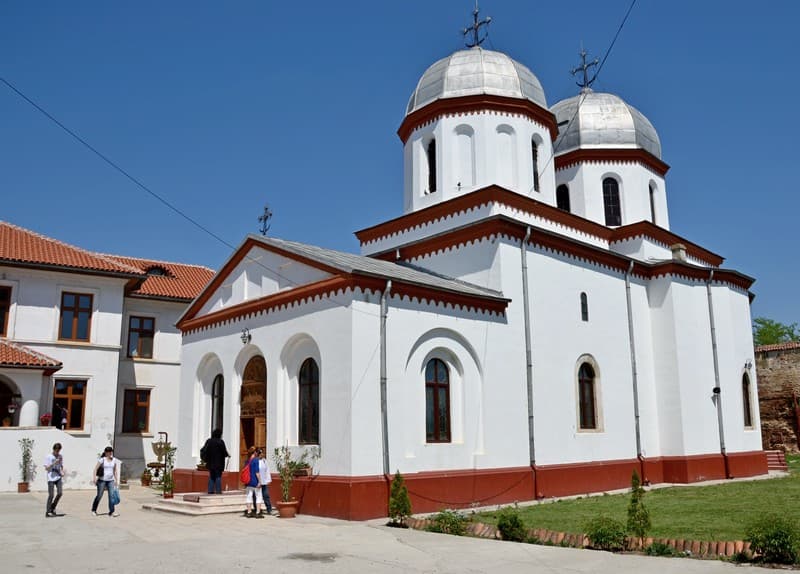
Comana Monastery is a Romanian Orthodox monastery located in Comana, Giurgiu County, Romania. Originally founded in 1461 by Vlad Țepeș as a monastery-fortress, it was rebuilt in 1589 by Radu Șerban and later restored multiple times. Archaeological discoveries on its grounds have led to speculation that it may be the burial site of Vlad Țepeș.

Neamț Monastery
Neamț Monastery is a historic Romanian Orthodox religious settlement, recognized as one of the oldest and most significant in Romania. Constructed in the 15th century during the reign of Stephen III of Moldavia, it exemplifies the mature Moldavian architectural style. The monastery has a rich history of artistic and cultural activity, serving as a center for scribes, miniaturists, and chroniclers, and later re-establishing a printing tradition.