
Neamț Monastery
Neamț Monastery is a historic Romanian Orthodox religious settlement, recognized as one of the oldest and most significant in Romania. Constructed in the 15th century during the reign of Stephen III of Moldavia, it exemplifies the mature Moldavian architectural style. The monastery has a rich history of artistic and cultural activity, serving as a center for scribes, miniaturists, and chroniclers, and later re-establishing a printing tradition.
Key Facts
- ›Built in the 15th century during the reign of Stephen III of Moldavia.
- ›Features the mature Moldavian architectural style with Gothic windows and enameled disk friezes.
- ›Houses tombs, a feature that first appeared in its church.
- ›Was a significant center for manuscript illumination, with artists like Gavril Uric associated with it.
- ›Re-established a printing tradition in the early 19th century, with an old printing press still preserved.
- ›Boasts a library over 600 years old containing rare books and early printed works.

Moldavian Architecture, Gothic
- Tombs Chamber
- Manuscript Collection
- Old Printing Press
- Library
- Altar Screen From Neamț Fortress
- Icon 'the Flight From Egypt' By Nicolae Grigorescu
MăNăStirea Neamț
Stephen Iii of Moldavia, Gavril Uric, Macarie the Chronicler, Eftimie the Chronicler, Veniamin Costachi, Nicolae Grigorescu
- Completion of the Church Coincided With the Moldavian Victory Against King John I Albert of Poland In 1497.
- Establishment of A Printing House By Metropolitan Veniamin Costachi In the Early 19th Century.
About Neamț Monastery
Overview
Neamț Monastery stands as a significant Romanian Orthodox religious settlement, recognized for its historical importance and architectural distinction within Romania. Its foundations were laid in the 15th century, with the construction of its church completed during the reign of Stephen III of Moldavia (1457–1504), notably in the same year the Moldavian army triumphed over King John I Albert of Poland in 1497. The monastery is a prime example of the mature Moldavian architectural style, characterized by its delicate color effects, Gothic windows, and friezes adorned with enameled disks in vivid green, yellow, and brown.
Artistic and Cultural Heritage
The monastery has historically been a vibrant center of artistic and cultural life. It housed renowned scribes and miniaturists, with Gavril Uric, a prominent figure of 15th-century Moldavian miniature art, associated with the site. His early works were created here. Furthermore, chroniclers like Macarie and Eftimie produced significant historical writings within its cells, documenting the reigns of Petru Rareș and Alexandru Lăpușneanu, respectively. The tradition of manuscript illumination and calligraphy continued through the centuries, contributing to the monastery's rich heritage.
Revival and Collections
Following a decline in its learned tradition during the 17th and 18th centuries, Neamț Monastery experienced a revival in the early 19th century under Metropolitan Veniamin Costachi. He established a printing house here, which operated from 1807, and an old printing press is preserved in the monastery's museum. The monastery's library is reputed to be over 600 years old, housing an impressive collection of nearly 11,000 volumes, including many rare books and some of the earliest printed materials in Romania. Among its most prized possessions are the altar screen from the former Neamț Fortress church and the icon "The Flight from Egypt" painted by Nicolae Grigorescu.
Source: Wikipedia ↗
Frequently Asked Questions
When was Neamț Monastery founded?
Neamț Monastery was built in the 15th century. Specifically, its church was completed in the year the Moldavian army achieved victory against King John I Albert of Poland in 1497.
What is the architectural style of Neamț Monastery?
The monastery is an example of medieval Moldavian architecture, showcasing the maturity of this style during Ștefan cel Mare's period. Its church features Gothic windows and decorative friezes with enameled disks.
What kind of art and cultural activities took place at Neamț Monastery?
Neamț Monastery was a hub for intense artistic and cultural activity. It was known for its calligraphers and miniaturists, such as Gavril Uric, and chroniclers like Macarie and Eftimie who wrote important historical accounts.
Does Neamț Monastery have a library and what is notable about it?
Yes, the monastery's library is said to be over 600 years old. It contains nearly 11,000 volumes, including many rare books and some of the first books ever printed in Romania.
Where is Neamț Monastery located?
The monastery is situated in north-eastern Romania, within Neamț County. It is located about 10 km west of the town of Târgu Neamț.
Related Monasteries

Bistrița Monastery
Bistrița Monastery is a Romanian Orthodox monastery located near Piatra Neamț, dedicated in 1402. It was originally founded by Voivode Alexandru cel Bun, whose remains are interred within the church. The monastery is noted for its Byzantine architecture, intricate frescoes, and the preservation of historically significant artifacts, including the miraculous icon of Saint Anne. It also served as a vital cultural center for scribes and chroniclers.
Comana Monastery
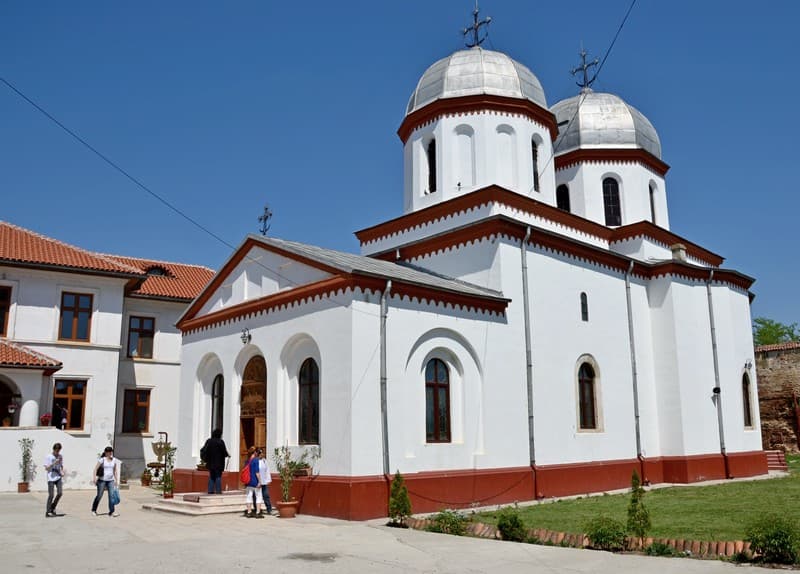
Comana Monastery is a Romanian Orthodox monastery located in Comana, Giurgiu County, Romania. Originally founded in 1461 by Vlad Țepeș as a monastery-fortress, it was rebuilt in 1589 by Radu Șerban and later restored multiple times. Archaeological discoveries on its grounds have led to speculation that it may be the burial site of Vlad Țepeș.

Putna Monastery
Putna Monastery is a significant Romanian Orthodox monastery in Bukovina, established by Stephen the Great in the 15th century as a testament to his military victories and a center of religious and artistic life in medieval Moldavia. It is renowned for housing the tombs of Stephen the Great and several family members, and its art, including icon veils and tombstones, is considered exemplary of Moldavian art from that era. The monastery also serves as the starting point for the Via Transilvanica long-distance trail.