
Pavilly
Pavilly is a commune in the Seine-Maritime department of Normandy, northern France, situated on the river Austreberthe. Historically, it is known for religious sites, including the church of Notre-Dame and the chapel of Sainte Austreberthe, which is a remnant of a thirteenth-century priory. The town is also associated with Saint Austrebertha, the first abbess of the convent of Pavilly.
Key Facts
- ›Located in the Seine-Maritime department of Normandy, northern France.
- ›Situated by the banks of the river Austreberthe.
- ›Features the thirteenth-century church of Notre-Dame.
- ›Includes the chapel of Sainte Austreberthe, a remnant of a thirteenth-century priory.
- ›Associated with Saint Austrebertha, the first abbess of the convent of Pavilly.
Gothic
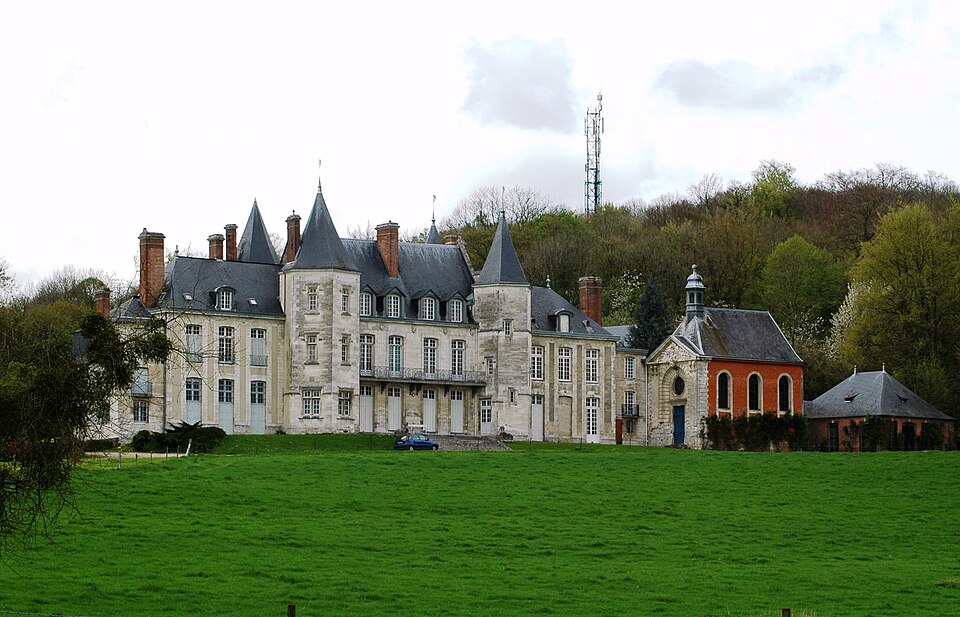
Church of Notre-Dame, Chapel of Sainte Austreberthe, ChâTeau Esneval
Saint Austrebertha, Philibert of JumièGes
About Pavilly
Pavilly is a commune located in the Seine-Maritime department within the Normandy region of northern France. Situated by the banks of the river Austreberthe in the Pays de Caux, it lies approximately 12 miles northwest of Rouen. The town is a blend of farming and light industry.
Places of Interest
The historical landscape of Pavilly is marked by several significant sites. The church of Notre-Dame is a notable structure dating back to the thirteenth century. Also present is the chapel of Sainte Austreberthe, which represents the sole remaining element of a priory established in the thirteenth century by Philibert of Jumièges. Further contributing to the town's historical architecture is the fourteenth-century château Esneval, constructed on the foundations of an earlier feudal castle.
Religious Significance
Pavilly holds particular importance due to its association with Saint Austrebertha. Born in Thérouanne in 633, Saint Austrebertha passed away in Pavilly on February 10, 704. She is venerated as the first abbess of the convent of Pavilly, a role that cemented her connection to the locality and its religious heritage.
Source: Wikipedia ↗
Frequently Asked Questions
What is Pavilly known for historically?
Pavilly is historically known for its religious sites, most notably the church of Notre-Dame and the chapel of Sainte Austreberthe. It is also associated with Saint Austrebertha, who was the first abbess of the convent of Pavilly.
What historical religious structures are found in Pavilly?
The church of Notre-Dame, dating from the thirteenth century, is a significant religious structure. Additionally, the chapel of Sainte Austreberthe remains, which is all that is left of a thirteenth-century priory.
Who was Saint Austrebertha and what is her connection to Pavilly?
Saint Austrebertha was born in 633 and died in Pavilly on February 10, 704. She is recognized as the first abbess at the convent of Pavilly, making her a central figure in the town's religious history.
What is the geographical location of Pavilly?
Pavilly is situated in the Pays de Caux region of Normandy, in northern France, by the banks of the river Austreberthe. It is located approximately 12 miles northwest of Rouen.
Related Monasteries

Abbaye Blanche
The Abbaye Blanche was a Benedictine nunnery founded in 1112 in Mortain, France, by Saint Vitalis. It was established for women with his sister, Adelina, as its first abbess. The community followed a strict interpretation of the Rule of Saint Benedict and later joined the Cistercian order in 1147. Though much has been lost to time, remnants of its Romanesque and Early Gothic architecture endure.

Abbaye du Paraclet
The Abbaye du Paraclet was a Benedictine monastery initially founded by Peter Abelard near Ferreux-Quincey, France. It was later transformed into a nunnery under the leadership of Héloïse, his wife, who served as its abbess for the remainder of her life. Though a significant portion of the abbey was demolished during the French Revolution, surviving structures and monuments continue to acknowledge its historical and religious importance.

Abbaye-aux-Bois
The Abbaye-aux-Bois, originally founded in 1202 as Notre-Dame-aux-Bois in Ognolles, was a Bernardine (Cistercian) convent that relocated to Paris in 1654. Renowned for educating daughters of aristocratic families and later hosting a significant literary salon, its buildings underwent numerous transformations after being expropriated in 1792. The abbey was ultimately destroyed in 1907 to facilitate urban expansion, with its site later occupied by a theater.