
Our Lady of Dallas Abbey
The Abbey of Our Lady of Dallas is a Cistercian monastery established in Irving, Texas, in 1955. Founded by displaced Hungarian Cistercians, it became a vital educational institution, operating Cistercian Preparatory School for boys and contributing faculty to the University of Dallas. It stands as a significant remnant of Cistercian monasticism in North America, having gained independence from its Hungarian dependency and growing to include American-born candidates.
Key Facts
- ›Founded in 1955 as a Cistercian monastery in Irving, Texas.
- ›Operates Cistercian Preparatory School, a boys' secondary school.
- ›Established by refugee monks from the disbanded Zirc Abbey in Hungary.
- ›It is currently the only Cistercian monastery remaining in North America.
- ›The abbey church was completed in 1992, designed by Gary Cunningham.
- ›Monks serve as educators and priests at both the preparatory school and the University of Dallas.
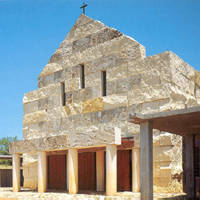
Cistercian Preparatory School, Abbey Church
Thomas K. Gorman, Anselm Nagy
- Disbandment of Zirc Abbey In Hungary
- Establishment of the Monastery On February 19, 1955
- Opening of the University of Dallas With Monks On Faculty
- Dedication of the First Monastery Building
- Independence From Hungary
- Election of First Abbot
About Our Lady of Dallas Abbey
The Abbey of Our Lady of Dallas is a Cistercian monastery located in Irving, Texas, founded in 1955. It originated from the displacement of Cistercian monks following the Communist takeover in Hungary, specifically from the Zirc Abbey which was disbanded in 1950. These refugee monks found refuge in the United States and were invited by Bishop Thomas K. Gorman of the Roman Catholic Diocese of Dallas to assist in the establishment of the University of Dallas.
History and Significance
The monastery received formal establishment by the Holy See on February 19, 1955, initially as a dependency of Zirc Abbey. Its core mission has always been intertwined with education, drawing upon the Cistercian order's historical role as centers of learning. Nine monks served on the faculty when the University of Dallas opened in September 1956. The community soon built its own monastery on the university campus, dedicated in 1958.
In 1961, the abbey gained independence from its Hungarian ties, electing its first prior, Anselm Nagy. The monastic community established Cistercian Preparatory School the following year, modeled after Hungarian Cistercian schools. The community rapidly grew and was elevated to the status of an abbey, with Nagy becoming its first abbot in 1964. The monastic complex expanded particularly in the 1970s with the arrival of American-born candidates. The abbey church, a significant structure, was completed in 1992, designed by Gary Cunningham. Today, the monks continue their dual commitment to education at both Cistercian Preparatory School and the University of Dallas, as well as providing pastoral services in local parishes.
Source: Wikipedia ↗
Frequently Asked Questions
When was Our Lady of Dallas Abbey founded?
Our Lady of Dallas Abbey was formally established on February 19, 1955. Its canonical status was initially that of a dependency of Zirc Abbey in Hungary.
What is the religious tradition of Our Lady of Dallas Abbey?
The monastery belongs to the Cistercian Order, which is a branch of the Benedictine monastic tradition. This order was founded in France in the 11th century as a reform movement.
What role does the abbey play in education?
The monks of Our Lady of Dallas Abbey operate Cistercian Preparatory School, a secondary school for boys. They also serve as faculty members and priests at the nearby University of Dallas.
Is Our Lady of Dallas Abbey still active?
Yes, as of 2018, it is the only Cistercian monastery left in North America, indicating an active monastic community. The monks continue their work in education and pastoral assistance.
Where is Our Lady of Dallas Abbey located?
The abbey is situated in Irving, Texas, on the grounds of what was to become the University of Dallas. It was built on land provided by Bishop Thomas K. Gorman.
What is the architectural style of the abbey church?
The abbey church, completed in 1992, was designed by architect Gary Cunningham. Specific details about its architectural style are not provided in the text.
Related Monasteries

Chuang Yen Monastery
Chuang Yen Monastery, meaning "Majestically Adorned," is a significant Buddhist temple located on 225 acres in Kent, New York. Established through a long-term lease and subsequent donation of land to the Buddhist Association of the United States, it is renowned for housing the largest indoor Buddha statue in the Western Hemisphere. The monastery's architecture largely reflects the Tang dynasty style of China and has been developed with various halls and facilities since its groundbreaking in 1981.

Clear Creek Abbey
Clear Creek Abbey is a Benedictine monastery located in the Ozark Mountains of Oklahoma, established in 1999 by monks from Fontgombault Abbey in France. It is known for its adherence to the traditional Benedictine life, including the use of the 1962 Roman Missal and Gregorian chant, and is actively recruiting new monks to reach its capacity. The abbey is undergoing phased construction of its church and facilities, with a growing community of lay families gathering around it.

Dai Bosatsu Zendo Kongo-ji
Dai Bosatsu Zendo Kongo-ji is a Rinzai Zen monastery and retreat center situated in the Catskill Mountains of New York. Established in 1976 as part of the Zen Studies Society, it offers intensive spiritual training, daily services, and retreats. The monastery has faced controversy regarding its co-founder, Eido Shimano, leading to his resignation and a public statement from his claimed lineage sect disavowing him.