
Chuang Yen Monastery
Chuang Yen Monastery, meaning "Majestically Adorned," is a significant Buddhist temple located on 225 acres in Kent, New York. Established through a long-term lease and subsequent donation of land to the Buddhist Association of the United States, it is renowned for housing the largest indoor Buddha statue in the Western Hemisphere. The monastery's architecture largely reflects the Tang dynasty style of China and has been developed with various halls and facilities since its groundbreaking in 1981.
Key Facts
- ›Situated on 225 acres in Kent, Putnam County, New York.
- ›Home to the largest indoor statue of a Buddha (Vairocana) in the Western Hemisphere.
- ›Much of the architecture is in the style of China's Tang dynasty.
- ›Groundbreaking for the first building, Kuan Yin Hall, occurred on May 23, 1981.
- ›Operates under the Buddhist Association of the United States (BAUS).

Tang Dynasty
- Largest Indoor Statue of A Buddha In the Western Hemisphere
- Kuan Yin Hall
- Dining Hall
- Thousand Lotus Memorial Terrace
- Tai Hsu Hall
- Yin Kuang Hall
- Woo Ju Memorial Library
- Great Buddha Hall
莊嚴寺, ZhuāNgyáN Sì
Dr. C.T. Shen, Venerable Lok To, Venerables Ming Chi, Venerable Xian Ming, Jen Chun, Sheng-Yen, Shou Yu, Ming Kuang, Ji Ru, Jing Tong, Ji Xing, Bhikkhu Bodhi, Dhammadipa, Hui Tsong, Yung Hsin, Hong Zhen, 14th Dalai Lama
- Groundbreaking Ceremony For Kuan Yin Hall Held On May 23, 1981.
- Opening of the Great Buddha Hall Presided Over By the 14th Dalai Lama.
About Chuang Yen Monastery
Chuang Yen Monastery, translating to "Majestically Adorned," is a prominent Buddhist temple situated on a expansive 225-acre site in Kent, Putnam County, New York. Its establishment began in November 1975 when the Buddhist Association of the United States (BAUS) leased the land, which was later donated in 1989. The monastery is distinguished by housing the largest indoor statue of a Buddha, Vairocana, in the Western Hemisphere, making it a significant site for Buddhist pilgrimage and practice.
History and Development
The development of Chuang Yen Monastery commenced with a 99-year lease of 125 acres from Dr. C.T. Shen, a co-founder of BAUS. The architectural vision for much of the monastery's structures draws inspiration from China's Tang dynasty, with the first building, the Kuan Yin Hall, breaking ground on May 23, 1981. Over the subsequent years, additional facilities were added, including a Dining Hall, the Thousand Lotus Memorial Terrace, Tai Hsu Hall, Yin Kuang Hall, Woo Ju Memorial Library, and the Great Buddha Hall. The inauguration of the Great Buddha Hall was graced by the presence of the 14th Dalai Lama.
Leadership and Services
The monastery's growth and operation have been guided by numerous leaders within BAUS, including Venerable Lok To, Venerables Ming Chi and Xian Ming, and various presidents and abbots of BAUS and Chuang Yen Monastery itself. Since at least 2006, the monastery has regularly offered prayer and meditation retreat programs. These programs often include meals and lodging for participants, adhering to specific guidelines and schedules.
Source: Wikipedia ↗
Frequently Asked Questions
What does the name Chuang Yen Monastery mean?
The name "Chuang Yen" is of Chinese origin and translates to "Majestically Adorned." This name reflects the temple's grandeur and its devotion to Buddhist principles.
When was Chuang Yen Monastery established?
The Buddhist Association of the United States (BAUS) began developing Chuang Yen Monastery in November 1975, when it leased 125 acres of land. The land was formally donated to BAUS in 1989.
What is the most notable feature of Chuang Yen Monastery?
The monastery is most famous for housing the largest indoor statue of a Buddha, specifically Vairocana, in the entire Western Hemisphere. This impressive statue is a central point of reverence for visitors.
What architectural style is prominent at Chuang Yen Monastery?
A significant portion of the monastery's buildings are constructed in the architectural style of China's Tang dynasty. This style was envisioned by architect Edward A Valeri RA.
Does Chuang Yen Monastery offer any programs or services?
Yes, the monastery regularly offers prayer and meditation retreat programs. They also provide meals and accommodation for pilgrims attending these programs, though under specific guidelines and schedules.
Related Monasteries

Lhuntse Dzong
Lhuntse Dzong is a significant Buddhist monastery and dzong located in eastern Bhutan, perched on a spur overlooking the Kuri Chhu valley. Originally known as Kurtoed, it is the ancestral home of Bhutan's royal family, the House of Wangchuck. The monastery was first established in 1543 and later developed into a formal dzong in 1654, undergoing several restorations.
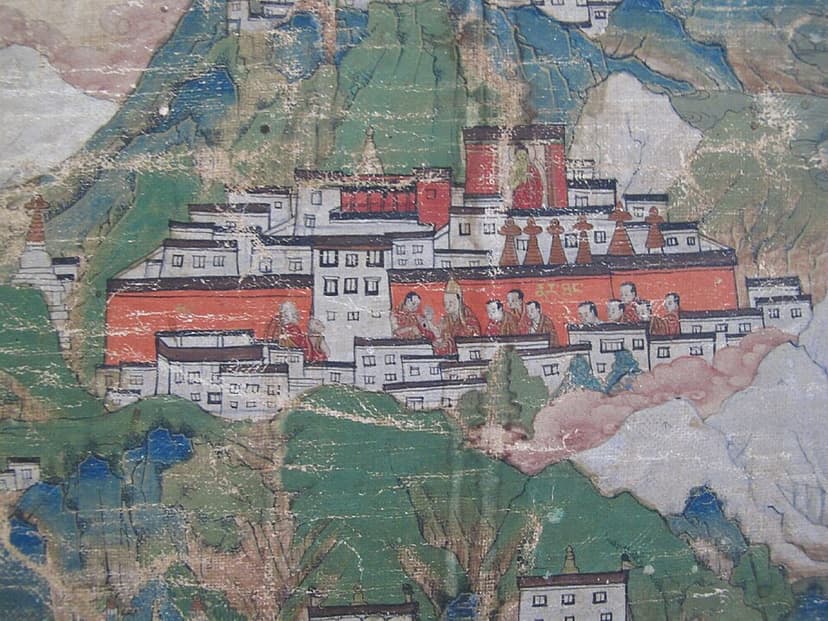
Narthang Monastery
Narthang Monastery, founded in 1153 by Tumtön Lodrö Drakpa, was a significant Kadam monastery and one of the four great monasteries of Tsang. It became renowned for its scriptural teaching and monastic discipline, and later as one of Tibet's three major printing centers. Although largely destroyed in 1966, efforts have been made to restore parts of the site, and a few monks have returned.

Dai Bosatsu Zendo Kongo-ji
Dai Bosatsu Zendo Kongo-ji is a Rinzai Zen monastery and retreat center situated in the Catskill Mountains of New York. Established in 1976 as part of the Zen Studies Society, it offers intensive spiritual training, daily services, and retreats. The monastery has faced controversy regarding its co-founder, Eido Shimano, leading to his resignation and a public statement from his claimed lineage sect disavowing him.