
Chuang Yen Monastery
Chuang Yen Monastery is a significant Buddhist temple located on 225 acres in Kent, New York. It is notable for housing the largest indoor statue of the Buddha Vairocana in the Western Hemisphere. The name "Chuang Yen" translates to "Majestically Adorned," reflecting its grandeur and purpose.
Key Facts
- ›Leased in 1975 by the Buddhist Association of the United States (BAUS) from Dr. C.T. Shen, with land formally donated in 1989.
- ›Much of the architecture is designed in the style of China's Tang dynasty.
- ›Features the largest indoor statue of Buddha Vairocana in the Western Hemisphere.
- ›Buildings include the Kuan Yin Hall, Dining Hall, Thousand Lotus Memorial Terrace, Tai Hsu Hall, Yin Kuang Hall, Woo Ju Memorial Library, and the Great Buddha Hall.
- ›The Great Buddha Hall's opening was attended by the 14th Dalai Lama.
- ›Offers regular prayer and meditation retreat programs, providing meals and accommodation for pilgrims.

Important Relationships
- Buddhist Association of the United States (BAUS)
- Dr. C.T. Shen
- 14th Dalai Lama
- Largest Indoor Statue of Buddha Vairocana In the Western Hemisphere
- Kuan Yin Hall
- Great Buddha Hall
- Woo Ju Memorial Library
- Groundbreaking Ceremony For the Kuan Yin Hall On May 23, 1981
- Opening of the Great Buddha Hall Presided Over By the 14th Dalai Lama
Tang Dynasty
About Chuang Yen Monastery
Chuang Yen Monastery is a prominent Buddhist temple situated on a 225-acre site in Kent, Putnam County, New York. The monastery is distinguished by its possession of the largest indoor statue of the Buddha Vairocana in the Western Hemisphere. The name "Chuang Yen" itself, derived from Chinese, translates to "Majestically Adorned," a fitting description for its significant spiritual and architectural presence.
History and Development
The establishment of Chuang Yen Monastery began in November 1975 when the Buddhist Association of the United States (BAUS) leased 125 acres of land in Putnam County. This lease was secured from Dr. C.T. Shen, a co-founder of BAUS. The lease was reportedly for a term of ninety-nine years with a nominal annual payment. In 1989, Dr. Shen formally donated the land to BAUS, solidifying the monastery's foundation. The architectural design of many of the temple buildings draws inspiration from China's Tang dynasty, with the designs conceptualized by architect Edward A Valeri RA. The construction commenced with a groundbreaking ceremony for the Kuan Yin Hall on May 23, 1981. Over subsequent years, several other key structures were added, including the Dining Hall, the Thousand Lotus Memorial Terrace, the Tai Hsu Hall, the Yin Kuang Hall, the Woo Ju Memorial Library, and the Great Buddha Hall. The inauguration of the Great Buddha Hall was a notable event, attended by the 14th Dalai Lama.
Leadership and Operations
Several influential figures have been instrumental in the leadership and development of Chuang Yen Monastery and the broader BAUS. Venerable Lok To, the first president of BAUS, is credited with laying the initial foundation for the association. Venerables Ming Chi and Xian Ming, along with Dr. Shen, took on the responsibility for the construction and service of the monastery. The monastery has a history of leadership transitions, with various individuals serving as Abbot of CYM (Chuang Yen Monastery) and President of BAUS over the years. Currently, Yung Hsin and Hong Zhen serve as Co-Abbesses, a role they have held since 2019.
Services and Visitor Experience
Chuang Yen Monastery actively engages with the Buddhist community by offering regular prayer and meditation retreat programs, which have been a consistent offering since at least 2006. For pilgrims attending these programs, the monastery provides essential services, including meals and accommodation. However, visitors participating in these retreats are expected to adhere to strict guidelines and follow a set schedule during their stay.
Source: Wikipedia ↗
Frequently Asked Questions
What is the meaning of "Chuang Yen"?
The name "Chuang Yen" is of Chinese origin and translates to "Majestically Adorned." This name reflects the temple's impressive and ornate presentation.
When was Chuang Yen Monastery established?
The Buddhist Association of the United States (BAUS) began developing the monastery in November 1975, when they leased the land. The land was formally donated to BAUS in 1989.
What significant religious figure is associated with the Great Buddha Hall's opening?
The opening of the Great Buddha Hall at Chuang Yen Monastery was presided over by the 14th Dalai Lama, a highly revered figure in Tibetan Buddhism.
Does Chuang Yen Monastery offer any programs for visitors?
Yes, the monastery regularly offers prayer and meditation retreat programs. They also provide meals and beds to pilgrims attending these programs, though strict guidelines are in place.
What architectural style is prominent at Chuang Yen Monastery?
A significant portion of the temple buildings at Chuang Yen Monastery are designed in the architectural style of China's Tang dynasty. The design was undertaken by architect Edward A Valeri RA.
Related Buddhist Temples
Deer Park Buddhist Center and Monastery
Deer Park Buddhist Center and Monastery in Oregon, Wisconsin, is a prominent center for Tibetan Buddhism, founded in 1975 by Geshe Lhundub Sopa. It serves as a monastic and teaching institution, upholding the Dalai Lama's tradition and attracting international students. The center is currently undertaking a significant temple expansion project to house Tibetan art and artifacts, expand educational programs, train new monks, and promote Tibetan freedom.

Berkeley Zen Center
Berkeley Zen Center (BZC), officially known as Shogakuji, is a Sōtō Zen Buddhist practice center in Berkeley, California, founded in 1967 as an affiliate of the San Francisco Zen Center. It serves as a residential center for priests, students, and lay practitioners, offering a full schedule of Zen services and teachings.
Beginner's Mind Temple
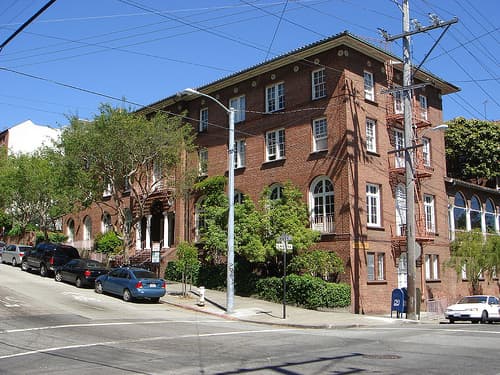
The San Francisco Zen Center (SFZC), established in 1962 by Shunryu Suzuki Roshi and his American students, is a prominent Sōtō Zen organization in the West. Its City Center, also known as Beginner's Mind Temple, is a key practice and retreat center within this network, which also includes Tassajara Zen Mountain Center and Green Gulch Farm Zen Center. SFZC has played a significant role in introducing and developing Zen Buddhism in the United States.