
Deer Park Buddhist Center and Monastery
Deer Park Buddhist Center and Monastery in Oregon, Wisconsin, is a prominent center for Tibetan Buddhism, founded in 1975 by Geshe Lhundub Sopa. It serves as a monastic and teaching institution, upholding the Dalai Lama's tradition and attracting international students. The center is currently undertaking a significant temple expansion project to house Tibetan art and artifacts, expand educational programs, train new monks, and promote Tibetan freedom.
Key Facts
- ›Founded in 1975 by Geshe Lhundub Sopa, a former professor at the University of Wisconsin–Madison.
- ›It is the only full-scale monastic and teaching center in the Midwest upholding the Dalai Lama's tradition.
- ›Hosted the first Kalachakra Initiation in the Western world, performed by the Dalai Lama in 1981.
- ›A stupa was erected in 1982 to commemorate the 1981 Kalachakra Initiation.
- ›Currently constructing a new $2.7 million temple project.
- ›Facilitates an ongoing relationship between the Dalai Lama and the University of Wisconsin–Madison.
Important Relationships
- Geshe Lhundub Sopa
- Dalai Lama
- University of Wisconsin–Madison
- Jeffrey Hopkins
- John Makransky
- Stupa Commemorating the 1981 Kalachakra Initiation
- Extensive Collection of Tibetan Art and Artifacts
- First Kalachakra Initiation In the Western World Performed By the Dalai Lama
Tibetan
About Deer Park Buddhist Center and Monastery
The Deer Park Buddhist Center and Monastery, located in Oregon, Wisconsin, is a significant institution dedicated to the practice and study of Tibetan Buddhism in the United States. Founded in 1975 by Geshe Lhundub Sopa, it emerged from students' requests for instruction outside the formal academic setting of the University of Wisconsin–Madison, where Geshe Sopa was a tenured professor of Buddhist philosophy, language, and culture for three decades.
Historical Context and Significance
Deer Park holds a notable place in the history of Tibetan Buddhism in the West. In 1981, it hosted the first Kalachakra Initiation performed by the Dalai Lama in the Western world, an event of considerable religious importance that is commemorated by a stupa erected in 1982. Geshe Sopa's tenure at the University of Wisconsin–Madison was instrumental, as he trained many of the first generation of respected Buddhist scholars and translators in the United States, fostering a deeper understanding of Buddhist traditions. The center has also facilitated an ongoing relationship between the Dalai Lama and the university, with the Dalai Lama having visited the campus multiple times and received an honorary doctoral degree.
Current Developments and Mission
Today, Deer Park Buddhist Center and Monastery continues to be the sole full-scale monastic and teaching center in the Midwest upholding the Dalai Lama's tradition. It attracts students from across the globe to its annual programs. The center is currently engaged in a substantial development project, a new $2.7 million temple. This ambitious undertaking aims to create a space for an extensive collection of Tibetan art and artifacts, enhance capacity for group meetings and educational sessions, support the ongoing training of new monks to expand Tibetan Buddhism in the U.S., and continue advocacy for Tibetan freedom from China. Restoration work on the original open-air pavilion, which housed the historic Kalachakra Initiation, is also part of this project.
Source: Wikipedia ↗
Frequently Asked Questions
Who founded the Deer Park Buddhist Center and Monastery?
The Deer Park Buddhist Center and Monastery was founded in 1975 by Geshe Lhundub Sopa. Geshe Sopa was a significant figure who taught Buddhist philosophy, language, and culture at the University of Wisconsin–Madison for 30 years.
What is the significance of the Kalachakra Initiation at Deer Park?
Deer Park hosted the first Kalachakra Initiation performed by the Dalai Lama in the Western world in 1981. This event is commemorated by a stupa erected near the current temple in 1982.
What are the current development plans for Deer Park?
The Deer Park Corp. is building a new $2.7 million temple project. This expansion aims to house Tibetan art and artifacts, increase capacity for educational sessions, train new monks, and promote Tibetan freedom.
What makes Deer Park unique in the Midwest?
Deer Park remains the only full-scale monastic and teaching center in the Midwest that upholds the Dalai Lama's tradition. It attracts students from around the world for its annual programs.
What is Geshe Lhundub Sopa's connection to the University of Wisconsin–Madison?
Geshe Lhundub Sopa was the first Tibetan tenured professor at an American university, teaching at the University of Wisconsin–Madison for 30 years. He trained many of the United States' first generation of respected Buddhist scholars and translators there, and has facilitated an ongoing relationship between the Dalai Lama and the university.
Related Buddhist Temples
Chenrezig Tibetan Buddhist Center of Philadelphia
The Chenrezig Tibetan Buddhist Center of Philadelphia (CTBC) is a Tibetan Buddhist community established in 1989 by Lama Losang Samten. The center serves as a place for the study and cultivation of loving-kindness and compassion, offering a non-sectarian and inclusive environment for practitioners. It is named and was blessed by His Holiness the Dalai Lama, reflecting its deep connection to Tibetan Buddhism.

Amarbayasgalant Monastery
Amarbayasgalant Monastery is one of Mongolia's three largest Buddhist monastic centers, established in the early 18th century. It was built to house the remains of Zanabazar, the first spiritual head of Tibetan Buddhism for the Khalkha in Outer Mongolia, and reflects a unified Chinese architectural style with Mongol and Tibetan influences.
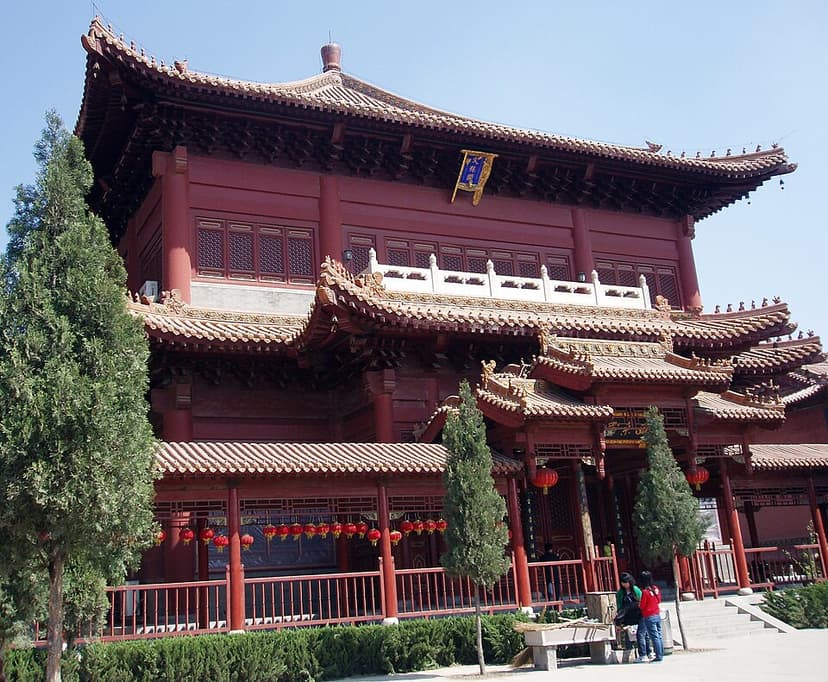
Bailin Temple (Beijing)
Bailin Temple, meaning 'Monastery of the Cypress Grove,' is a significant 14th-century Tibetan Buddhist temple located in Beijing, China. Originally constructed in 1347 during the Yuan Dynasty, it served as a prominent center for the Sakya school before experiencing periods of disrepair and subsequent renovations under various emperors. The temple holds a complete set of printing blocks for the Tripitaka, carved in the early 18th century, which are considered a valuable cultural and religious relic.