
Chenrezig Tibetan Buddhist Center of Philadelphia
The Chenrezig Tibetan Buddhist Center of Philadelphia (CTBC) is a Tibetan Buddhist community established in 1989 by Lama Losang Samten. The center serves as a place for the study and cultivation of loving-kindness and compassion, offering a non-sectarian and inclusive environment for practitioners. It is named and was blessed by His Holiness the Dalai Lama, reflecting its deep connection to Tibetan Buddhism.
Key Facts
- ›Founded in 1989 by Lama Losang Samten, a Tibetan Buddhist monk and sand mandala master.
- ›Located at 954 N. Marshall Street in Philadelphia, Pennsylvania, in the Northern Liberties neighborhood.
- ›The center was named and blessed by his Holiness the Dalai Lama.
- ›Lama Losang Samten previously served as the personal assistant to his Holiness the 14th Dalai Lama.
- ›The CTBC is known for its diverse and inclusive community, offering teachings accessible to people of various backgrounds.
- ›It provides various programs including Sunday Sangha, meditation, and Dharma study groups, both in-person and virtually.
Important Relationships
- His Holiness the 14th Dalai Lama
- Namgyal Monastery
- University of Pennsylvania Museum of Archaeology and Anthropology
- Sand Mandalas Created By Lama Losang Samten
- Diverse and Inclusive Community of Practitioners
- Establishment of the Center In 1989
- Blessing By His Holiness the Dalai Lama
- Various Nomadic Periods and Searches For A Permanent Home Before Settling At the Current Location In 2017
About Chenrezig Tibetan Buddhist Center of Philadelphia
The Chenrezig Tibetan Buddhist Center of Philadelphia (CTBC) is a vibrant Tibetan Buddhist community located at 954 N. Marshall Street in Philadelphia, Pennsylvania. Founded in 1989 by Lama Losang Samten, a respected Tibetan Buddhist monk and sand mandala master, the center has evolved through various locations before establishing its current home in the Northern Liberties neighborhood.
History and Establishment
Lama Losang Samten, who previously served as the personal assistant to His Holiness the 14th Dalai Lama, was instrumental in bringing Tibetan Buddhist teachings and practices to Philadelphia. After being sent to the Western Hemisphere to create sand mandalas, he was invited to Philadelphia to construct one at the University of Pennsylvania Museum of Archaeology and Anthropology. In 1989, he began teaching Tibetan Buddhism, language, and culture at the museum. Following a petition from his students to the Dalai Lama, Lama Losang Samten was appointed as a permanent teacher, leading to the establishment of the Chenrezig Tibetan Buddhist Center.
The center's journey to a permanent location involved several phases, including rental spaces and a property in Upper Darby that faced challenges with accessibility and zoning. After periods of nomadic activity, the sangha eventually found a semi-permanent home in a converted industrial building before a fire necessitated another move. In 2017, a modest brick building was purchased at its current Marshall Street address, a site with a history as a market corridor and various commercial establishments.
Lama Losang Samten's Approach
Lama Losang Samten's teaching philosophy is deeply rooted in making Buddhist principles accessible and relatable. He draws parallels from various religious traditions, including Christianity, Islam, Hinduism, and Judaism, to connect with a diverse student body. His approach emphasizes the original words of the Buddha and encourages practitioners to engage with the community while remaining open to learning from different teachers and traditions. He sees himself as a caretaker, actively involved in the physical upkeep of the center, mirroring his early monastic life.
Programs and Facilities
The CTBC offers a range of programs designed to foster spiritual growth and community connection. Weekly offerings include Sunday Sangha, led by Lama Losang Samten or senior students, which can be joined in person or virtually. Other recurring programs include a Meditation and Dharma Study Group held via Zoom and periodic Heart Sutra and Medicine Buddha practices. The center is characterized as a non-sectarian and inclusive community.
The current facility, a renovated brick building, serves as a hub for these activities. The center has also hosted numerous distinguished visiting teachers and practitioners of Buddhism over the years, enriching its offerings and fostering connections within the wider Buddhist world. The center was named and blessed by His Holiness the Dalai Lama, underscoring its significance within the Tibetan Buddhist tradition.
Source: Wikipedia ↗
Frequently Asked Questions
When was the Chenrezig Tibetan Buddhist Center of Philadelphia founded?
The Chenrezig Tibetan Buddhist Center of Philadelphia was founded in 1989. It was established by Lama Losang Samten and a group of his students.
Who is Lama Losang Samten?
Lama Losang Samten is the Spiritual Director of the Chenrezig Tibetan Buddhist Center of Philadelphia. He is a Tibetan Buddhist monk, a master of sand mandala creation, and a former personal assistant to His Holiness the 14th Dalai Lama.
What is the purpose of the Chenrezig Tibetan Buddhist Center of Philadelphia?
The center's purpose is to provide a place for the study and cultivation of loving-kindness and compassion. It aims to be a diverse and inclusive community for Buddhist practitioners.
What kind of programs does the center offer?
The center offers weekly programs such as Sunday Sangha, Meditation and Dharma Study Group, and Heart Sutra Practice. They also hold periodic teachings by Lama Samten and visiting teachers.
Where is the Chenrezig Tibetan Buddhist Center of Philadelphia located?
The center is located at 954 N. Marshall Street in Philadelphia, Pennsylvania, within the Northern Liberties neighborhood.
Related Buddhist Temples
Deer Park Buddhist Center and Monastery
Deer Park Buddhist Center and Monastery in Oregon, Wisconsin, is a prominent center for Tibetan Buddhism, founded in 1975 by Geshe Lhundub Sopa. It serves as a monastic and teaching institution, upholding the Dalai Lama's tradition and attracting international students. The center is currently undertaking a significant temple expansion project to house Tibetan art and artifacts, expand educational programs, train new monks, and promote Tibetan freedom.
Bailin Temple (Beijing)
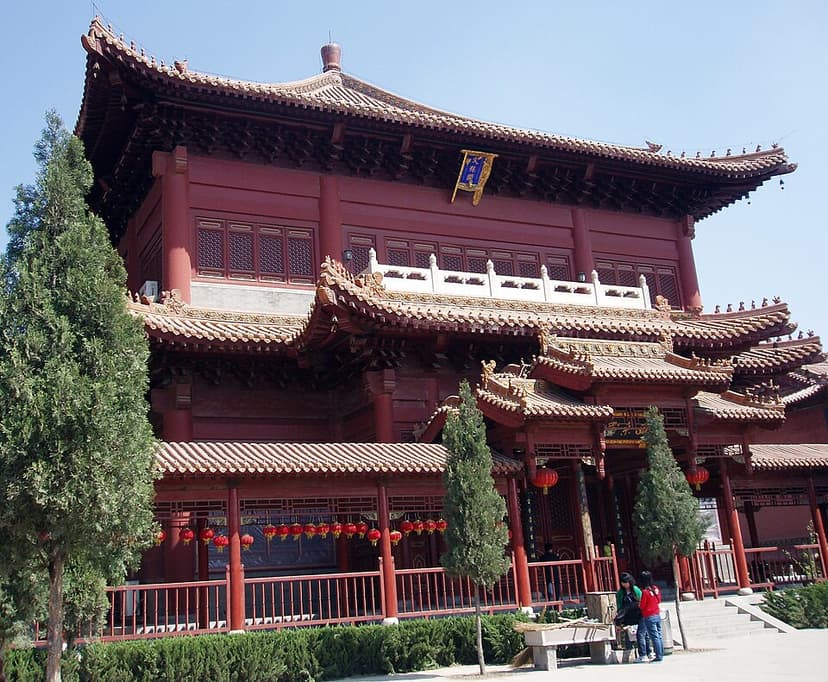
Bailin Temple, meaning 'Monastery of the Cypress Grove,' is a significant 14th-century Tibetan Buddhist temple located in Beijing, China. Originally constructed in 1347 during the Yuan Dynasty, it served as a prominent center for the Sakya school before experiencing periods of disrepair and subsequent renovations under various emperors. The temple holds a complete set of printing blocks for the Tripitaka, carved in the early 18th century, which are considered a valuable cultural and religious relic.

Amarbayasgalant Monastery
Amarbayasgalant Monastery is one of Mongolia's three largest Buddhist monastic centers, established in the early 18th century. It was built to house the remains of Zanabazar, the first spiritual head of Tibetan Buddhism for the Khalkha in Outer Mongolia, and reflects a unified Chinese architectural style with Mongol and Tibetan influences.