
Beginner's Mind Temple
The San Francisco Zen Center (SFZC), established in 1962 by Shunryu Suzuki Roshi and his American students, is a prominent Sōtō Zen organization in the West. Its City Center, also known as Beginner's Mind Temple, is a key practice and retreat center within this network, which also includes Tassajara Zen Mountain Center and Green Gulch Farm Zen Center. SFZC has played a significant role in introducing and developing Zen Buddhism in the United States.
Key Facts
- ›Founded in 1962 as the San Francisco Zen Center (SFZC) by Shunryu Suzuki Roshi and American students.
- ›City Center, also known as Beginner's Mind Temple, is one of SFZC's primary practice and retreat locations.
- ›SFZC is the largest Sōtō Zen organization in the Western world.
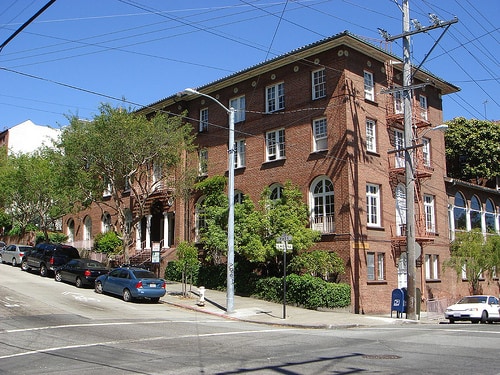
- ›The City Center building was designed by Julia Morgan and originally served as the Emanu-el Residence Club.
- ›SFZC established the Zen Hospice Project in 1987, a volunteer program providing end-of-life care.
- ›The organization has faced controversies, including the resignation of its first abbot, Richard Baker, in 1984.
Important Relationships
- Shunryu Suzuki Roshi
- San Francisco Zen Center
- Tassajara Zen Mountain Center
- Green Gulch Farm Zen Center
- Julia Morgan
Julia Morgan-Designed Building, Originally the Emanu-El Residence Club, Zen Hospice Project Operations
- Incorporation of San Francisco Zen Center In 1962
- Move To the Current City Center Building On Page Street
- Establishment of the Zen Hospice Project In 1987
Eclectic
About Beginner's Mind Temple
Beginner's Mind Temple (City Center)
Beginner's Mind Temple, also known as City Center, is a significant Buddhist practice and retreat center within the network of the San Francisco Zen Center (SFZC). The SFZC was incorporated in 1962 by Shunryu Suzuki Roshi, a Japanese Sōtō Zen priest, and his American students, establishing itself as the largest Sōtō Zen organization in the Western world. Beginner's Mind Temple serves as a central hub for the sangha, offering a space for meditation, study, and community engagement.
History and Context
Shunryu Suzuki arrived in San Francisco in 1959 to lead the Sokoji temple. His accessible English and teachings attracted a growing number of non-Japanese American practitioners, particularly during the cultural shifts of the 1960s. This expansion led to the formation of a separate group that eventually incorporated as the San Francisco Zen Center. The City Center building itself, located at 300 Page Street, was designed by the notable architect Julia Morgan and was originally built in 1922 as the Emanu-el Residence Club. Its design, with a blend of private and public spaces, proved adaptable to the needs of a Zen practice center, offering meditation halls and communal areas on lower levels and residential quarters above.
Role and Significance
As a core component of the SFZC, Beginner's Mind Temple embodies the center's mission to foster Zen practice and its integration into daily life. The organization has expanded beyond its urban centers to include Tassajara Zen Mountain Center, the first Zen Buddhist monastery in the United States, and Green Gulch Farm Zen Center. A notable initiative stemming from SFZC is the Zen Hospice Project, founded in 1987, which provides compassionate end-of-life care and support, demonstrating a commitment to Buddhist principles of compassion in action. Despite facing internal controversies over the years, SFZC, with Beginner's Mind Temple at its heart, continues to be a vital institution in the landscape of American Buddhism.
Source: Wikipedia ↗
Frequently Asked Questions
What is Beginner's Mind Temple?
Beginner's Mind Temple, also referred to as City Center, is the main urban practice and retreat center of the San Francisco Zen Center (SFZC). It serves as a hub for Zen Buddhist practice and community life in San Francisco.
Who founded the San Francisco Zen Center?
The San Francisco Zen Center was incorporated in 1962 by Shunryu Suzuki Roshi, a Japanese Sōtō Zen priest, along with a group of his American students. Suzuki had come to San Francisco in 1959 to serve as head priest of Sokoji temple.
What is the architectural significance of the City Center building?
The City Center building, which houses Beginner's Mind Temple, was designed by the renowned architect Julia Morgan. It was originally constructed in 1922 as the Emanu-el Residence Club for Jewish women, featuring a design that facilitated both private residential spaces and public communal areas.
What is the Zen Hospice Project?
The Zen Hospice Project is a volunteer hospice program founded by the San Francisco Zen Center in 1987. It offers compassionate, non-sectarian, non-medical care to individuals facing end-of-life, operating out of a guest house on Page Street and providing training for volunteers who assist patients in hospice and palliative care wards.
What role did Shunryu Suzuki play in Zen Buddhism in the West?
Shunryu Suzuki played a pivotal role in establishing Sōtō Zen Buddhism in the United States. His teachings and the organization he founded, SFZC, made Zen accessible to a wider Western audience, leading to the formation of numerous practice centers.
Related Buddhist Temples

Daifukuji Soto Zen Mission
Daifukuji Soto Zen Mission is a historic Zen Buddhist temple located in Honalo, Hawaii, established in 1914. It served as a vital center for the Japanese immigrant community in the Kona area during the 20th century, blending traditional Japanese architecture with local building methods. The temple is significant for its historical role, its preservation of Buddhist figures, and its recognition on national and state historic registers.

Berkeley Zen Center
Berkeley Zen Center (BZC), officially known as Shogakuji, is a Sōtō Zen Buddhist practice center in Berkeley, California, founded in 1967 as an affiliate of the San Francisco Zen Center. It serves as a residential center for priests, students, and lay practitioners, offering a full schedule of Zen services and teachings.

Byodo-In Temple
The Byodo-In Temple in Hawaiʻi is a non-denominational Buddhist temple dedicated in 1968 to commemorate the centennial of Japanese immigration to the islands. It is a replica of a 900-year-old temple in Kyoto, Japan, and serves as a significant cultural and spiritual landmark, welcoming visitors of all faiths.