
Narthang Monastery
Buddhist·Tibet·Partially restored, ruins·12th century
Narthang Monastery, founded in 1153 by Tumtön Lodrö Drakpa, was a significant Kadam monastery and one of the four great monasteries of Tsang. It became renowned for its scriptural teaching and monastic discipline, and later as one of Tibet's three major printing centers. Although largely destroyed in 1966, efforts have been made to restore parts of the site, and a few monks have returned.
Key Facts
- ›Founded in 1153 by Tumtön Lodrö Drakpa.
- ›Was the fourth great monastery of Tsang.
- ›Became Tibet's oldest printing center after the 14th century.
- ›Was assimilated as a branch of Tashi Lhunpo Monastery.
- ›Printed the Kangyur and Tengyur scriptures until 1959.
- ›Most buildings were destroyed by the Chinese in 1966.
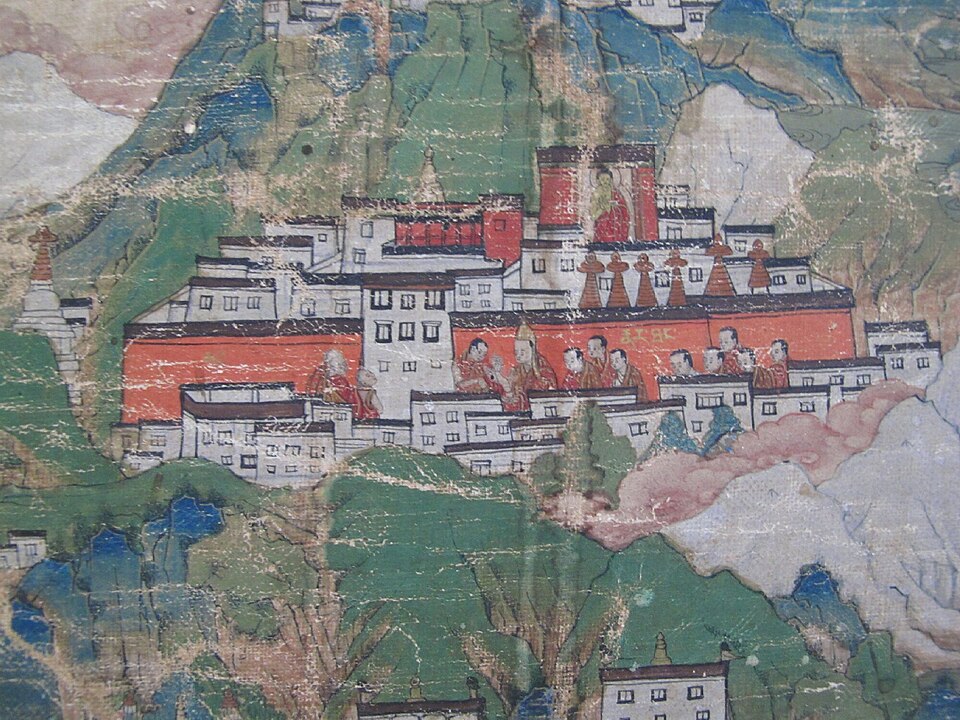
Mongolian Styled
Printing Establishment, Engraved Wooden Plates For Printing, Mud-Brick Foundations, Mongolian Styled High-Fortress Walls
TumtöN Lodrö Drakpa, Sharawa Yonten Drak, Fourth Panchen Lama, Fifth Dalai Lama, SöNam Rapten, GüShi Khan
- Founded In 1153
- Became One of the Four Great Monasteries of Tsang
- Gained Eminence As A Printing Center After the 14th Century
- Assimilated As A Branch of Tashi Lhunpo Monastery
- Printing of Kangyur and Tengyur Continued Until 1959
- Main Buildings Razed To the Ground By the Chinese In 1966
About Narthang Monastery
Narthang Monastery is a historically significant Buddhist monastery situated 15 kilometers west of Shigatse in Tibet. Founded in 1153 by Tumtön Lodrö Drakpa, a student of Sharawa Yonten Drak, it was initially an influential Kadam monastery and recognized as the fourth great monastery of the Tsang region, alongside Shalu, Sakya, and Tashilhunpo.
History and Significance
The monastery first gained renown for its rigorous scriptural teachings and strict monastic discipline. Following the 14th century, Narthang achieved even greater eminence as it became the oldest of Tibet's three major printing centers for Buddhist scriptures, alongside the Potala and Derge. The Kangyur and Tengyur, vital Buddhist texts, were printed here. In later years, with support from the fourth Panchen Lama, the fifth Dalai Lama, Sönam Rapten, and Güshi Khan, Narthang was assimilated as a branch of Tashi Lhunpo Monastery. The printing of scriptures continued until 1959.
Destruction and Restoration
Tragically, Narthang's five main buildings and its large chanting hall were destroyed in 1966 by Chinese forces. These structures had contained priceless 14th-century murals, potentially created by the artist scholars from nearby Shalu Monastery. Today, only the mud-brick foundations of the main buildings are discernible, although sections of the Mongolian-styled high-fortress walls still stand. A few monks have returned to the site, and several minor buildings have undergone restoration, indicating a gradual revival of its presence.
Source: Wikipedia ↗
Frequently Asked Questions
When was Narthang Monastery founded?
Narthang Monastery was founded in 1153 by Tumtön Lodrö Drakpa, a student of Sharawa Yonten Drak.
What was Narthang Monastery known for?
Initially, Narthang was famous for its scriptural teaching and monastic discipline. After the fourteenth century, it gained prominence as one of Tibet's three major printing centers for Buddhist scriptures.
What is the current state of Narthang Monastery?
The monastery's main buildings were destroyed in 1966. Today, only the mud-brick foundations are visible, though parts of its fortress walls remain. A few monks have returned, and some minor buildings have been restored.
Which printing centers were considered the three great ones in Tibet?
The text mentions Narthang as the oldest of Tibet's three great printing centers, with the other two being the Potala and Derge.
Who was involved in assimilating Narthang Monastery?
The fourth Panchen Lama, the fifth Dalai Lama, Sönam Rapten, and Güshi Khan were involved in assimilating Narthang Monastery as a branch of Tashi Lhunpo Monastery.
Related Monasteries

Chuang Yen Monastery
Chuang Yen Monastery, meaning "Majestically Adorned," is a significant Buddhist temple located on 225 acres in Kent, New York. Established through a long-term lease and subsequent donation of land to the Buddhist Association of the United States, it is renowned for housing the largest indoor Buddha statue in the Western Hemisphere. The monastery's architecture largely reflects the Tang dynasty style of China and has been developed with various halls and facilities since its groundbreaking in 1981.

Lhuntse Dzong
Lhuntse Dzong is a significant Buddhist monastery and dzong located in eastern Bhutan, perched on a spur overlooking the Kuri Chhu valley. Originally known as Kurtoed, it is the ancestral home of Bhutan's royal family, the House of Wangchuck. The monastery was first established in 1543 and later developed into a formal dzong in 1654, undergoing several restorations.

Drigung
Drigung Thil Monastery, established in 1179, is a significant monastic seat of the Drikung Kagyu tradition of Tibetan Buddhism. Historically, it held considerable religious and political influence until its destruction by Mongol forces in 1290. Though rebuilt, it primarily functioned as a center for meditative studies and was again severely damaged after 1959, with partial reconstruction commencing in 1983. As of 2015, it housed approximately 250 resident monks and remains a site of pilgrimage.