
Lhuntse Dzong
Lhuntse Dzong is a significant Buddhist monastery and dzong located in eastern Bhutan, perched on a spur overlooking the Kuri Chhu valley. Originally known as Kurtoed, it is the ancestral home of Bhutan's royal family, the House of Wangchuck. The monastery was first established in 1543 and later developed into a formal dzong in 1654, undergoing several restorations.
Key Facts
- ›Ancestral home of Bhutan's House of Wangchuck.
- ›Founded by Khedrup Kuenga Wangpo and later established as a monastery by Pema Lingpa's son, Kuenga Wanpo, in 1543.
- ›Formal dzong construction by Trongsa Penlop Minjur Tenpa in 1654 after a battle.
- ›Underwent restoration in 1962 and again between 1972 and 1974.
- ›Currently houses 100 monks.
- ›Suffered significant damage from a 2009 earthquake.

- Five Temples, Including Those Dedicated To Padmasambhava, MahāKāLa, AmitāYus, and AvalokiteśVara.
- Kunre .
Kurtoed, Kurtoed Lhuentse Phodrang, Lhuentse Rinchentse
Khedrup Kuenga Wangpo, TertöN Pema Lingpa, Minjur Tenpa, Dasho Jigme Namgyal
- Construction of Formal Dzong After A Battle In 1654.
- Restoration In 1962.
- Restoration Between 1972 and 1974.
- Suffered Damage In the 2009 Earthquake.
About Lhuntse Dzong
Lhuntse Dzong is a prominent dzong and Buddhist monastery situated in the Lhuentse District of eastern Bhutan. Perched on a spur overlooking the Kuri Chhu valley, it holds deep historical and cultural significance, particularly as the ancestral home of Bhutan's ruling House of Wangchuck. Its unique location at the end of a narrow valley adds to its picturesque setting.
History and Establishment
The site's origins are linked to legend, with Khedrup Kuenga Wangpo, son of Tertön Pema Lingpa, meditating there. The monastery was initially founded by Pema Lingpa's son, Kuenga Wanpo, in 1543. The formal dzong structure, named Lhuentse Rinchentse, was built later in 1654 by the Trongsa penlop, Minjur Tenpa, following a military victory. The dzong has undergone restoration work, notably in 1962 and again between 1972 and 1974. Its connection to the Wangchuck Dynasty underscores its importance in Bhutanese history.
Architecture and Contents
The dzong complex comprises five temples. Three of these temples are located within the central tower and are dedicated to the revered Buddhist master Padmasambhava. Additionally, the dzong houses a Gonkhang, a shrine dedicated to the protective deity Mahākāla, and a temple devoted to Amitāyus, the Buddha of Infinite Life. The ground floor includes a temple honoring Avalokiteśvara. The Kunre, serving as the assembly hall for the monks, is situated on the upper floor.
Recent History
In 2009, Lhuntse Dzong suffered considerable damage as a result of a 6.1 magnitude earthquake that affected eastern Bhutan. This event impacted numerous other monasteries in the region as well. Despite the damage, the monastery continues to be an active monastic center, currently home to 100 monks.
Source: Wikipedia ↗
Frequently Asked Questions
When was Lhuntse Dzong founded?
The monastery was originally established in 1543 by Kuenga Wanpo. However, the formal dzong structure was built later in 1654 by Trongsa Penlop Minjur Tenpa.
What is the historical significance of Lhuntse Dzong?
Lhuntse Dzong holds historical importance as the ancestral home of the Wangchuck Dynasty, the royal family of Bhutan. It was also known as Kurtoed and was the birth place of Dasho Jigme Namgyal in 1825.
What is the architectural style of Lhuntse Dzong?
The dzong features multiple temples, with three located in the central tower dedicated to Padmasambhava. It also includes a Gonkhang dedicated to Mahākāla and temples for Amitāyus and Avalokiteśvara.
What happened to Lhuntse Dzong in 2009?
Lhuntse Dzong sustained serious damage during an earthquake that struck eastern Bhutan on September 21, 2009. The earthquake measured 6.1 on the Richter scale.
What is Lhuentse District known for besides the Dzong?
Lhuentse District, and specifically Khoma village near the Dzong, is renowned for its intricate woven silk cloth known as Kishuthara. Weaving is a prominent handicraft practiced by women in the region.
Related Monasteries

Chuang Yen Monastery
Chuang Yen Monastery, meaning "Majestically Adorned," is a significant Buddhist temple located on 225 acres in Kent, New York. Established through a long-term lease and subsequent donation of land to the Buddhist Association of the United States, it is renowned for housing the largest indoor Buddha statue in the Western Hemisphere. The monastery's architecture largely reflects the Tang dynasty style of China and has been developed with various halls and facilities since its groundbreaking in 1981.
Narthang Monastery
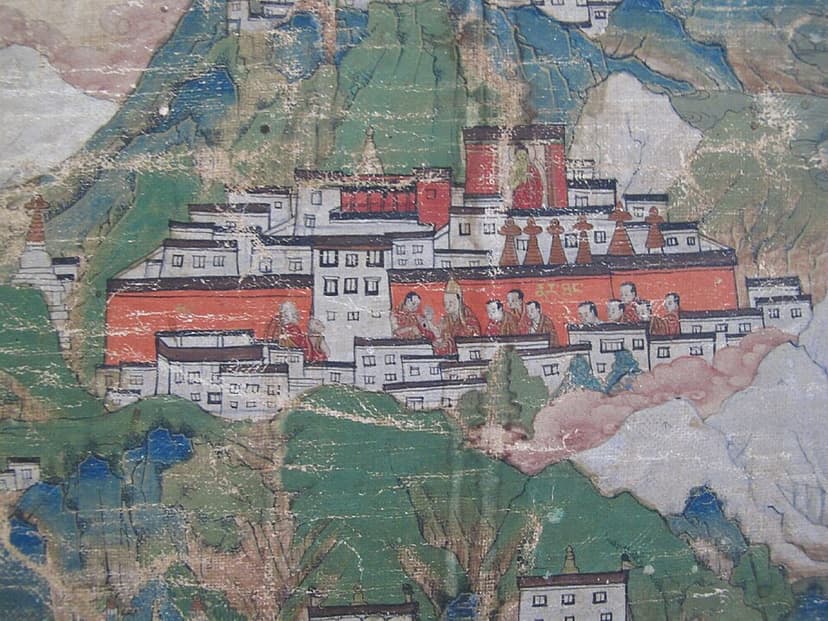
Narthang Monastery, founded in 1153 by Tumtön Lodrö Drakpa, was a significant Kadam monastery and one of the four great monasteries of Tsang. It became renowned for its scriptural teaching and monastic discipline, and later as one of Tibet's three major printing centers. Although largely destroyed in 1966, efforts have been made to restore parts of the site, and a few monks have returned.
Tamzhing Monastery
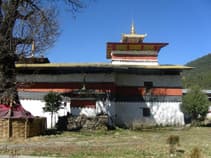
Tamzhing Monastery, established in 1501 by the Bhutanese tertön Pema Lingpa, is a significant Nyingma gompa in central Bhutan. It is renowned for its direct connection to Pema Lingpa and his lineage, serving as the current seat of his speech incarnation, Sungtrul Rinpoche. The monastery is also recognized as the origin of sacred dances performed at Tsechus throughout Bhutan and is celebrated for its early wall paintings, including a portrait of its founder.