
Tamzhing Monastery
Nyingma·Bhutan·active·16th century
Tamzhing Monastery, established in 1501 by the Bhutanese tertön Pema Lingpa, is a significant Nyingma gompa in central Bhutan. It is renowned for its direct connection to Pema Lingpa and his lineage, serving as the current seat of his speech incarnation, Sungtrul Rinpoche. The monastery is also recognized as the origin of sacred dances performed at Tsechus throughout Bhutan and is celebrated for its early wall paintings, including a portrait of its founder.
Key Facts
- ›Founded in 1501 by the Bhutanese Saint Pema Lingpa.
- ›Home to over 95 Buddhist monks, many of whom are orphans or from impoverished families.
- ›Features some of the earliest wall paintings in Bhutan, including a portrait of Pema Lingpa.
- ›Is the original home of sacred dances celebrated at traditional Tsechu festivals across Bhutan.
- ›Submitted for inscription on the UNESCO World Heritage Sites list in March 2012 and is currently on the tentative list.
- ›Faces financial challenges due to its lack of government support and endowment, operating at a loss.
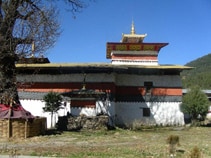
- Wall Paintings Including Founder's Portrait
- Origin of Sacred Bhutanese Dances
- Direct Connection To Pema Lingpa and His Tulkus
Tamzhing LhüNdrup Monastery, Tamzhing Gompa
Pema Lingpa, Sungtrul Rinpoche, Thinley Kuenchap, Lopen Tseten, Lopen Kharma
- Founded By Pema Lingpa In 1501
- Descendants Cared For the Temple After Pema Lingpa's Death In 1521
- Re-Establishment of the Lhalung Monk Body At Tamzhing In 1960
- Submission For Unesco World Heritage Site Tentative List In 2012
About Tamzhing Monastery
Tamzhing Lhündrup Monastery, located in the Bumthang District of central Bhutan, is a prominent Nyingma gompa with deep historical and cultural significance. Founded in 1501 by the revered Bhutanese tertön and saint Pema Lingpa, the monastery is distinguished by its direct connection to him and his lineage of reincarnate lamas, known as tulkus. Today, it serves as the seat of Sungtrul Rinpoche, who is recognized as the current speech incarnation of Pema Lingpa.
History and Significance
The temple at Tamzhing was constructed by Pema Lingpa, and its coeval wall paintings, which include a portrait of the founder, are among the earliest of their kind in Bhutan. Following Pema Lingpa's death in the temple in 1521, his descendants assumed responsibility for its upkeep. However, over many years, Tamzhing fell into disrepair and was largely neglected, with its courtyard even being used as a granary. The monastery's current community was re-established in 1960 when a group of monks, led by Thinley Kuenchap, arrived from Lhalung to revive the monk body. This community has since grown from a small group to over 95 monks.
Cultural Contributions and Current Status
Tamzhing Monastery is particularly renowned as the origin of sacred dances that are integral to traditional Tsechu festivals celebrated throughout Bhutan. Joseph Houseal, director of Core of Culture Dance Preservation, highlights these dances as the "living tradition of their founding identity" and a means by which Pema Lingpa sought to teach Buddhism. The monastery's core missions involve teaching the Dharma, performing religious services, and educating young monks, many of whom are orphans or from impoverished backgrounds. Despite its cultural importance, Tamzhing faces considerable financial challenges, as it is not government-supported and operates at a loss, necessitating efforts to maintain its ancient structures while meeting the needs of its community. In recognition of its unique heritage, Tamzhing Monastery was submitted for inscription on the UNESCO World Heritage Sites list in March 2012 and is currently on the tentative list.
Source: Wikipedia ↗
Frequently Asked Questions
When was Tamzhing Monastery founded?
Tamzhing Monastery was founded in 1501 by the Bhutanese tertön and saint, Pema Lingpa. He built the temple himself, and it has a direct connection to his lineage.
What is Tamzhing Monastery known for?
Tamzhing Monastery is known for its direct connection to Pema Lingpa and his incarnations, its early wall paintings, and for being the original home of sacred Bhutanese dances performed at Tsechu festivals. It is also recognized as the seat of Sungtrul Rinpoche, the current speech incarnation of Pema Lingpa.
What is the current status of Tamzhing Monastery?
Tamzhing Monastery is an active Nyingma gompa that supports a community of over 95 Buddhist monks. It faces financial challenges as it is not government-supported and operates at a loss, while also working to maintain its ancient structures.
Is Tamzhing Monastery a UNESCO World Heritage Site?
Tamzhing Monastery was submitted for inscription on the list of World Heritage Sites in March 2012. It currently resides on the tentative list, indicating it has been nominated but not yet officially inscribed.
What role does Tamzhing Monastery play in Bhutanese culture?
Tamzhing Monastery is the origin of sacred dances that are a vital part of traditional Tsechu festivals throughout Bhutan. These dances were revealed by Pema Lingpa as a means to teach Buddhism, making Tamzhing a central repository of this living tradition.
Related Monasteries

Lhuntse Dzong
Lhuntse Dzong is a significant Buddhist monastery and dzong located in eastern Bhutan, perched on a spur overlooking the Kuri Chhu valley. Originally known as Kurtoed, it is the ancestral home of Bhutan's royal family, the House of Wangchuck. The monastery was first established in 1543 and later developed into a formal dzong in 1654, undergoing several restorations.

Chagri Monastery
Chagri Dorjeden Monastery, also known as Cheri Monastery, is a significant Buddhist monastery in Bhutan, established in 1620 by Ngawang Namgyal, the founder of the Bhutanese state. It is a major teaching and retreat center for the Southern Drukpa Lineage and holds historical importance as the first monastery founded by Ngawang Namgyal in Bhutan, where he also established the first Drukpa monastic order.

Punakha Dzong
The Punakha Dzong, also known as Pungthang Dewa Chhenbi Phodrang, is a majestic fortress in Bhutan, constructed between 1637 and 1638 by Ngawang Namgyal. It served as the administrative and governmental seat of Bhutan until 1955 and has been the site of royal coronations since 1907. The dzong is renowned for its strategic location between two rivers, its significant religious relics, and its role as the winter capital for the Bhutanese clergy.