
Tamzhing Monastery
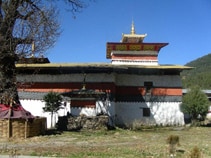
Tamzhing Monastery, officially Tamzhing Lhündrup Monastery, is a significant Nyingma gompa located in the Bumthang District of central Bhutan. It is renowned for its direct historical and spiritual connection to the Bhutanese tertön and saint Pema Lingpa, who founded the temple in 1501. The monastery continues to be the seat of Sungtrul Rinpoche, the current speech incarnation of Pema Lingpa, and plays a vital role in preserving Bhutanese Buddhist traditions and sacred dances.
Key Facts
- ›Founded in 1501 by the Bhutanese Saint Pema Lingpa.
- ›Features some of the earliest wall paintings in Bhutan, including a portrait of Pema Lingpa.
- ›Serves as the seat of Sungtrul Rinpoche, the current speech incarnation of Pema Lingpa.
- ›Supports a body of over 95 Buddhist monks, many of whom are orphans or from impoverished families.
- ›Is the original home of sacred dances celebrated at traditional Tsechus throughout Bhutan.
- ›Was submitted for inscription on the UNESCO World Heritage Sites list in 2012 and is currently on the tentative list.
Important Relationships
- Pema Lingpa
- Guru Rinpoche (Padmasambhava)
- Sungtrul Rinpoche
- Thinley Kuenchap
- Lopen Tseten
- Lopen Kharma
Wall Paintings, Sacred Dances
- Founding By Pema Lingpa
- Death of Pema Lingpa In the Temple
- Reestablishment of the Lhalung Monk Body At Tamshing
- Submission For Unesco World Heritage Site Inscription
About Tamzhing Monastery
Tamzhing Monastery, officially known as Tamzhing Lhündrup Monastery (Wylie: gtam zhing lhun grub chos gling), is a significant Nyingma gompa located in the Bumthang District of central Bhutan. Its historical and spiritual importance is deeply rooted in its direct connection to the renowned Bhutanese tertön and saint, Pema Lingpa (1450-1521), who personally founded the temple in 1501. The monastery continues to serve as the seat of Sungtrul Rinpoche, recognized as the current speech incarnation of Pema Lingpa.
History and Significance
The temple's construction by Pema Lingpa in 1501 is marked by coeval wall paintings, which are among the earliest in Bhutan and include a portrait of the saint himself. Following Pema Lingpa's death in the temple in 1521, his descendants assumed care of the site. Over centuries, the monastery experienced periods of disrepair and neglect, with its courtyard even being used as a granary. However, in 1960, a group of monks from the Lhalung monastery in Tibet reestablished the Lhalung monk body at Tamzhing, leading to its revitalization and growth to over 95 resident monks.
Tamzhing Monastery is celebrated as the original home of sacred dances that are performed at traditional Tsechus (festivals) across Bhutan. These dances are considered a living tradition and a means by which Pema Lingpa sought to teach Buddhism. The monastery's dedication to preserving these traditions and educating young monks underscores its role as a repository of traditional wisdom.
Contemporary Role
Today, Tamzhing Monastery focuses on teaching the Dharma, conducting religious services, and educating its young monks, many of whom are orphans or come from impoverished families. The monastery operates at a financial loss, relying on community support rather than government funding, and faces challenges in maintaining its ancient structures amidst evolving economic and cultural landscapes. In recognition of its cultural and historical importance, Tamzhing Monastery was submitted for inscription on the UNESCO World Heritage Sites list in 2012 and is currently on the tentative list.
Source: Wikipedia ↗
Frequently Asked Questions
When was Tamzhing Monastery founded?
The temple of Tamzhing Monastery was built by Pema Lingpa in 1501. He later died in the temple in 1521.
What is Tamzhing Monastery famous for?
Tamzhing Monastery is renowned for its direct connection to Pema Lingpa, the coeval wall paintings, and for being the original home of sacred dances performed at Bhutanese Tsechus. It is also known for the Tamzhing Phala Choepa Festival.
Who currently heads Tamzhing Monastery?
The current spiritual head of Tamzhing Monastery is the 11th incarnation of Pema Lingpa, Lama Sungtrul Rinpoche. He was born in 1967 in the Chumi Valley of Bumthang, Bhutan.
What are the main activities of Tamzhing Monastery today?
The core missions of Tamzhing Monastery are teaching the Dharma, performing religious services for the community, and educating the young monks under its care. It also plays a role in preserving traditional Buddhist wisdom and sacred dances.
Is Tamzhing Monastery a UNESCO World Heritage Site?
Tamzhing Monastery was submitted for inscription on the list of World Heritage Sites in March 2012 and currently resides on the tentative list. It is not yet officially inscribed as a UNESCO World Heritage Site.
Related Buddhist Temples
Yongla Goenpa
Yongla Goenpa is a Nyingma Buddhist monastery situated atop a mountain in Pema Gatshel, Bhutan, visible from the national highway. It holds significance for its legendary founding by Kheydrup Jigme Kundel in the 18th century, following instructions from Jigme Lingpa to find a site resembling a ritual dagger, and its annual Phurpai Drubchen festival.

Takthok Monastery
Takthok Monastery is a significant Buddhist monastery located in Sakti village, Ladakh, India, renowned as the only monastery in the region belonging to the Nying-ma-pa (Red Hat) sect. Its unique name, meaning 'rock-roof,' derives from its construction, where both the roof and walls are integrated with the natural rock face. The monastery holds historical importance as the site where Padmasambhava, a revered figure in Tibetan Buddhism, is believed to have meditated.

Dorje Drak
Dorje Drak, meaning "Indestructible Rock Vihara," is a significant Tibetan Buddhist monastery of the Nyingma school, historically one of its "Six Mother Monasteries." Located in the Lhoka Prefecture of Tibet, it was established as Ewam Chogar Gompa and later renamed Dorje Drak due to auspicious natural formations found at its relocation site. The monastery has endured destruction and rebuilding throughout its history, playing a central role in the Nyingma tradition.