
Takthok Monastery
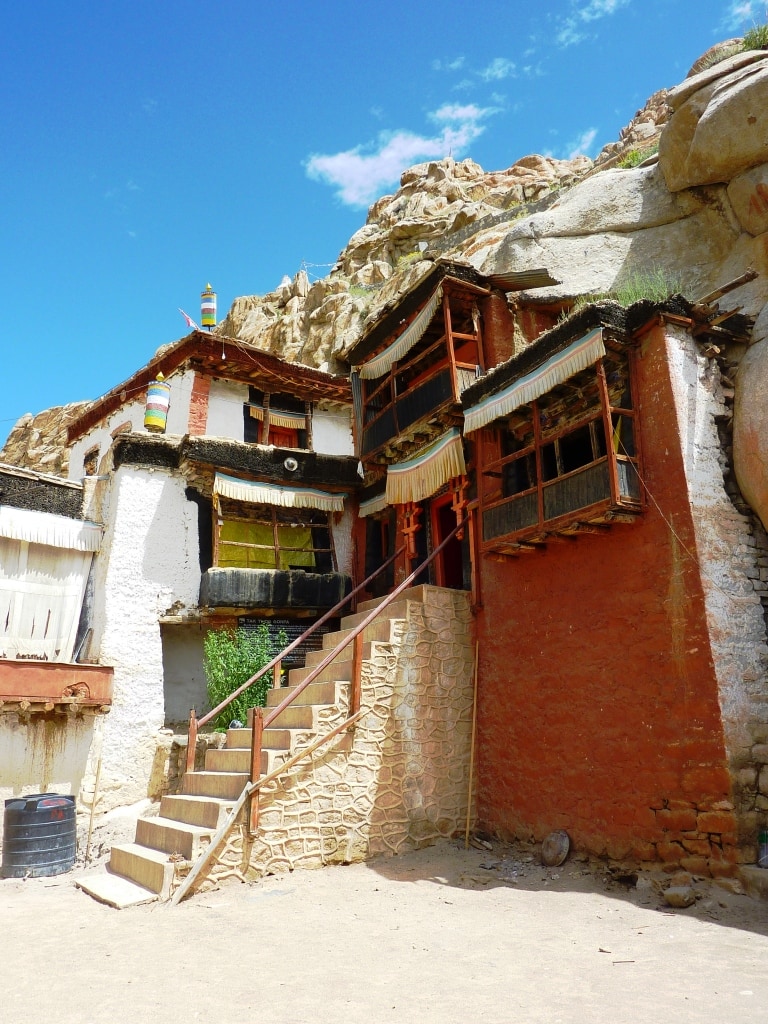
Takthok Monastery is a significant Buddhist monastery located in Sakti village, Ladakh, India, renowned as the only monastery in the region belonging to the Nying-ma-pa (Red Hat) sect. Its unique name, meaning 'rock-roof,' derives from its construction, where both the roof and walls are integrated with the natural rock face. The monastery holds historical importance as the site where Padmasambhava, a revered figure in Tibetan Buddhism, is believed to have meditated.
Key Facts
- ›Founded in the MID-16th century, during the reign of Tsewang Namgyal I.
- ›The only monastery in Ladakh belonging to the Nying-ma-pa (Red Hat) sect.
- ›Built around a cave where Padmasambhava is said to have meditated in the 8th century.
- ›Features a main temple with a rock ceiling covered in butterlamp residue and a new temple consecrated by the 14th Dalai Lama in 1980.
- ›Houses the 108 volumes of the Kanjur, Buddha's teachings.
- ›Hosts the Tak Tok Festival (Takthok Tsechu) annually around July-August.
Important Relationships
- Padmasambhava
- Tsewang Namgyal I
- 14th Dalai Lama
- Cave Associated With Padmasambhava's Meditation
- Main Temple With A Rock Ceiling
- Kitchen With Large Stoves
- Assembly Hall
- New Temple Consecrated By the 14th Dalai Lama
- 108 Volumes of the Kanjur
- Padmasambhava's Meditation In the 8th Century
- Founding Around the Mid-16th Century
- Consecration of the New Temple By the 14th Dalai Lama In 1980
Cave Architecture, Tibetan Buddhist
About Takthok Monastery
Takthok Monastery, whose name translates from Tibetan as 'rock-roof,' is a prominent Buddhist monastery situated in Sakti village in Ladakh, northern India. Located approximately 46 kilometers east of Leh, it holds a unique distinction as the sole monastery in Ladakh affiliated with the Nying-ma-pa, often referred to as the Red Hat sect. This affiliation makes it a significant spiritual center for the Nyingma tradition of Tibetan Buddhism, with around 55 lamas currently residing there.
Historical Context and Construction
The monastery's origins trace back to the mid-16th century, established during the reign of Tsewang Namgyal I (1575-1595). Its construction is notable for its integration with the natural landscape, with both its roof and walls being fashioned from the rock face of the mountainside. The monastery is built around a cave that is historically significant as the place where the revered Buddhist master Padmasambhava is said to have meditated in the 8th century. A smaller cave behind the more recent temple is believed to be the specific location where Padmasambhava resided and meditated for three years.
Description and Key Features
The main temple within Takthok Monastery is characterized by its dim and atmospheric interior, featuring a low rock ceiling stained by centuries of butterlamp use. While ancient paintings that once adorned the walls are now obscured by grime, the floor also retains a sticky residue. Adjacent to this, another cave has been converted into a kitchen equipped with large stoves capable of preparing food for the numerous pilgrims who attend the annual festival. The Assembly Hall, or du-khang, includes a verandah displaying paintings of the Four Lords, and its walls are adorned with recent depictions of fierce protector deities. Within the du-khang itself are statues of Maitreya, Padmasambhava, and one of his manifestations, Dorje Takposal.
A new temple, consecrated by the 14th Dalai Lama in 1980, is located just below the main gompa complex. The monastery also holds a significant collection of Buddhist scriptures, including the 108 volumes of the Kanjur, which contain the teachings of the Buddha.
Festivals and Significance
Takthok Monastery is a focal point for religious observances, most notably the Tak Tok Festival, also known as Takthok Tsechu. This festival typically takes place around July or August. The monastery's unique architectural style, its association with Padmasambhava, and its status as the only Nyingma monastery in Ladakh contribute to its importance as a site of pilgrimage and cultural heritage.
Source: Wikipedia ↗
Frequently Asked Questions
What is the meaning of Takthok Monastery's name?
Takthok Monastery's name translates to 'rock-roof' in English. This name was given because both the roof and the walls of the main structure are made of rock, blending seamlessly with the mountainside.
Which Buddhist sect does Takthok Monastery belong to?
Takthok Monastery is the only monastery in Ladakh that belongs to the Nying-ma-pa, also known as the Red Hat sect. This affiliation makes it a distinct center for Nyingma tradition in the region.
When was Takthok Monastery founded and by whom?
The monastery was founded around the mid-16th century. Its establishment occurred during the reign of Tsewang Namgyal I, who ruled from 1575 to 1595.
What is the significance of the cave at Takthok Monastery?
A cave located at the monastery is believed to be a place where Padmasambhava, a highly revered figure in Tibetan Buddhism, meditated in the 8th century. A smaller cave behind the new temple is specifically thought to be where he lived and meditated for three years.
When is the annual festival held at Takthok Monastery?
The annual festival at Takthok Monastery, known as the Tak Tok Festival or Takthok Tsechu, is held around July to August. This timing has been adjusted in recent times to better accommodate tourists.
Related Buddhist Temples
Tamzhing Monastery
Tamzhing Monastery, officially Tamzhing Lhündrup Monastery, is a significant Nyingma gompa located in the Bumthang District of central Bhutan. It is renowned for its direct historical and spiritual connection to the Bhutanese tertön and saint Pema Lingpa, who founded the temple in 1501. The monastery continues to be the seat of Sungtrul Rinpoche, the current speech incarnation of Pema Lingpa, and plays a vital role in preserving Bhutanese Buddhist traditions and sacred dances.

Dubdi Monastery
Dubdi Monastery, also known as Yuksom Monastery, is a significant Buddhist monastery of the Nyingma sect, renowned as the oldest in Sikkim. Established in 1701, it played a crucial role in the founding of the Kingdom of Sikkim and is part of a vital Buddhist pilgrimage circuit.

Enchey Monastery
Enchey Monastery is a significant Buddhist religious center located above Gangtok, Sikkim. Established in 1909 and belonging to the Nyingma order of Vajrayana Buddhism, it is believed to be the residence of the protecting deities Khangchendzonga and Yabdean, making it deeply significant to the local populace.