
Zirc Abbey
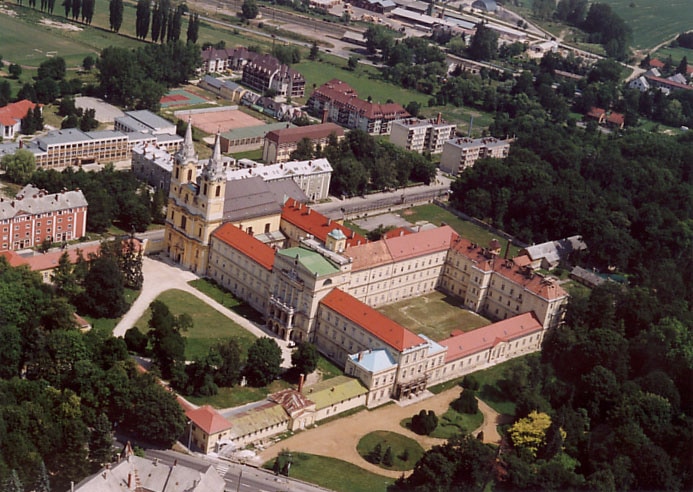
Zirc Abbey, also known by its Latinized names Zircensis or Boccon, is a Cistercian abbey located in Zirc, Hungary. Its history is marked by periods of prosperity and decline, including destruction and abandonment in the 15th and 16th centuries, followed by revival and resettlement by monks from other Cistercian abbeys. The abbey was dissolved in 1950 but re-established in 1989, continuing its monastic tradition.
Key Facts
- ›Founded likely by Béla III of Hungary around 1182.
- ›Established the Kutjevo Abbey in Croatia in 1232.
- ›Suffered significant damage and abandonment in the late 16th century.
- ›Revived in the 17th century by monks from Lilienfeld Abbey and later Heinrichau Abbey.
- ›Dissolved in 1950 and re-established in 1989.
- ›The Congregation of Zirc was established in 1923.
Zirc Bestiary
Zircz Abbey, Zircensis, Boccon
BéLa Iii, King of Hungary, MiklóS MaglóDy, MiháLy Monoszlay, Matthew Kolweiß, MáRton úJfalusy, Antonius Dreta, Gloger, Vendel EndréDy, KáRoly Kerekes, PolikáRp Zakar, Sixtus DéKáNy, BernáT BéRczi, Mauro-Giuseppe Lepori
- Foundation of Kutjevo Abbey
- Abbey In Ruins and Abandoned
- Revival of the Abbey
- New Abbey Church Consecrated
- Community Expelled and Restored
- Unions With Pilis, PáSztó, and SzentgottháRd Abbeys
- Establishment of the Congregation of Zirc
- Dissolution of the Abbey
- Re-Establishment of the Monastery
About Zirc Abbey
Zirc Abbey, historically also referred to as Zircz Abbey, Zircensis, or Boccon, is a significant Cistercian monastic institution located in the town of Zirc within the Diocese of Veszprém, Hungary. Its origins are somewhat obscure, but it is widely believed to have been founded by Béla III, King of Hungary, around 1182, on land that was formerly royal property. The abbey played a role in the wider Cistercian network, notably founding Kutjevo Abbey in present-day Croatia in 1232.
History and Development
The abbey's early history is marked by a period of crisis in the late 15th and early 16th centuries. By 1511, it was in ruins with a minimal number of monks. Neighboring landlords occupied its estates and looted the monastery, leading to its abandonment by 1538, a decline that occurred before the arrival of Turkish forces in the region. The abbey experienced a revival in the 17th century, initially under ecclesiastical ownership, and then more formally in 1660 when it was granted to Matthew Kolweiß, Abbot of Lilienfeld Abbey. Monks from the German abbey of Heinrichau undertook further restoration, relocating to Zirc in 1726 and consecrating their new church in 1745.
Throughout its existence, Zirc Abbey faced periods of suppression and restoration. It was expelled in 1810 but restored in 1814, after which it prospered and absorbed other abbeys. The establishment of the Congregation of Zirc in 1923 marked a significant organizational development. Following World War II and the subsequent Soviet influence in Hungary, the abbey was dissolved in 1950, with its church becoming a parish church. However, the monastic community was re-established in 1989, and it continues to operate, maintaining residences in several Hungarian cities. Some former monks also established communities in the United States after fleeing Hungary post-WWII.
Source: Wikipedia ↗
Frequently Asked Questions
When was Zirc Abbey founded?
The exact founding date of Zirc Abbey is not precisely recorded, but it is believed to have been founded by Béla III, King of Hungary, around 1182. The monastic domain was formerly royal property.
What happened to Zirc Abbey in the 16th century?
In the second half of the 15th century, the abbey faced a severe crisis. By the 1530s, neighboring landlords occupied its estates and looted the monastery, leading to its abandonment by 1538. This decline predated the arrival of the Turkish forces in the region.
How was Zirc Abbey revived after its decline?
The abbey was acquired by ecclesiastics in the 17th century and later given to Matthew Kolweiß, Abbot of Lilienfeld Abbey, who revived it by appointing Márton Újfalusy as abbot in 1660. Monks from the Silesian abbey of Heinrichau further restored the monastic buildings and church after acquiring ownership in 1700.
Was Zirc Abbey dissolved?
Yes, Zirc Abbey was dissolved in 1950 following the Soviet takeover of Hungary. Its church became a parish church. However, the monastery was re-established in 1989 and continues to maintain residences in various Hungarian cities.
Are there former monks of Zirc Abbey who established communities elsewhere?
After World War II, many monks from Zirc Abbey escaped Hungary and went to Wisconsin, USA, where they served at Spring Bank. A group of these monks later founded Our Lady of Dallas in Irving, Texas.
Related Monasteries

Serbian Kovin Monastery
The Serbian Kovin Monastery, officially the Monastery of the Dormition of the Holy Mother of God, is an Eastern Orthodox Christian monastery located in Ráckeve, Hungary. It is recognized as one of the oldest monasteries in Hungary, with a history potentially dating back to the 12th century. The monastery has undergone significant architectural transformations and holds importance as a spiritual center for Serbs in Hungary.

Gellért Hill Cave
The Gellért Hill Cave, also known as Saint Ivan's Cave, is a significant cave network in Budapest, Hungary, historically associated with a hermit and thermal springs. In the 1920s, Pauline monks transformed it into a chapel and monastery, serving as a place of worship and a World War II field hospital. After being sealed by the authorities in 1951, it reopened in 1989 and the Pauline Order returned, continuing its religious functions while also functioning as a popular tourist attraction.

Hungary
Hungary is a landlocked nation in Central Europe with a rich history dating back to the late ninth century. It transformed from a principality into a Christian medieval kingdom, experienced periods of division and reunification under various empires, and played a significant role as part of the Austro-Hungarian Monarchy. The country has a strong cultural heritage, with notable contributions to arts, music, literature, and science, and is a popular tourist destination.