
Gellért Hill Cave
The Gellért Hill Cave, also known as Saint Ivan's Cave, is a significant cave network in Budapest, Hungary, historically associated with a hermit and thermal springs. In the 1920s, Pauline monks transformed it into a chapel and monastery, serving as a place of worship and a World War II field hospital. After being sealed by the authorities in 1951, it reopened in 1989 and the Pauline Order returned, continuing its religious functions while also functioning as a popular tourist attraction.
Key Facts
- ›Also referred to as "Saint Ivan's Cave" due to a hermit who reputedly used its thermal waters for healing.
- ›A modern entrance and chapel (Cave Church) were constructed by Pauline monks in the 1920s.
- ›Served as a field hospital for Nazi Germany's army during World War II.
- ›Sealed by state authorities in 1951, with its superior executed and other monks imprisoned.
- ›Reopened in 1989 and restored, with the Pauline Order returning to continue religious services.
- ›Features a monastery carved into the rock, decorated with neo-Gothic turrets.

Neo-Gothic
Cave Church, Monastery Carved Into Rock, Neo-Gothic Turrets, Hardwood Carved Ornaments, Statue of Saint Stephen
Saint Ivan's Cave, Szent IváN-Barlang, Cave Church, Sziklatemplom
Saint Ivan, Ferenc VezéR
- Inhabited By A Poor Family In the 19th Century.
- Construction of Cave Church and Monastery By Pauline Monks .
- Served As A Field Hospital During World War Ii.
- Sealed By Authorities and Subsequent Persecution of Monks .
- Reopening and Restoration of the Chapel .
About Gellért Hill Cave
The Gellért Hill Cave, also known by its Hungarian name Gellérthegyi-barlang, is a unique cave system situated within Gellért Hill in Budapest, Hungary. Historically, it is associated with a hermit named Saint Ivan, who is believed to have inhabited the cave and utilized the natural thermal waters of an adjacent muddy lake for healing the sick. These waters may have also fed the pools of the old Sáros fürdő, now known as the Gellért Baths.
Transformation and Persecution
In the 19th century, the cave's main opening was informally used by a poor family. The modern era of the cave began in the 1920s when a group of Pauline monks, inspired by their pilgrimage to Lourdes, France, constructed a new entrance and transformed the cave into a chapel and monastery. Kálmán Lux, a professor at the Technical University of Budapest, served as the architect for this endeavor, which was consecrated in 1926. During World War II, the chapel served as a field hospital for the Nazi German army. Following the Soviet capture of Budapest in 1945, the cave continued its religious functions for six years.
However, in 1951, the State Protection Authority raided the chapel as part of an intensified campaign against the Catholic Church. This led to the cave being sealed, the monastery's superior, Ferenc Vezér, being condemned to death, and the remaining monks imprisoned for over a decade.
Revival and Present Day
As the geopolitical landscape shifted with the disintegration of the Iron Curtain, the Cave Church reopened on August 27, 1989, with the removal of the concrete wall that had sealed it. By 1992, restoration efforts were complete, and the Pauline Order returned to the cave. Today, the monks continue their religious duties within the rock-hewn monastery, which is also a significant tourist attraction. The monastery is characterized by its natural rock walls and striking neo-Gothic turrets, with a notable room featuring ornaments carved from hardwood. The entrance terrace is marked by a statue of Saint Stephen and his horse.
Source: Wikipedia ↗
Frequently Asked Questions
What is the Gellért Hill Cave also known as?
The Gellért Hill Cave is also referred to as "Saint Ivan's Cave" (Szent Iván-barlang). This name comes from a hermit who is believed to have lived there and used the natural thermal waters for healing purposes.
When was the modern chapel and monastery at Gellért Hill Cave established?
The first modern entrance and chapel, known as the Cave Church, were constructed in the 1920s by Pauline monks. It was consecrated in 1926 and served as a chapel and monastery until 1951.
What happened to the Gellért Hill Cave in 1951?
In 1951, the State Protection Authority raided the chapel as part of actions against the Catholic Church. The cave was sealed, its superior was condemned to death, and other monks were imprisoned.
When did the Gellért Hill Cave reopen?
The chapel reopened on August 27, 1989, following the disintegration of the Iron Curtain. By 1992, the chapel had been restored, and the Pauline Order returned to the cave.
What are some notable features of the Gellért Hill Cave monastery?
The monastery is carved into the natural rock of the cave and decorated with striking neo-Gothic turrets. One notable room features ornaments carved entirely in hardwood by a follower of the Pauline Order.
Related Monasteries
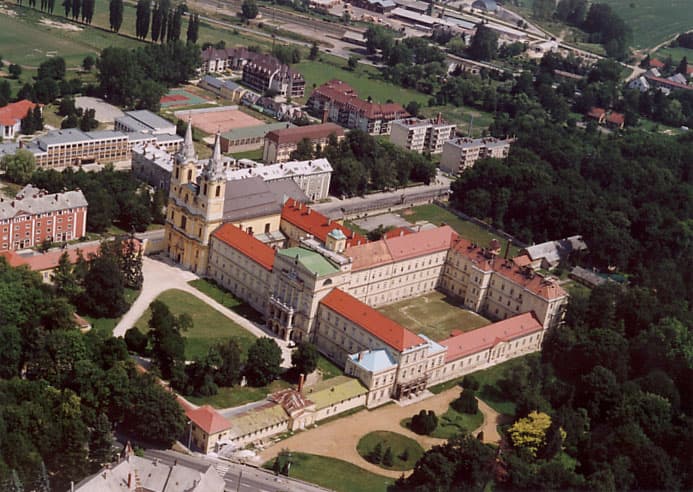
Zirc Abbey
Zirc Abbey, also known by its Latinized names Zircensis or Boccon, is a Cistercian abbey located in Zirc, Hungary. Its history is marked by periods of prosperity and decline, including destruction and abandonment in the 15th and 16th centuries, followed by revival and resettlement by monks from other Cistercian abbeys. The abbey was dissolved in 1950 but re-established in 1989, continuing its monastic tradition.

Hungary
Hungary is a landlocked nation in Central Europe with a rich history dating back to the late ninth century. It transformed from a principality into a Christian medieval kingdom, experienced periods of division and reunification under various empires, and played a significant role as part of the Austro-Hungarian Monarchy. The country has a strong cultural heritage, with notable contributions to arts, music, literature, and science, and is a popular tourist destination.

Pauline Fathers
The Order of Saint Paul the First Hermit, commonly known as the Pauline Fathers, is a Catholic monastic order founded in Hungary in the 13th century. Inspired by the hermit Saint Paul of Thebes, the order was established by Blessed Eusebius of Esztergom and grew to encompass numerous houses across Europe, though many were suppressed in the 18th century. Today, the Pauline Fathers continue their charism of contemplation, liturgical prayer, and devotion to the Virgin Mary, with communities in various countries.