
Otterton Priory
Otterton Priory was a Benedictine monastic institution founded in Devon before 1087 and suppressed in 1414. As an "alien priory," it was a dependency of Mont St. Michael in Normandy. The most significant remaining structure of the priory is the tower of the present-day parish church, with the manor house likely incorporating salvaged monastic materials.
Key Facts
- ›Founded as an alien priory of Benedictine monks before 1087.
- ›A dependency of the monastery of Mont St. Michael in Normandy.
- ›King John is recorded as establishing it for four monks in 1332.
- ›Suppressed in 1414 and its lands granted to Syon Abbey.
- ›The tower of the parish church is the primary surviving structure.
- ›The manor house, built after 1539, likely reuses monastic fabric.
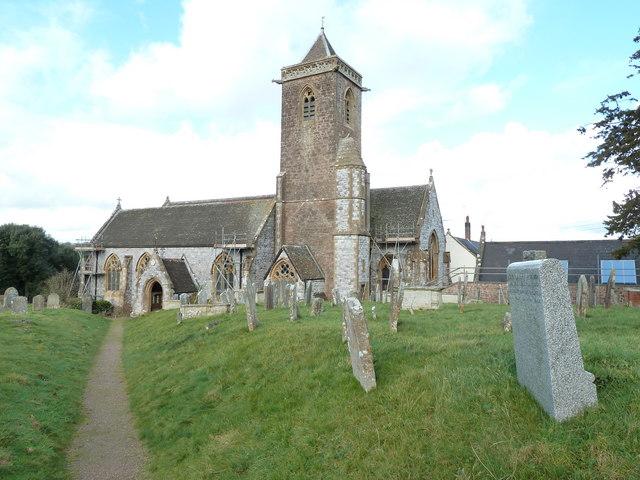
Parish Church Tower, Manor House
King John
Suppression In 1414, Lands Granted To Syon Abbey
About Otterton Priory
Otterton Priory was an "alien priory" of Benedictine monks located in Otterton, Devon. Its establishment predates 1087, making it a significant early monastic site in the region. As a dependency of the monastery of Mont St. Michael in Normandy, its administration and affiliations were tied to its French parent house.
Historically, the priory experienced periods of change and development. In 1332, King John is recorded as having established the priory, possibly by increasing its revenues and improving its buildings. It is also noted that the priory was briefly sold off in the same year. Despite these events, it appears to have been re-established by a monk from its parent house.
The priory was ultimately suppressed in 1414. Following its dissolution, the lands associated with Otterton Priory were granted to Syon Abbey in Middlesex. Today, few physical remains of the monastic complex are visible. The most prominent surviving structure is the tower of the present-day parish church, which likely stood within or adjacent to the priory grounds. Furthermore, the manor house, constructed after 1539 by Richard Duke, is believed to have incorporated fabric from the original monastic buildings, though it has since been converted into almshouses.
Source: Wikipedia ↗
Frequently Asked Questions
When was Otterton Priory founded?
Otterton Priory was founded at some point before 1087. It was established as a Benedictine priory.
What religious order was Otterton Priory part of?
Otterton Priory was a Benedictine priory. It was an 'alien priory,' meaning it was a dependency of Mont St. Michael in Normandy.
What remains of Otterton Priory today?
The most significant remaining structure of Otterton Priory is the tower of the present-day parish church. The manor house, built after the priory's suppression, is also believed to incorporate parts of the original monastic buildings.
When was Otterton Priory suppressed?
Otterton Priory was suppressed in 1414. Following its suppression, its lands were transferred to Syon Abbey in Middlesex.
Related Monasteries
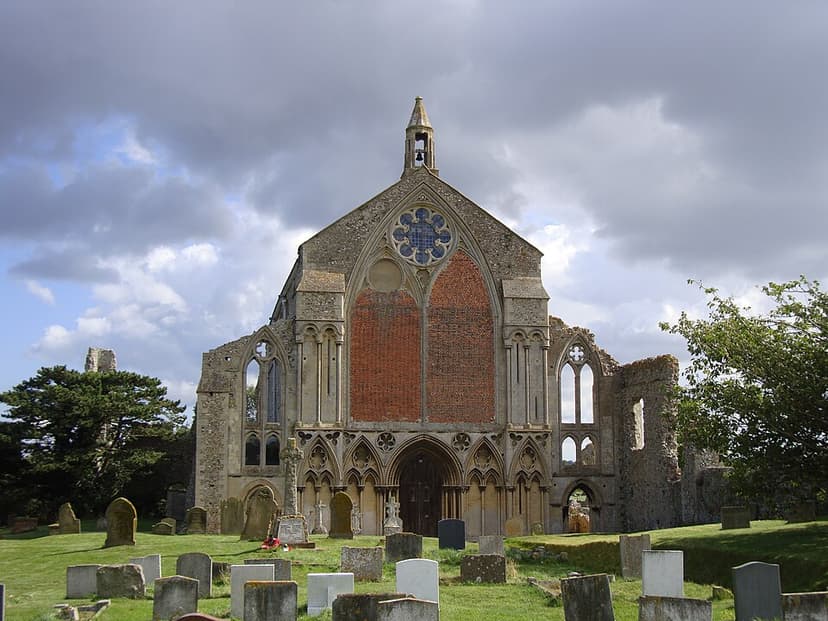
Binham Priory
Binham Priory, officially St Mary's Priory, Binham, was a ruined Benedictine priory in Norfolk, England, founded in 1091. Its history is marked by scandal and unscrupulous priors, culminating in its dissolution and partial destruction in 1539. The surviving nave of its priory church continues to serve as the parish church of St. Mary and the Holy Cross.

Chatteris Abbey
Chatteris Abbey was a Benedictine monastery for nuns founded in 1016 by Eadnoth, Bishop of Dorchester. Despite surviving an early fire and the initial wave of monastic dissolutions, it was ultimately surrendered to the King's commissioners in 1538 and demolished. While a portion of its cloister buildings was incorporated into a later mansion, the abbey site has largely vanished, with only a few wall fragments remaining.

Derby Priory (Cluniac)
St. James Priory, also known as Derby Cluniac Priory, was a Benedictine monastery established between 1072 and 1076. Situated in Derby City Centre, it developed from a Saxon-era chapel and was later associated with the Cluniac order. The priory served as a hospital for the poor and unwell in the 13th century and experienced periods of financial difficulty and rebuilding after a fire in 1335. It ceased to exist during the Dissolution of the Monasteries.