
Binham Priory
Binham Priory, officially St Mary's Priory, Binham, was a ruined Benedictine priory in Norfolk, England, founded in 1091. Its history is marked by scandal and unscrupulous priors, culminating in its dissolution and partial destruction in 1539. The surviving nave of its priory church continues to serve as the parish church of St. Mary and the Holy Cross.
Key Facts
- ›Founded in 1091 as a cell of St Albans Abbey.
- ›The priory church's nave, now the Church of St. Mary and the Holy Cross, is still in use.
- ›Suffered a siege in 1212 by Robert Fitzwalter and had its records burned in 1381 during the Great Revolt.
- ›Most of the priory was destroyed in 1539 during the Dissolution of the Monasteries.
- ›The west front features an early example of Gothic bar tracery, dating to around 1245.
- ›The ruins are managed by English Heritage.
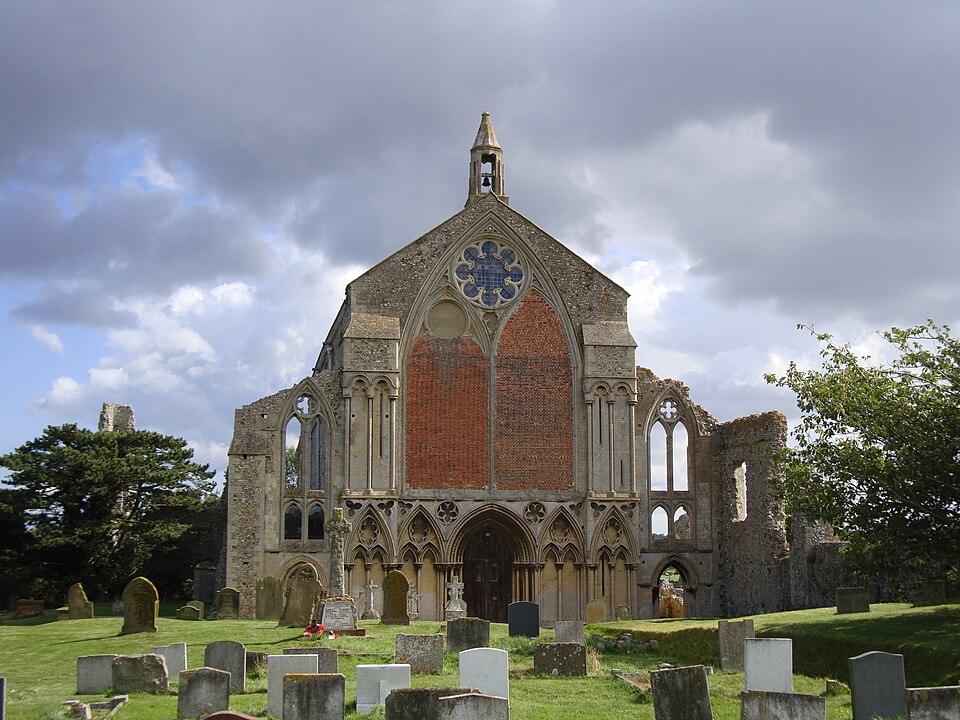
Romanesque, Gothic
- Surviving Nave of the Priory Church
- West Front With Early Gothic Bar Tracery
- Gatehouse Ruins
- Remains of the Eastern End of the Church, Including Crossing Piers and Transepts
St Mary's Priory, Binham
Peter De Valognes, Robert Fitzwalter, King Edward I, John Lister, Henry Viii, Sir Thomas Paston, Edward Paston, Matthew Champion, Matthew Paris, Richard De Parco, Reginald De Warenne, Simon Binham
- Founded In 1091
- Siege of Binham Priory In 1212
- Visit By King Edward I In 1285
- Burning of Priory Records During the Great Revolt In 1381
- Dissolution of the Monasteries In 1539
About Binham Priory
Binham Priory, officially known as St Mary's Priory, Binham, is a ruined Benedictine monastic institution situated in the village of Binham in Norfolk, England. Founded in 1091 as a dependency of St Albans Abbey, its construction spanned approximately 150 years, concluding in the mid-13th century. The history of Binham Priory is notably characterized by alleged scandals and the misconduct of its successive priors.
History and Significance
The priory's existence was marked by significant historical events. It endured a siege in 1212, led by Robert Fitzwalter, and its records were destroyed in 1381 during the Peasants' Revolt, an act attributed to local organizer John Lister. The priory met its end in 1539 when it was dissolved by order of King Henry VIII, leading to the destruction of most of its buildings. The valuable stone from these demolitions was subsequently used for secular construction, including a house in Wells-next-the-Sea.
Architectural Remains
Today, Binham Priory exists primarily as a Grade I listed ruin, with the nave of its original priory church being the most substantial surviving structure. This surviving section continues to function as the local parish church, dedicated to St. Mary and the Holy Cross. The architecture of the church reflects a period of transition between Romanesque and Gothic styles, showcasing a blend of these influences. The west front, in particular, is praised for its quality, and it holds the distinction of being one of the earliest examples in England of Gothic bar tracery, dating to around 1245.
Current Status and Management
Much of the priory complex, including its chapter house, refectory, and dormitories, was revealed through excavations in the 1930s, though these efforts did not always adhere to modern archaeological standards. The surviving ruins and the gatehouse are maintained and protected by English Heritage, and the site is accessible to the public.
Source: Wikipedia ↗
Frequently Asked Questions
When was Binham Priory founded?
Binham Priory was founded in 1091. It took approximately 150 years to complete, with construction finishing in the mid-13th century.
What is the current status of Binham Priory?
Binham Priory is largely a ruin, with most of its buildings destroyed after the Reformation. The nave of its original church survives and is used as the parish church of St. Mary and the Holy Cross. The ruins are maintained by English Heritage.
What is notable about the architecture of Binham Priory?
The priory church exhibits a mix of Romanesque and Gothic architectural styles due to its long construction period. Its west front is particularly noted for its quality and for featuring one of the earliest examples of Gothic bar tracery in England, dating to around 1245.
What historical events are associated with Binham Priory?
The priory faced a siege in 1212, its records were burned during the Great Revolt of 1381, and it was dissolved and largely demolished in 1539 under Henry VIII. Its history is also described as one of 'almost continuous scandal' due to the conduct of its priors.
Who is responsible for the care of Binham Priory's remains?
The remains of Binham Priory, including its gatehouse, are protected and managed by English Heritage.
Related Monasteries

Derby Priory (Cluniac)
St. James Priory, also known as Derby Cluniac Priory, was a Benedictine monastery established between 1072 and 1076. Situated in Derby City Centre, it developed from a Saxon-era chapel and was later associated with the Cluniac order. The priory served as a hospital for the poor and unwell in the 13th century and experienced periods of financial difficulty and rebuilding after a fire in 1335. It ceased to exist during the Dissolution of the Monasteries.

Chatteris Abbey
Chatteris Abbey was a Benedictine monastery for nuns founded in 1016 by Eadnoth, Bishop of Dorchester. Despite surviving an early fire and the initial wave of monastic dissolutions, it was ultimately surrendered to the King's commissioners in 1538 and demolished. While a portion of its cloister buildings was incorporated into a later mansion, the abbey site has largely vanished, with only a few wall fragments remaining.
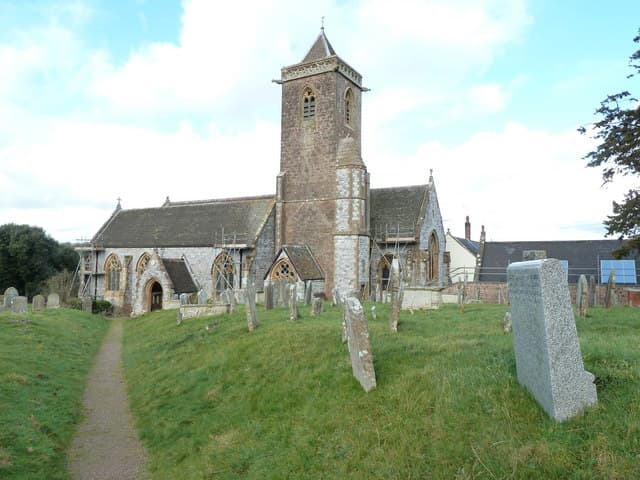
Otterton Priory
Otterton Priory was a Benedictine monastic institution founded in Devon before 1087 and suppressed in 1414. As an "alien priory," it was a dependency of Mont St. Michael in Normandy. The most significant remaining structure of the priory is the tower of the present-day parish church, with the manor house likely incorporating salvaged monastic materials.