
Neuwiller-lès-Saverne
Neuwiller-lès-Saverne is a commune in northeastern France, historically significant for its Benedictine abbey founded in 723 by Saint Sigibald. The abbey church, dedicated to Saints Peter and Paul, is a notable landmark with Romanesque elements and is classified as a monument historique. The relics of Saint Adelphus, brought to the abbey in 826, attracted numerous pilgrims, leading to the construction of a separate shrine church.
Key Facts
- ›Founded as a Benedictine abbey in 723 by Saint Sigibald, bishop of Metz.
- ›The Église Saint-Pierre-et-Saint-Paul, formerly the abbey church, is a monument historique since 1840.
- ›Features Romanesque architectural elements and is part of the Romanesque Road of Alsace.
- ›The relics of Saint Adelphus were interred here in 826, becoming a major pilgrimage site.
- ›The abbey's surrounding buildings and ruins are remnants of the former Benedictine order.

Romanesque
éGlise Saint-Pierre-Et-Saint-Paul, Remains of Benedictine Abbey Buildings, Relics of Saint Adelphus
Neuweiler, Neiwiller
Saint Sigibald, Saint Adelphus, Bishop Drogo of Metz
Founding of the Benedictine Abbey, Transport of Saint Adelphus's Remains
About Neuwiller-lès-Saverne
Neuwiller-lès-Saverne: A Historic Benedictine Abbey Site
Neuwiller-lès-Saverne, situated in the Grand Est region of northeastern France, is a locality with deep historical roots, primarily centered around its former Benedictine abbey. The origins of the settlement trace back to the Merovingian period, with the formal founding of a Benedictine abbey in 723 by Saint Sigibald, bishop of Metz. This abbey was dedicated to Saints Peter and Paul and was established with significant landholdings, reflecting the considerable power and influence monasteries wielded during the early medieval era.
Landmark Church and Pilgrimage
The Église Saint-Pierre-et-Saint-Paul, which once served as the abbey church, remains a prominent landmark. Classified as a monument historique since 1840, it showcases notable Romanesque architectural elements and is recognized as a stage on the Romanesque Road of Alsace. The abbey's importance was further amplified in 826 when Bishop Drogo of Metz transferred the relics of Saint Adelphus to its church. The veneration of these relics drew such a large number of pilgrims that the Benedictine monks found it necessary to construct a separate shrine church nearby, allowing them to maintain their own monastic sanctuary undisturbed.
Legacy and Surviving Structures
Today, Neuwiller-lès-Saverne is a commune within the Bas-Rhin department and a member of the Northern Vosges Regional Nature Park. While the abbey as a functioning monastic community is no longer active, the church and surrounding buildings and ruins stand as testament to its rich past. The site continues to be of historical and architectural interest, preserving vestiges of its medieval religious and cultural significance.
Source: Wikipedia ↗
Frequently Asked Questions
When was the Benedictine abbey of Neuwiller-lès-Saverne founded?
The Benedictine abbey of Neuwiller-lès-Saverne was founded in the year 723. It was established by Saint Sigibald, who was the bishop of Metz at the time.
What is the significance of the Église Saint-Pierre-et-Saint-Paul?
The Église Saint-Pierre-et-Saint-Paul was formerly the church of the wealthy Benedictine abbey. It is classified as a monument historique and boasts Romanesque architectural parts, making it a stop on the Romanesque Road of Alsace.
Why were the relics of Saint Adelphus important to Neuwiller-lès-Saverne?
In 826, Bishop Drogo of Metz transported the remains of Saint Adelphus to be interred at the abbey's church. These relics became so popular with pilgrims that the Benedictines constructed a second church nearby to serve as a shrine.
What historical period is associated with the founding of the abbey?
The village of Neuwiller-lès-Saverne began to develop under the Christianizing rule of the Merovingian dynasty of Franks. The founding of the abbey in 723 falls within this early medieval period.
Related Monasteries
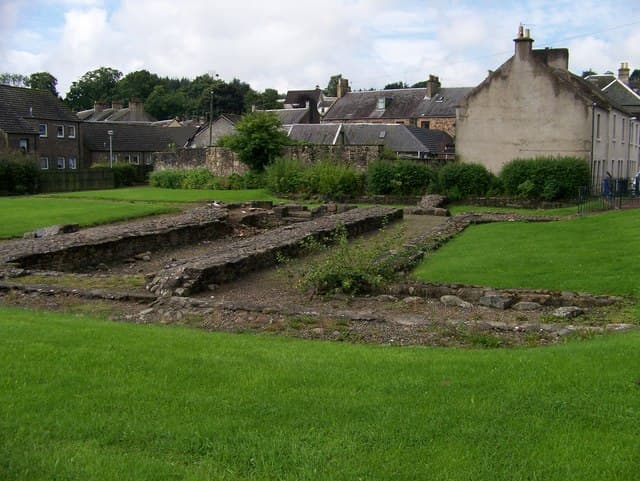
Lesmahagow Priory
Lesmahagow Priory was a medieval Tironensian monastic community situated in Lesmahagow, Scotland. Founded by grants from John, Bishop of Glasgow, and King David I, it served as a dependency of Kelso Abbey. The priory's control was secularized in the 16th century and it was transformed into a secular lordship in 1607, eventually passing to the Hamilton family.
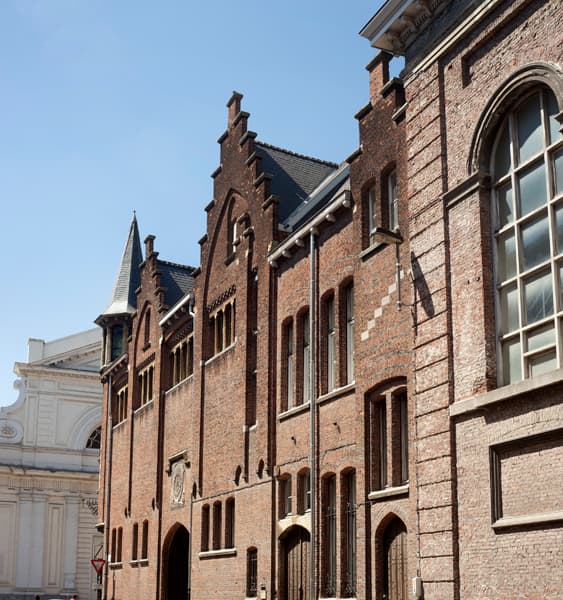
Oost-Eekloo Abbey
Oost-Eekloo Abbey was a Cistercian nunnery founded in Oosteeklo in 1217, later relocating to Ghent after being plundered during the Dutch Revolt. The abbey played a role in the agricultural development of its original locale and, after its move to Ghent, saw the construction of its church, refectory, chapter house, and infirmary. Though suppressed in 1796, the community continued clandestinely until officially recognized again in 1814, eventually dying out by the mid-19th century.
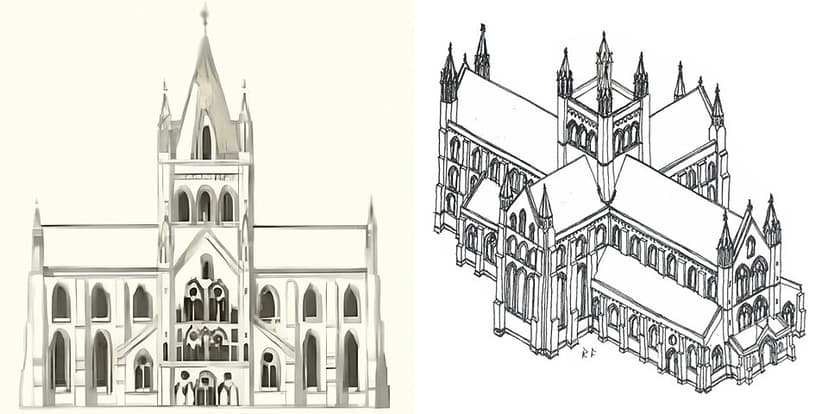
Scone Abbey
Scone Abbey, originally Scone Priory, was a significant Augustinian monastic house in Scone, Perthshire, Scotland. Established between 1114 and 1122 AD, it held the Stone of Destiny, upon which Scottish monarchs were crowned, and played a crucial role in royal ceremonies. Though burned down during the Scottish Reformation in 1559, its historical importance as a center of religious and royal power is well-documented.