
Scone Abbey
Scone Abbey, originally Scone Priory, was a significant Augustinian monastic house in Scone, Perthshire, Scotland. Established between 1114 and 1122 AD, it held the Stone of Destiny, upon which Scottish monarchs were crowned, and played a crucial role in royal ceremonies. Though burned down during the Scottish Reformation in 1559, its historical importance as a center of religious and royal power is well-documented.
Key Facts
- ›Founded as Scone Priory for Augustinian canons, likely between 1114 and 1122 AD.
- ›Housed the Stone of Scone, the coronation stone for early Scottish kings, until its theft in 1296.
- ›Elevated to abbey status in December 1164.
- ›Served as a principal seat of the Scottish kingdom, hosting kings and holding royal functions.
- ›Renowned for its music, particularly late medieval choral music produced by Robert Carver.
- ›Destroyed by a Protestant mob in 1559 during the Scottish Reformation.
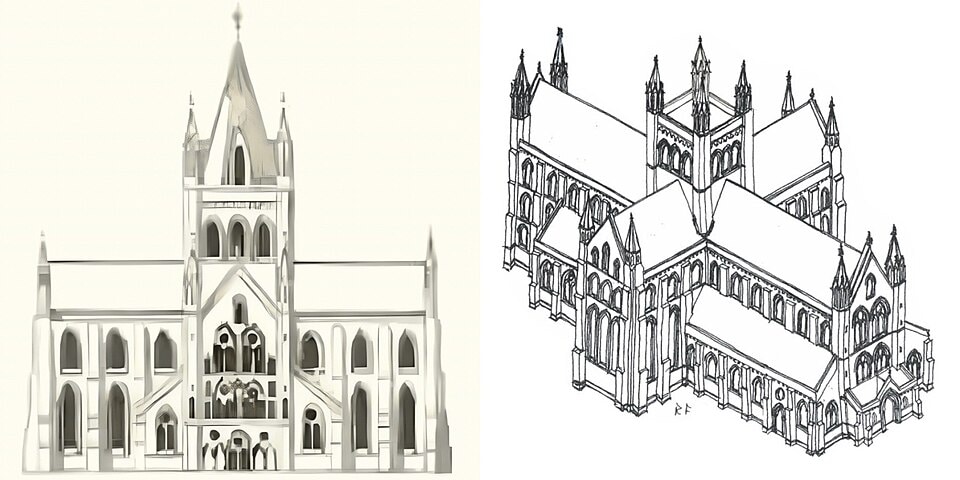
Romanesque
Stone of Scone, Coronation Site of Scottish Kings, Abbot's Palace, Relics of St. Fergus
Scone Priory
Prior Robert, King MáEl Coluim Iv, Robert the Bruce, Charles Ii, Robert Carver, John Knox, Andrew Murehead, Lord Ruthven, Earl of Gowrie, Sir David Murray of Gospetrie, Earls of Mansfield, Doctor Oliver O'Grady, Robert Ii of Scotland, Maud, Countess of Huntingdon, Thomas De Rossy
- Establishment of Scone Priory
- Elevation To Abbey Status
- Theft of the Stone of Scone By Edward I of England
- Destruction of Records During the Wars of Scottish Independence
- Burning of the Abbey During the Scottish Reformation
- Erection Into A Temporal Lordship
- Gowrie Conspiracy
- Cessation of Monastic Function
About Scone Abbey
Scone Abbey: A Seat of Scottish Royalty and Faith
Scone Abbey, originally established as Scone Priory, was a prominent house of Augustinian canons located in Scone, Perthshire, Scotland. Its founding is generally placed between 1114 and 1122 AD, though evidence suggests a significant religious presence at the site, possibly associated with the Culdees, as early as the 8th century. The abbey's historical importance is deeply intertwined with the Scottish monarchy, most notably for its role as the keeper of the Stone of Scone, the sacred coronation stone upon which the early Kings of Scotland were crowned. This sacred relic remained at Scone until its removal by King Edward I of England in 1296.
In 1164, Scone Priory was elevated to abbey status by King Máel Coluim IV, signifying its position as being "in the principal seat of our kingdom." It served as one of the chief residences for Scottish kings, who were hosted by the abbot during their stays. The abbey was also recognized for its musical contributions, with Robert Carver producing significant late medieval choral music there. Furthermore, it housed relics of St. Fergus, attracting pilgrims.
The abbey's history took a dramatic turn during the Scottish Reformation. In 1559, a zealous Protestant mob burned the abbey to the ground, marking a devastating end to its centuries of functioning monastic life. Following the Reformation, the abbey was erected into a temporal lordship and its estates were granted to noble families, including the Ruthvens and later the Murrays of Scone. While the physical structures of the abbey are now largely gone, archaeological surveys have helped to pinpoint its location and understand its scale, confirming its status as a site of immense historical and royal significance.
Source: Wikipedia ↗
Frequently Asked Questions
When was Scone Abbey founded?
The establishment of Scone Priory, which later became Scone Abbey, is dated between 1114 and 1122 AD. However, historical belief suggests that religious activity, possibly by the Culdees, may have occurred at Scone as early as 700 AD.
What was the significance of the Stone of Scone at the abbey?
Scone Abbey held the Stone of Scone, also known as the Stone of Destiny, which was Scotland's most prized relic and the traditional coronation stone for the early Kings of Scotland. Kings like Robert the Bruce and Charles II were crowned upon it at Scone.
What happened to Scone Abbey during the Scottish Reformation?
During the early days of the Scottish Reformation in 1559, Scone Abbey was attacked and burned to the ground by a Protestant mob from Dundee. Its records were also destroyed during the Wars of Scottish Independence.
What is the current status of Scone Abbey?
Scone Abbey ceased to function as a monastic institution in 1640 and was later converted into a secular lordship. While the abbey buildings are gone, its historical site and the former Abbot's Palace remain, with the latter having been rebuilt as a residence.
Was Scone Abbey known for anything other than its royal connections?
Yes, Scone Abbey was long famous for its music. Robert Carver produced some of Europe's best late medieval choral music there, extending into the late 16th century. The abbey also held relics of St. Fergus, making it a pilgrimage site.
Related Monasteries
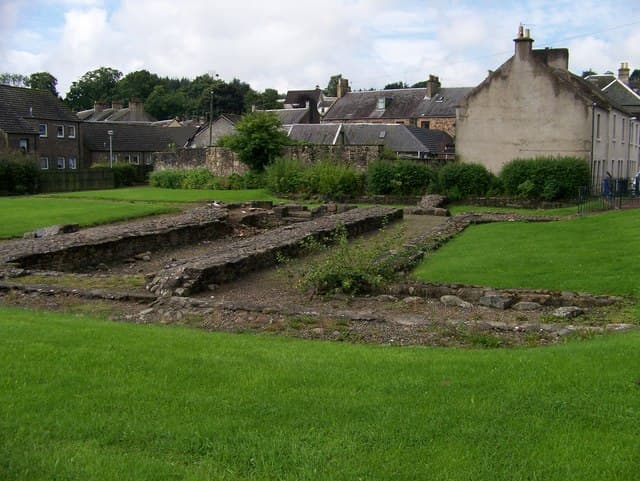
Lesmahagow Priory
Lesmahagow Priory was a medieval Tironensian monastic community situated in Lesmahagow, Scotland. Founded by grants from John, Bishop of Glasgow, and King David I, it served as a dependency of Kelso Abbey. The priory's control was secularized in the 16th century and it was transformed into a secular lordship in 1607, eventually passing to the Hamilton family.

Neuwiller-lès-Saverne
Neuwiller-lès-Saverne is a commune in northeastern France, historically significant for its Benedictine abbey founded in 723 by Saint Sigibald. The abbey church, dedicated to Saints Peter and Paul, is a notable landmark with Romanesque elements and is classified as a monument historique. The relics of Saint Adelphus, brought to the abbey in 826, attracted numerous pilgrims, leading to the construction of a separate shrine church.
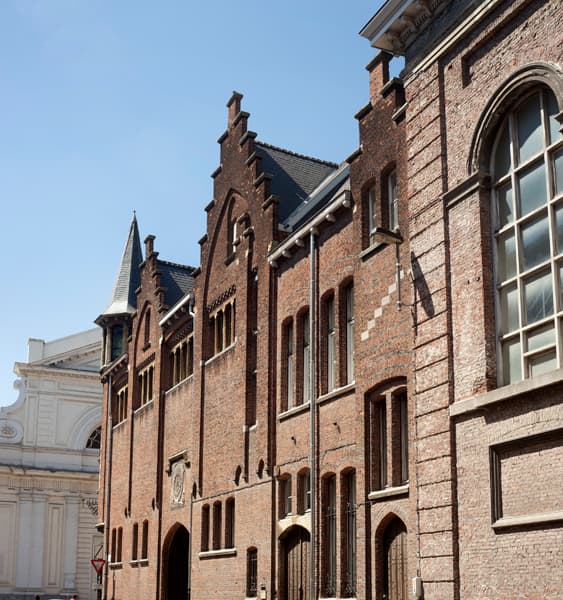
Oost-Eekloo Abbey
Oost-Eekloo Abbey was a Cistercian nunnery founded in Oosteeklo in 1217, later relocating to Ghent after being plundered during the Dutch Revolt. The abbey played a role in the agricultural development of its original locale and, after its move to Ghent, saw the construction of its church, refectory, chapter house, and infirmary. Though suppressed in 1796, the community continued clandestinely until officially recognized again in 1814, eventually dying out by the mid-19th century.