
Lesmahagow Priory
Lesmahagow Priory was a medieval Tironensian monastic community situated in Lesmahagow, Scotland. Founded by grants from John, Bishop of Glasgow, and King David I, it served as a dependency of Kelso Abbey. The priory's control was secularized in the 16th century and it was transformed into a secular lordship in 1607, eventually passing to the Hamilton family.
Key Facts
- ›Founded as a Tironensian monastic community.
- ›Established through land grants by Bishop John of Glasgow and King David I of Scotland.
- ›Remained a dependency of Kelso Abbey throughout its monastic history.
- ›Control was secularized in the 16th century.
- ›Converted into a secular lordship in 1607.
- ›The site of the priory church is now occupied by Lesmahagow Old Parish Church.
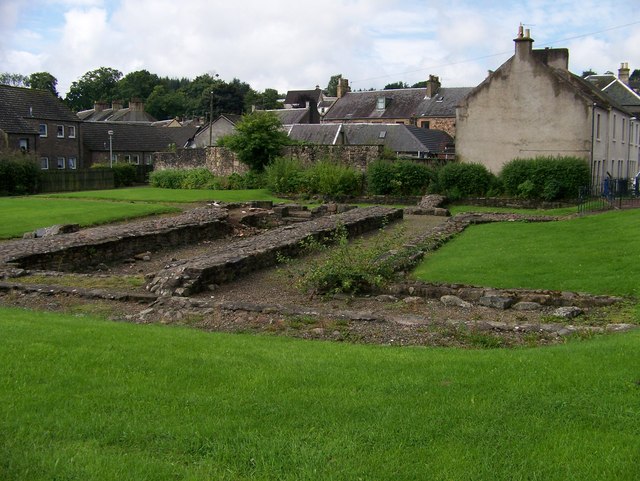
Site of the Former Priory Church
John, Bishop of Glasgow, David I of Scotland, Robert Ker, James Hamilton, 2nd Marquess of Hamilton
Grant of Lands For Establishment, Secularization of Control In the 16th Century, Conversion Into A Secular Lordship In 1607
About Lesmahagow Priory
Lesmahagow Priory was a significant medieval monastic establishment of the Tironensian order, situated in the town of Lesmahagow in modern-day South Lanarkshire, Scotland. Its foundation was facilitated by royal and ecclesiastical grants, with Bishop John of Glasgow and King David I of Scotland bestowing lands at Lesmahagow for the purpose of establishing a new priory. For much of its history, Lesmahagow Priory operated as a dependency of the more prominent Kelso Abbey.
Historical Trajectory
The monastic life at Lesmahagow Priory eventually gave way to secularization. During the 16th century, control over the abbey began to shift away from monastic governance. This process culminated in 1607 when, akin to Kelso Abbey, Lesmahagow was transformed into a secular lordship, granted to Robert Ker of Cesford. The priory's lands and assets subsequently passed into the hands of James Hamilton, 2nd Marquess of Hamilton, in 1623.
Legacy and Modern Connections
While the priory itself is no longer extant as an active monastic community, its historical presence is marked by its connection to the religious life of Lesmahagow. Two present-day churches in the town trace their origins back to the priory. Lesmahagow Old Parish Church of the Church of Scotland stands on the site of the original priory church, having been rebuilt in its current form in 1804. Abbeygreen Church of the Free Church of Scotland, established in 1843, also holds historical ties to the former monastic institution.
Source: Wikipedia ↗
Frequently Asked Questions
When was Lesmahagow Priory founded?
Lesmahagow Priory was founded after Bishop John of Glasgow and King David I of Scotland granted lands at Lesmahagow for its establishment. While an exact date is not specified, these grants occurred during the medieval period.
What religious order was Lesmahagow Priory part of?
Lesmahagow Priory belonged to the Tironensian order. It was established as a dependency of Kelso Abbey, which also followed the Tironensian rule.
What happened to Lesmahagow Priory after the medieval period?
The control of Lesmahagow Priory began to be secularized in the 16th century. In 1607, along with Kelso Abbey, it was converted into a secular lordship for Robert Ker.
Are there any modern churches on the site of Lesmahagow Priory?
Yes, two present-day churches in Lesmahagow trace their history back to the priory. Lesmahagow Old Parish Church stands on the site of the priory church, and Abbeygreen Church is also historically connected.
Related Monasteries
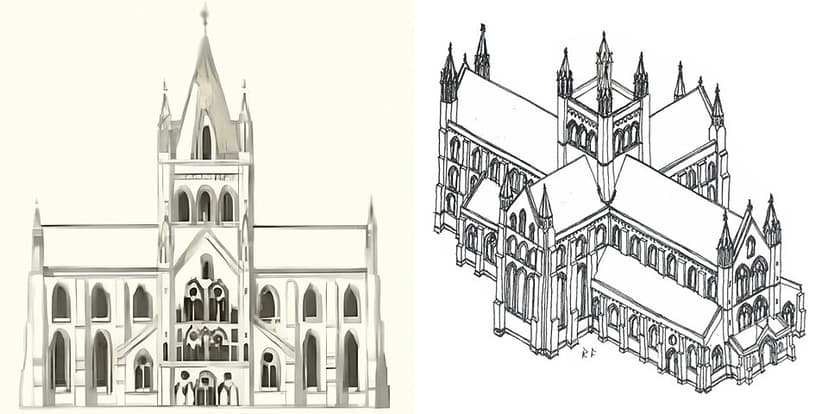
Scone Abbey
Scone Abbey, originally Scone Priory, was a significant Augustinian monastic house in Scone, Perthshire, Scotland. Established between 1114 and 1122 AD, it held the Stone of Destiny, upon which Scottish monarchs were crowned, and played a crucial role in royal ceremonies. Though burned down during the Scottish Reformation in 1559, its historical importance as a center of religious and royal power is well-documented.

Neuwiller-lès-Saverne
Neuwiller-lès-Saverne is a commune in northeastern France, historically significant for its Benedictine abbey founded in 723 by Saint Sigibald. The abbey church, dedicated to Saints Peter and Paul, is a notable landmark with Romanesque elements and is classified as a monument historique. The relics of Saint Adelphus, brought to the abbey in 826, attracted numerous pilgrims, leading to the construction of a separate shrine church.
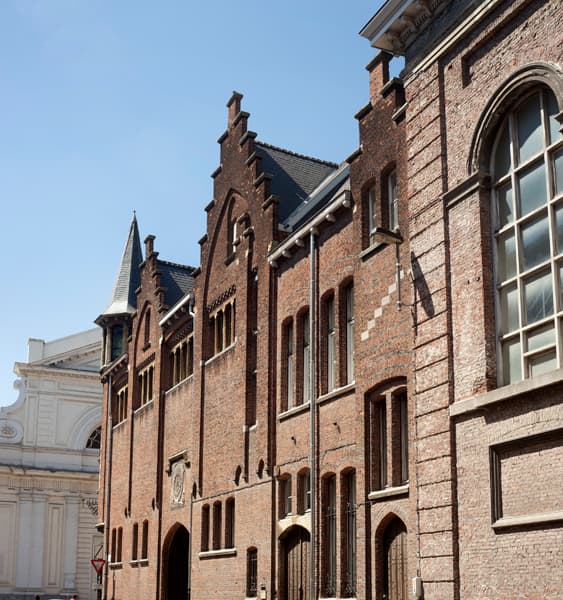
Oost-Eekloo Abbey
Oost-Eekloo Abbey was a Cistercian nunnery founded in Oosteeklo in 1217, later relocating to Ghent after being plundered during the Dutch Revolt. The abbey played a role in the agricultural development of its original locale and, after its move to Ghent, saw the construction of its church, refectory, chapter house, and infirmary. Though suppressed in 1796, the community continued clandestinely until officially recognized again in 1814, eventually dying out by the mid-19th century.