
Nativity of the Most Holy Mother of God Glinskaya Pustyn stauropegial Monastery
The Nativity of the Most Holy Mother of God Glinskaya Pustyn stauropegial Monastery, also known as the Glinsk Hermitage, was a significant spiritual center of the Russian Orthodox Church in the 19th and early 20th centuries. Founded in the 17th century near Putivl, it experienced periods of prosperity and severe suppression by the Soviet government before being reestablished in 1994. Many of its spiritual leaders have been canonized as saints, and it continues to operate under the Ukrainian Orthodox Church (Moscow Patriarchate).
Key Facts
- ›Founded in 1648 after a miraculous icon of the Nativity of the Theotokos was discovered.
- ›Informally known as the Glinsk Hermitage due to the area's historical use by potters for clay (glina).
- ›Experienced a significant revival in the early 19th century under Abbot Philaret (Danilevsky), who implemented a new monastic rule.
- ›Closed by the Soviet government in 1922, with many buildings demolished and monks persecuted.
- ›Reopened in 1994 and regained its stavropegial status in 1996.
- ›Many of its elders have been canonized as saints by the Ukrainian Orthodox Church (Moscow Patriarchate).

- Location of A Miraculous Icon of the Nativity of the Theotokos
- Spiritual Center For the Russian Orthodox Church In the 19th and Early 20th Centuries
- Canonization of Many of Its Elders As Saints
- Glinsk Hermitage
- Nativity of the Theotokos Stavropegial Male Monastery
Abbot Philaret, Paisius Velichkovsky, St. Seraphim of Sarov, Makarii, Schema-Archimandrite Seraphim, Schema-Archimandrite Andronik, Schema-Metropolitan Seraphim, Archimandrite Ilarion, Metropolitan Vladimir of Kiev, Bishop Anthony of Putivl
- Discovery of A Miraculous Icon of the Nativity of the Theotokos
- Foundation of the Monastery In 1648
- Dispossession of Land By Decree of Paul I In 1787
- Revival Under Abbot Philaret In the Early 19th Century
- Closure and Demolition By the Soviet Government In 1922
- Brief Reopening During German Occupation
- Reopening In 1994 After the Dissolution of the Soviet Union
About Nativity of the Most Holy Mother of God Glinskaya Pustyn stauropegial Monastery
The Nativity of the Most Holy Mother of God Glinskaya Pustyn stauropegial Monastery, commonly known as the Glinsk Hermitage, stands as a significant spiritual landmark within Orthodox Christianity. Located in Sosnivka, Ukraine, near the Russian border, its history is marked by periods of flourishing spiritual life and severe persecution.
History and Significance
The monastery's origins trace back to 1648, stemming from the discovery of a miraculous icon of the Nativity of the Theotokos. This event drew pilgrims and led to the establishment of the monastic community. For centuries, it developed as a vital spiritual hub, particularly during the 19th and early 20th centuries, serving as a major center for the Russian Orthodox Church. Its reputation for spiritual depth attracted many, and its monastic rule, influenced by Mount Athos and the teachings of Paisius Velichkovsky, was adopted by numerous other monasteries.
Persecution and Revival
The monastery faced immense challenges with the rise of the atheist Soviet government. It was closed in 1922, its sacred buildings largely destroyed, and its monks subjected to imprisonment and martyrdom. Despite these hardships, a period of revival occurred during the German occupation in World War II, with the monastery reopening from 1942 to 1961. However, it was once again shut down by the Soviet authorities. Following the dissolution of the Soviet Union and subsequent reforms, the Glinsk Hermitage was finally able to reopen in 1994, regaining its stavropegial status in 1996. It now operates under the Ukrainian Orthodox Church (Moscow Patriarchate).
Spiritual Legacy
A notable aspect of the Glinsk Hermitage's legacy is the spiritual stature of its former inhabitants. Many of the elders who lived and served at the monastery have been canonized as saints by the Ukrainian Orthodox Church (Moscow Patriarchate), underscoring its profound influence on Orthodox spiritual life.
Source: Wikipedia ↗
Frequently Asked Questions
When was the Glinsk Hermitage founded?
The monastery was founded in 1648. Tradition states it originated from the discovery of a miraculous icon of the Nativity of the Theotokos on a pine tree.
What is the significance of the name 'Glinsk Hermitage'?
The monastery became informally known as the Glinsk Hermitage because the wooded thicket where it was founded was historically used by potters as a source of clay, or 'glina' in Russian.
What happened to the monastery during the Soviet era?
The monastery was closed in 1922 by the atheist government, its buildings were largely demolished, and many monks were imprisoned or killed. It was reopened briefly during World War II but closed again in 1961.
Is the Glinsk Hermitage still active?
Yes, the monastery was reopened in 1994 and is currently active. It is under the jurisdiction of the Ukrainian Orthodox Church (Moscow Patriarchate).
Are there any notable figures associated with the Glinsk Hermitage?
Yes, many of its elders have been canonized as saints. Abbot Philaret (Danilevsky), who led its revival in the 19th century, is among those glorified.
Related Monasteries
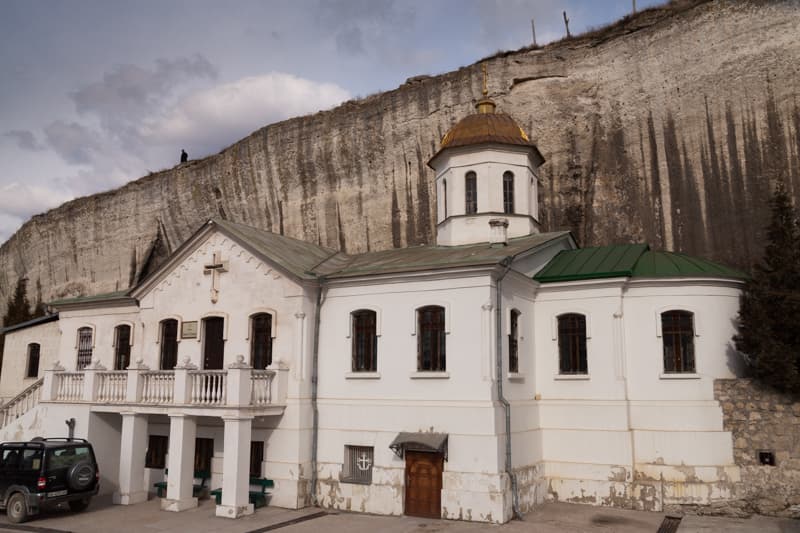
Inkerman Cave Monastery
The Inkerman Monastery of St. Clement is a cave monastery situated in a cliff near the Black River in Inkerman, Crimea. Founded in 1850, it stands on the site of a medieval Byzantine monastery believed to have housed the relics of St. Clement. The monastery has a complex history, including periods of damage, closure, and recent resumption of services.
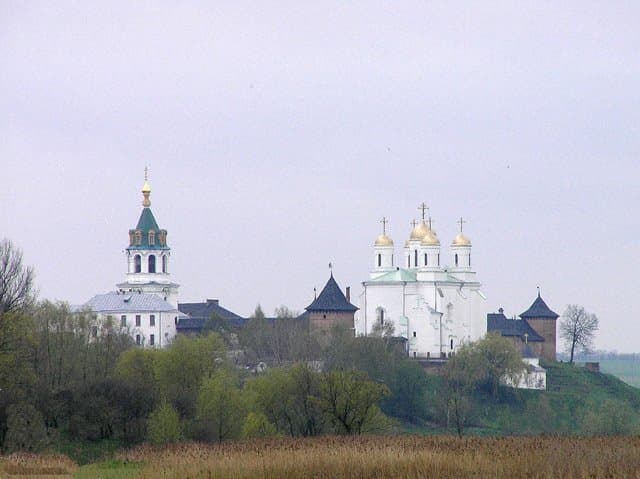
Assumption Cave Monastery
The Assumption Cave Monastery, also known as Sviatohirskyi Uspenskyi Zymnenskyi monastyr, is a significant Ukrainian Orthodox cave monastery located near the village of Zymne. Its origins are attributed to monastic legend, with some accounts suggesting a connection to Vladimir the Great. The monastery has a long and complex history, marked by periods of control by different religious authorities, dissolution, and re-establishment, eventually regaining its status as a stauropegial institution in 1996.

Bakhchysarai Cave Monastery
The Bakhchysarai Cave Monastery, also known as the Dormition Monastery of the Caves, is a significant Eastern Orthodox monastic site carved into cliffs near Bakhchysarai, Crimea. While local tradition suggests an 8th-century founding, the current monastic establishment dates to the 15th century, refounded by monks from Kyiv-Pechersk Lavra. It served as a vital center for Orthodox Christians, particularly those seeking refuge, before periods of decline and closure under Soviet rule, eventually reopening in 1993.