
Muri Abbey
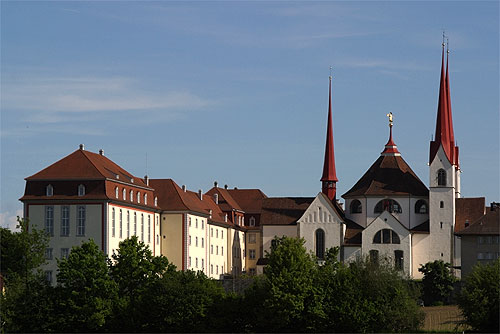
Muri Abbey, a Benedictine monastery dedicated to Saint Martin of Tours, was founded in 1027 by Radbot, Count of Habsburg, and flourished for over eight centuries in Muri, Canton of Aargau, Switzerland. It served as a significant religious and cultural center, housing the burial place of the House of Habsburg and educating many distinguished figures. Though the monastic community was dissolved in 1841 and relocated, the former abbey now functions as a museum and heritage site of national significance.
Key Facts
- ›Founded in 1027 by Radbot, Count of Habsburg.
- ›Dedicated to Saint Martin of Tours.
- ›Served as a Benedictine monastery for over 800 years.
- ›Was the burial place for the House of Habsburg.
- ›Dissolved by the Canton of Aargau in 1841.
- ›The former abbey is now a museum and heritage site.
- Burial Place of the House of Habsburg
- Museum and Cultural Center
- Features Work of Swiss Landscape Painter Caspar Wolf
Kloster Muri
Radbot, Count of Habsburg, Reginbold, Burchard, Blessed Luitfrid, Ranzelin, Cuno, Henry Scheuk, Henry De Schoenwerd, Conrad Ii, George Russinger, Laurentius Von Heidegg, Jakob Meyer, John Jodoc Singisen, Dominic Tschudi, Placid Zurlauben, Adalbert Regli, Karl I, Emperor of Austria, Zita of Bourbon-Parma, Rudolf, Felix
- Founded In 1027
- Abbey Church Consecrated In 1064
- Damaged By Fires In 1300 and 1363
- Attacked By Troops From Bern In the 1530s
- Joined the Congregation of Bursfelde
- Abbots Granted Use of Pontificalia By Pope Julius Ii
- Closed By the Canton In 1841
- Community Relocated To Canton of Unterwalden
About Muri Abbey
Muri Abbey, historically known as Kloster Muri, was a prominent Benedictine monastery dedicated to Saint Martin of Tours. It was founded in 1027 by Radbot, Count of Habsburg, and flourished for over eight centuries in Muri, located in the Canton of Aargau, near Zürich, Switzerland. The abbey played a significant role in the religious, cultural, and political landscape of the region, serving as a center of learning and civilization, and notably as a burial place for the House of Habsburg.
History and Significance
The monastery's establishment marked the beginning of a long and influential history. A colony of monks from Einsiedeln Abbey, led by Prior Reginbold, formed its initial community. Under its early abbots, the abbey church was consecrated in 1064, and the community saw reinforcements from the Abbey of St. Blaise. Over the centuries, Muri Abbey was led by notable abbots such as Cuno, who founded a school and enriched the library, and Henry Scheuk, who expanded its landed property. The abbey's reputation grew, attracting the special protection of Emperor Henry V in 1114 and the solicitous attention of popes. It held extensive possessions and rights in various regions.
Despite periods of hardship, including devastating fires in 1300 and 1363, and disruptions from wars, Muri Abbey persevered. Abbot George Russinger's involvement in the Council of Constance and his efforts to reform the abbey by joining it to the Congregation of Bursfelde in the 15th century were significant. In the 16th century, Abbot Laurentius von Heidegg, a friend of Heinrich Bullinger, helped protect the abbey during attacks by Bernese troops. Abbot John Jodoc Singisen is recognized as a second founder for restoring discipline and extending care to other Swiss Benedictine houses, contributing to the establishment of the Swiss Congregation in 1602.
In the 18th century, the abbey experienced renewed prosperity and prestige. Abbots were raised to the rank of princes of the Holy Roman Empire, and vast sums were spent on rebuilding and embellishing the monastery and church, which served as the ancient mausoleum of the imperial family. However, with the spread of the French Revolution, the Canton of Aargau sought to dismantle religious institutions. After a prolonged resistance, Muri Abbey was closed by the canton in 1841, and its community was expelled, relocating to Canton of Unterwalden.
Legacy and Present Day
The former abbey church remains the oldest burial place of the Habsburgs. In the 20th century, the hearts of the last reigning Imperial couple, Karl I and Zita of Bourbon-Parma, were interred in the family crypt. Today, the former abbey is no longer an active monastic site but has been transformed into a museum and cultural center. It houses valuable treasures and showcases the work of Swiss landscape painter Caspar Wolf. Designated as a heritage site of national significance, the former Muri Abbey stands as a testament to its rich history and enduring cultural importance.
Source: Wikipedia ↗
Frequently Asked Questions
When was Muri Abbey founded?
Muri Abbey was founded in 1027. It was established by Radbot, Count of Habsburg, one of the progenitors of the House of Habsburg.
What religious tradition does Muri Abbey belong to?
Muri Abbey is a Benedictine monastery, belonging to the Benedictine religious tradition.
What is the current status of Muri Abbey?
The monastic community was dissolved in 1841 and relocated. The former abbey is now a museum and cultural center, recognized as a heritage site of national significance.
Who founded Muri Abbey?
Muri Abbey was founded by Radbot, Count of Habsburg. He was a significant figure in the lineage of the House of Habsburg.
Is Muri Abbey still an active monastery?
No, the active monastic community was expelled from Muri in 1841 when the canton closed the abbey. The community relocated to Canton of Unterwalden.
What is notable about Muri Abbey's historical significance?
Muri Abbey was a favored burial place of the House of Habsburg, with the oldest burial place of the family located in its abbey church. It also flourished for over eight centuries as a center of religion and civilization.
Related Monasteries

Bubikon Commandery
Bubikon Commandery, also known as Bubikon Castle, was a medieval monastery of the Knights Hospitaller. Founded between 1191 and 1198, it grew to own significant lands across the present-day Canton of Zürich. The commandery was secularized during the Reformation, and its buildings now house a museum dedicated to its history and the Order.

Tänikon Abbey
Tänikon Abbey was a Cistercian nunnery in Thurgau, Switzerland, first historically mentioned as a nunnery in 1249. It became a center for the Counter Reformation in the 17th century but was dissolved by the canton of Thurgau in 1848, with its buildings later becoming a museum dedicated to agricultural technology, known as Agrotechnorama Tänikon. The former abbey church and conventual buildings are recognized as Swiss heritage sites of national significance.
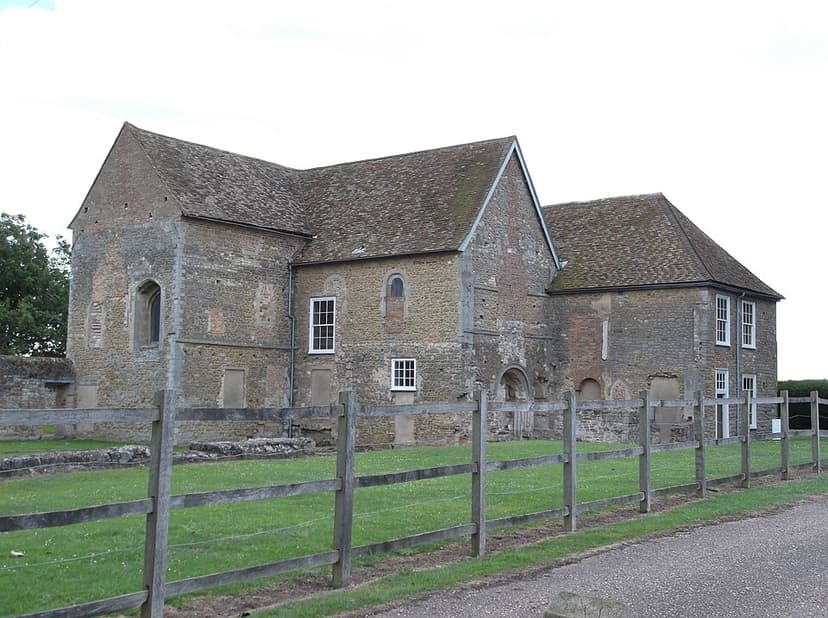
Denny Abbey
Denny Abbey is a historic monastic site near Waterbeach, Cambridgeshire, England, that has been home to three different religious orders: Benedictine monks, Knights Templar, and Franciscan Poor Clares. Today, it functions as the Farmland Museum and Denny Abbey, preserving its significant architectural remains and showcasing local history and agricultural practices.