
Bubikon Commandery
Bubikon Commandery, also known as Bubikon Castle, was a medieval monastery of the Knights Hospitaller. Founded between 1191 and 1198, it grew to own significant lands across the present-day Canton of Zürich. The commandery was secularized during the Reformation, and its buildings now house a museum dedicated to its history and the Order.
Key Facts
- ›Established as a commandry of the Knights Hospitaller between 1191 and 1198 AD.
- ›Founded through an exchange of goods between the Counts of Toggenburg and Counts of Rapperswil.
- ›Owned extensive lands throughout the Canton of Zürich at its peak.
- ›The chapel features Romanesque mural paintings from the first half of the 13th century.
- ›The buildings were renewed in the 20th century and house a museum and an herb garden.
- ›It is a Swiss heritage site of national significance.

Romanesque, Gothic, Renaissance
Chapel of St. John the Baptist, Ritterhaus History Museum, Hotz Coin Collection, Collection of Antique Arms, Epochen-KräUtergarten, Romanesque Mural Paintings
Bubikon Castle, Ritterhaus Bubikon
Diethelm V Von Toggenburg, Rudolf Von Rapperswil, Johann Jakob Vogel
Founding of the Commandry, Secularization During the Reformation, Reformation In ZüRich
About Bubikon Commandery
Bubikon Commandery, also historically known as Bubikon Castle or Ritterhaus Bubikon, is a significant medieval complex located in the municipality of Bubikon within the Swiss Canton of Zürich. It stands as a Swiss heritage site of national importance and was a former commandry of the Knights Hospitaller. Its history spans from its establishment in the late 12th century to its secularization and transformation into a museum and protected site.
History and Establishment
The foundation of Bubikon Commandery is attributed to an exchange of goods between the Counts of Toggenburg and Counts of Rapperswil, likely occurring in the early 1190s. Between 1191 and 1198 AD, Diethelm V von Toggenburg and Vogt Rudolf von Rapperswil granted the site to the Knights Hospitaller to resolve disputes over legacy and claims. The commandry's influence and possessions grew substantially throughout the 13th and 14th centuries through donations from local noble families, eventually owning land across the entire present-day Canton of Zürich. The inhabitants of the commandry received burgrecht, or rights of citizenship, from the neighboring town of Rapperswil and later from the city of Zürich.
Buildings and Architecture
The complex comprises several key structures. The oldest buildings are the Bruderhaus (brothers' house) and the 12th-century chapel of St. John the Baptist, both likely constructed in the early 1190s, possibly incorporating an older structure. The chapel features a Romanesque nave, with a Gothic chancel added later, and retains Romanesque mural paintings from the first half of the 13th century depicting the founding families and scenes from the life of Saint John the Baptist. The main building, or commander's house, and an adjacent wing were developed between the 13th and 15th centuries. Following the Reformation, this main building served as the residence for the local governor appointed by Zürich. Representative rooms within this structure were lavishly decorated in the Renaissance style in 1570.
Reformation and Later History
During the Reformation in Zürich, Johannes Stumpf, the prior of the commandry, supported its secularization, a process that occurred in spring 1525. The convent was secularized in 1528, and the commandry's secularization in 1798 led to its lands partially becoming the property of the city of Zürich. Since 1936, the Ritterhausgesellschaft (Ritterhaus society) has managed the building complex, which underwent complete renewal in 1947 and further renovations to the chapel and museum in the late 20th and early 21st centuries. The site has been under federal protection since 1959 and is listed as a Class A object of national importance in the Swiss inventory of cultural property.
Museum and Public Access
The commander's building now houses the Ritterhaus history museum, established in the 1940s. Its collections include the Hotz coin collection, detailing the Order's history, and antique arms donated by Johann Jakob Vogel. In 2011, an "epochal herb garden" (Epochen-Kräutergarten) was opened to the public, showcasing medieval herbs. The adjacent farm and barn buildings are privately operated and not part of the Ritterhaus building complex. Bubikon Commandery is generally open to the public for visits.
Source: Wikipedia ↗
Frequently Asked Questions
When was Bubikon Commandery founded?
Bubikon Commandery was founded between 1191 and 1198 AD. This establishment was likely in compensation for claims related to the Alt-Rapperswil lands and rights.
Who founded Bubikon Commandery?
The commandry was granted by Diethelm V von Toggenburg and Vogt Rudolf von Rapperswil. It was established for the Knights Hospitaller.
What is the current status of Bubikon Commandery?
Bubikon Commandery is now a heritage site housing a museum managed by the Ritterhausgesellschaft. The buildings have been renewed, and it features a museum and an herb garden.
What are the oldest parts of Bubikon Commandery?
The oldest buildings are the Bruderhaus (brothers' house) and the 12th-century chapel of St. John the Baptist, both likely built in the early 1190s. The chapel's nave is Romanesque, with a Gothic chancel added later.
What historical events affected Bubikon Commandery?
The commandry was secularized during the Reformation in Zürich in 1525, with its lands partially becoming the property of the city of Zürich. The chapel was desecrated and secularised during this period.
What can be seen at the Ritterhaus museum?
The museum houses the Ritterhaus history museum, including the Hotz coin collection showcasing the Order and its Grandmasters from the 14th to 18th centuries, and a collection of antique arms donated by Johann Jakob Vogel.
Related Monasteries

Tänikon Abbey
Tänikon Abbey was a Cistercian nunnery in Thurgau, Switzerland, first historically mentioned as a nunnery in 1249. It became a center for the Counter Reformation in the 17th century but was dissolved by the canton of Thurgau in 1848, with its buildings later becoming a museum dedicated to agricultural technology, known as Agrotechnorama Tänikon. The former abbey church and conventual buildings are recognized as Swiss heritage sites of national significance.
Muri Abbey
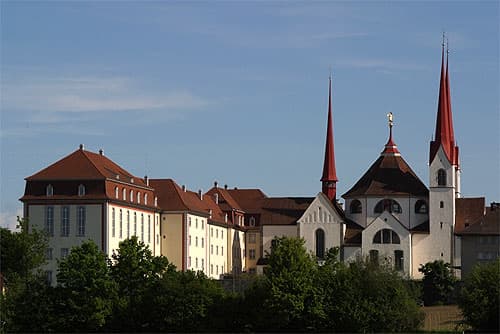
Muri Abbey, a Benedictine monastery dedicated to Saint Martin of Tours, was founded in 1027 by Radbot, Count of Habsburg, and flourished for over eight centuries in Muri, Canton of Aargau, Switzerland. It served as a significant religious and cultural center, housing the burial place of the House of Habsburg and educating many distinguished figures. Though the monastic community was dissolved in 1841 and relocated, the former abbey now functions as a museum and heritage site of national significance.
Denny Abbey
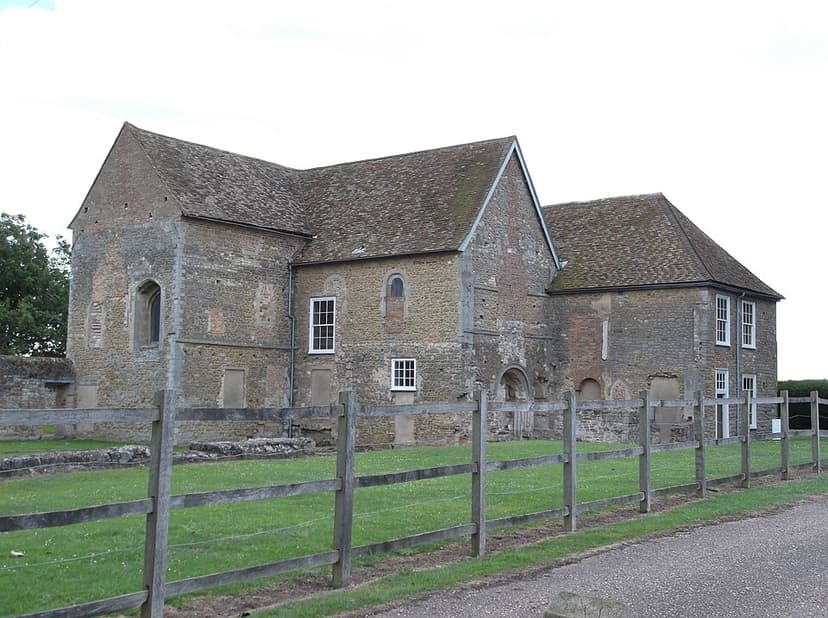
Denny Abbey is a historic monastic site near Waterbeach, Cambridgeshire, England, that has been home to three different religious orders: Benedictine monks, Knights Templar, and Franciscan Poor Clares. Today, it functions as the Farmland Museum and Denny Abbey, preserving its significant architectural remains and showcasing local history and agricultural practices.