
Tänikon Abbey
Tänikon Abbey was a Cistercian nunnery in Thurgau, Switzerland, first historically mentioned as a nunnery in 1249. It became a center for the Counter Reformation in the 17th century but was dissolved by the canton of Thurgau in 1848, with its buildings later becoming a museum dedicated to agricultural technology, known as Agrotechnorama Tänikon. The former abbey church and conventual buildings are recognized as Swiss heritage sites of national significance.
Key Facts
- ›First mentioned as an established nunnery in 1249.
- ›Became a Cistercian institution around the MID-13th century.
- ›Served as a center for the Counter Reformation during the 17th century.
- ›Dissolved by the canton of Thurgau in 1848.
- ›The former conventual buildings now house the Agrotechnorama Tänikon museum.
- ›The former abbey church and conventual buildings are Swiss heritage sites of national significance.

- Former Abbey Church
- Conventual Buildings
- Marble Pulpit and Altar By Johann Josef Mosbrugger
Tanninchova
Abbess Anna Welter of Blidegg, Sophia Von GrüTh, Johann Josef Mosbrugger
- Protestant Reformation
- Helvetic Republic
- Dissolution By the Grand Council of Thurgau In 1848
About Tänikon Abbey
Tänikon Abbey was a significant Cistercian nunnery located in Ettenhausen, within the municipality of Aadorf in the Swiss canton of Thurgau. While the site was first mentioned in historical records as a local court named Tanninchova in 789, an established nunnery at Tänikon is first documented in 1249. Around the mid-13th century, it officially became a Cistercian institution, with records indicating the presence of lay brothers who worked onsite until at least 1491.
History and Significance
The abbey played a notable role in regional history, particularly during the Counter Reformation, becoming a strict center for Cistercian observance in the 17th century. Throughout its existence, Tänikon acquired substantial landholdings across various localities in the region. However, the wave of secularization following the Helvetic Republic significantly impacted the abbey. Its lands were nationalized, and the community was largely forbidden from accepting new novices. In 1848, the Grand Council of Thurgau formally dissolved the abbey and took possession of its buildings.
Modern Use and Heritage Status
Following its dissolution, the abbey and its chapel were sold in 1850 and later underwent further sales. In the mid-20th century, the premises were acquired by the Swiss Federal Institute of Business and Agriculture, which evolved into the Agrotechnorama Tänikon. Today, the former abbey church and conventual buildings are recognized as Swiss heritage sites of national significance. Agrotechnorama Tänikon, housed in the former abbey barn, operates as a museum dedicated to the evolution of agricultural technology in Switzerland, featuring exhibits from 1813 to 1984. The museum is accessible by appointment.
Source: Wikipedia ↗
Frequently Asked Questions
When was Tänikon Abbey founded?
While Tänikon was first mentioned as a local court in 789, an established nunnery at the site is first recorded in 1249. It later became Cistercian around the mid-13th century.
What happened to Tänikon Abbey after its dissolution?
After being dissolved by the canton of Thurgau in 1848, the buildings were sold and eventually became the Agrotechnorama Tänikon, a museum focused on agricultural technology.
Is Tänikon Abbey still an active monastery?
No, Tänikon Abbey is no longer an active monastery. The community was dissolved in 1848, and the former buildings now serve as a museum and heritage sites.
What is Agrotechnorama Tänikon?
Agrotechnorama Tänikon is a museum housed in the former abbey barn, dedicated to the development of agricultural technology in Switzerland from the 19th and 20th centuries. It displays approximately 750 objects showcasing the transition from manual labor to mechanized farming.
Can I visit Tänikon Abbey?
The former abbey church and conventual buildings are recognized as Swiss heritage sites. Agrotechnorama Tänikon, located in the former abbey barn, is open by appointment only.
Related Monasteries

Bubikon Commandery
Bubikon Commandery, also known as Bubikon Castle, was a medieval monastery of the Knights Hospitaller. Founded between 1191 and 1198, it grew to own significant lands across the present-day Canton of Zürich. The commandery was secularized during the Reformation, and its buildings now house a museum dedicated to its history and the Order.
Muri Abbey
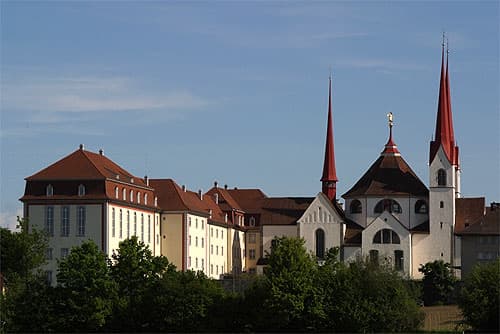
Muri Abbey, a Benedictine monastery dedicated to Saint Martin of Tours, was founded in 1027 by Radbot, Count of Habsburg, and flourished for over eight centuries in Muri, Canton of Aargau, Switzerland. It served as a significant religious and cultural center, housing the burial place of the House of Habsburg and educating many distinguished figures. Though the monastic community was dissolved in 1841 and relocated, the former abbey now functions as a museum and heritage site of national significance.
Denny Abbey
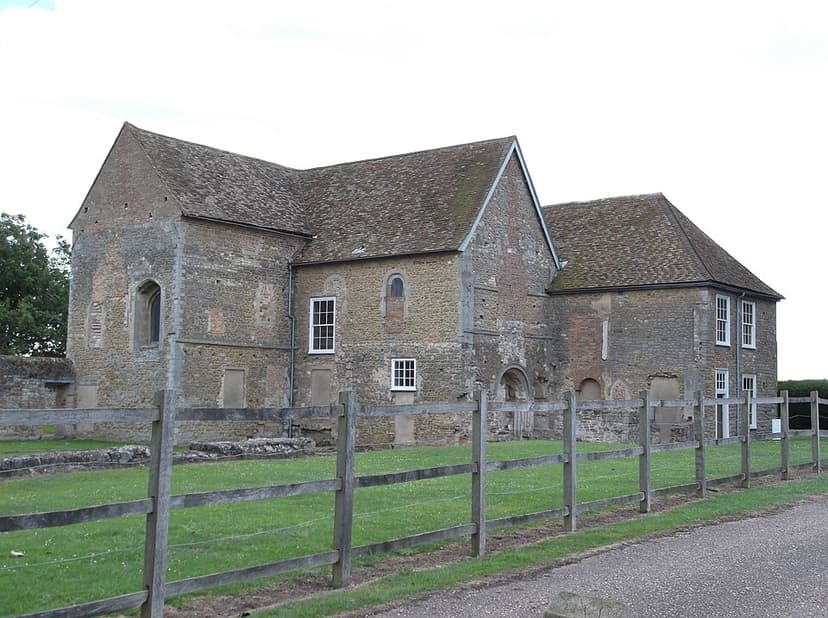
Denny Abbey is a historic monastic site near Waterbeach, Cambridgeshire, England, that has been home to three different religious orders: Benedictine monks, Knights Templar, and Franciscan Poor Clares. Today, it functions as the Farmland Museum and Denny Abbey, preserving its significant architectural remains and showcasing local history and agricultural practices.