
Zürich
Protestant Reformation·Switzerland·active·2nd century AD
Zürich, originally known as Turicum by the Romans, is the largest city in Switzerland and a significant historical center. It evolved from an early Roman settlement and tax-collecting point to a medieval city with imperial immediacy. In 1519, it became a pivotal hub for the Protestant Reformation under Huldrych Zwingli. Today, Zürich is a major global financial center, renowned for its museums, art galleries, and as a transportation hub.
Key Facts
- ›Founded by the Romans and known as Turicum.
- ›Became a center of the Protestant Reformation in 1519 under Huldrych Zwingli.
- ›Gained independent status as an imperial free city in 1218.
- ›Home to the Fraumünster abbey, founded in 853.
- ›The first railway in Switzerland, the Spanisch-Brötli-Bahn, began service from Zürich in 1847.
- ›A major financial center with a population of over 436,000 (municipality).

Renaissance
GrossmüNster, FraumüNster Abbey, Lindenhof Hill, Lake Zurich, Bahnhofstrasse, Swiss National Museum, Natural History Museum, Kunsthaus
Turicum, ZüRi
Huldrych Zwingli, Louis the German, Hildegard, Rudolf Brun, Arnold BüRkli
Roman Foundation As Turicum, Foundation of FraumüNster Abbey, Gained Imperial Immediacy, Completion of the Manesse Codex, Persecution of Jews During the Black Death, Joined the Old Swiss Confederacy, Old Zurich War, Start of the Swiss Reformation, Construction of Second Ring of Fortifications, Became A Republic, ZüRiputsch, Treaty of Zurich Signed, Incorporation of Outlying Districts, Accidental Bombing During World War Ii, Drug Crisis and Harm Reduction Strategy
About Zürich
Zürich, a city with a history stretching back over 2,000 years, is the largest municipality in Switzerland and serves as the capital of the canton of Zürich. Its origins trace back to a Roman settlement known as Turicum, established around the 2nd century AD, which functioned as a tax-collecting point. The area shows evidence of human presence dating back over 6,400 years.
Early History and Medieval Significance
During the Middle Ages, Zürich developed into a significant urban center. In 853 AD, Louis the German founded the Fraumünster abbey, which played a crucial role in the city's early development. By 1218, Zürich attained the status of imperial immediacy, becoming an imperial free city and wielding considerable political autonomy. The city was also a center for intellectual and artistic endeavors, evidenced by the production of the illuminated Manesse Codex between 1304 and 1340.
Reformation and Confederacy
Zürich emerged as a primary center of the Protestant Reformation in Europe in 1519, led by Huldrych Zwingli, who was the main preacher at the Grossmünster. The city officially joined the Old Swiss Confederacy on May 1, 1351, becoming its fifth member. Despite a temporary expulsion during the Old Zurich War (1440-1446), Zürich was readmitted and played a significant role in the confederacy's governance, serving as the presiding canton of the Diet for a period.
Modern Development and Identity
In modern times, Zürich has transformed into a leading global financial center. The 19th century saw substantial urban development, including the establishment of Switzerland's first railway line originating from Zürich in 1847 and the construction of the Quaianlagen, which reshaped its lakefront. The city has also been a pioneer in social policies, notably its harm reduction strategies implemented in response to a severe drug crisis in the 1980s and 1990s. Today, Zürich is recognized for its high quality of life, vibrant cultural scene, and as a crucial hub for transportation and commerce.
Source: Wikipedia ↗
Frequently Asked Questions
What is the historical origin of the name Zürich?
The earliest known form of the city's name is Turicum, attested on a tombstone from the late 2nd century AD, interpreted as a derivation from a Gaulish personal name, Tūros. This Latinized form evolved through Germanic influences to its current name.
When did Zürich become a significant religious center?
Zürich became a primary center of the Protestant Reformation in Europe in 1519, with Huldrych Zwingli serving as the main preacher at the Grossmünster.
What was Zürich's status during the Middle Ages?
During the Middle Ages, Zürich gained the independent and privileged status of imperial immediacy, comparable to statehood, and was effectively ruled by the abbess of the Fraumünster abbey.
How did Zürich contribute to the development of the Swiss Confederacy?
Zürich joined the Swiss Confederacy as the fifth member on May 1, 1351. It also served as the presiding canton of the Diet from 1468 to 1519, acting as the executive and lawmaking body.
What major urban development occurred in modern Zürich?
The construction of the Quaianlagen in the 19th century transformed Zürich from a medieval river town into a modern city on the shores of Lake Zürich, significantly reshaping its urban landscape.
Related Monasteries
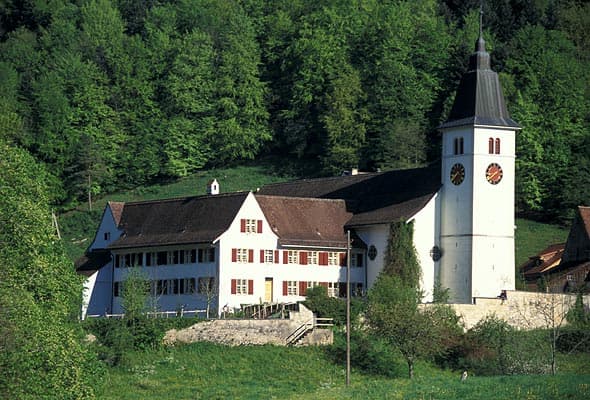
Beinwil Abbey
Beinwil Abbey, originally a Benedictine monastery founded around 1100, experienced periods of conflict, dissolution, and revival. Despite being dissolved in the 16th century and later re-established, it faced further dissolution during the Kulturkampf. In recent times, it transitioned from an ecumenical center to an Orthodox monastery, though its canonical affiliation has been questioned.

Einsiedeln Abbey
Einsiedeln Abbey is a significant Catholic Benedictine monastery located in Einsiedeln, Switzerland, renowned as one of the most important Baroque monastic sites and Switzerland's largest pilgrimage destination. It is a territorial abbey, meaning it is not under the jurisdiction of a local diocese, and is famous for housing the Black Madonna of Einsiedeln, which draws approximately 800,000 visitors annually. The abbey supports itself through various businesses, operates a private high school, and maintains an active community of around 40 monks.

Engelberg Abbey
Engelberg Abbey is a historic Benedictine monastery located in Engelberg, Switzerland, founded in 1120. It was established by Count Conrad of Sellenbüren and initially populated by monks from Muri Abbey, eventually becoming a double monastery housing both monks and nuns. Over centuries, it held significant spiritual and temporal jurisdiction, though many rights were lost during the French Revolution. Despite fires and political disturbances, the abbey has been rebuilt and continues its monastic traditions, also operating educational institutions.