
Minster in Thanet Priory
Christian·England·Active Priory and Ruins·7th century
Minster Abbey in Minster-in-Thanet, Kent, England, originally comprised two abbeys: a 7th-century foundation that endured until the Dissolution of the Monasteries, and a modern Benedictine priory established in 1937 beside its ruins. The ancient abbey was famously founded by Domne Eafe, who received land as compensation for her brothers' deaths, with its boundaries legendarily defined by a deer. The current site hosts a Benedictine community of women.
Key Facts
- ›Founded in AD 670 by Domne Eafe (also known as Domneva) as a double monastery.
- ›Legendarily founded on land granted to Domne Eafe, with boundaries defined by a deer.
- ›Sacked by Vikings around 855 according to late traditions.
- ›Dissolved during the Reformation and later became Crown property.
- ›Re-established in 1937 as St Mildred's Priory by Benedictine nuns from Germany.
- ›A relic of St Mildred was returned to Minster in 1953.
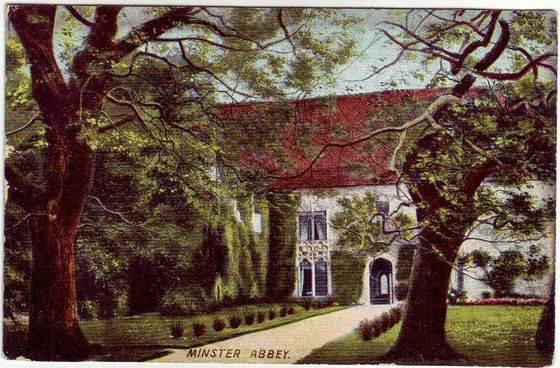
Saxon, Norman
Saxon and Norman Wings, Chapel Accessible For Private Prayer, Site of A 7th-Century Double Monastery
St Mildred's Priory
Domne Eafe, Eormenburg, Mildrith, Edburga, Selethryth, Cwoenthryth, æThelred, æThelberht, King Centwine of the West Saxons, King Offa of Mercia, Archbishop Wulfred of Canterbury, Asser
Foundation of the Double Monastery, Viking Sack, Dissolution of the Monasteries, Purchase By Benedictine Nuns From EichstäTt, Return of A Relic of St Mildred
About Minster in Thanet Priory
Minster Abbey
Minster Abbey, located in Minster-in-Thanet, Kent, England, encompasses the historical site of a significant 7th-century monastic foundation and the present-day St Mildred's Priory, a Benedictine community established in 1937. The original abbey, a double monastery, was reputedly founded around AD 670 by Domne Eafe, a Kentish princess who received land as compensation for the deaths of her brothers. Local legend states that the boundaries of this land were defined by a pet deer, a motif that has become symbolic of the site.
History and Succession
Following Domne Eafe, the leadership of the abbey passed to her daughter, Mildrith (also known as Mildred), around the year 700. Subsequent abbesses included Edburga, daughter of King Centwine of the West Saxons, and Selethryth, sister of King Offa of Mercia, who is noted for reclaiming seized estates. Traditions suggest the abbey was sacked by Vikings in approximately 855, though contemporary writings from Asser at the end of the 9th century describe an "excellent minster" still in existence. The charter S 535 from 948 also mentions the community's boundary. During the Reformation, the ancient abbeys were dissolved, and Minster Abbey became Crown property, eventually serving as a private residence.
Modern Foundation and Visiting
In 1937, Benedictine nuns from St Walburga's Abbey in Bavaria purchased the site, establishing it as a dependent Priory, St Mildred's Priory, seeking refuge from persecution. A significant event occurred in 1953 when a small relic of St Mildred was returned to Minster from Deventer, Netherlands. While most of the abbey grounds remain closed to the public, visitors can view the exterior of the Saxon and Norman wings on guided tours, and the abbey's chapel is accessible for private prayer. The nearby parish church, St Mary the Virgin, is also available for visitors. Minster railway station is conveniently located a short distance from the abbey.
Source: Wikipedia ↗
Frequently Asked Questions
When was the original Minster Abbey founded?
The original Minster Abbey was founded around AD 670 by Domne Eafe. This marked the beginning of a monastic presence in Minster-in-Thanet that would last for over a millennium.
What is the legend behind the founding of Minster Abbey?
According to legend, Domne Eafe, a Kentish princess, was granted land for a house of prayer as compensation for the killing of her brothers. The extent of the land was said to be defined by what her pet deer could cover in a single day.
What happened to the original Minster Abbey?
The original Minster Abbey was dissolved during the Dissolution of the Monasteries at the Reformation. It subsequently became Crown property and was later used as a private house.
Is there still a monastic community at Minster-in-Thanet?
Yes, beside the ruins of the ancient abbey, St Mildred's Priory was founded in 1937. This is a Benedictine community of women.
Can I visit Minster Abbey?
Most of the grounds of the abbey are closed to the public. However, it is possible to view the outside of the Saxon and Norman wings on guided tours. The abbey's chapel is open for private prayer.
Who were some notable abbesses of the early Minster Abbey?
Early abbesses included Domne Eafe, her daughter Mildrith (Mildred), Edburga (daughter of King Centwine), Selethryth (sister of King Offa of Mercia), and Cwoenthryth.
Related Monasteries

Hartlepool — St Hilda's Monastery
Hartlepool Abbey, also known as Heretu Abbey, was a Northumbrian monastery founded in 640 CE by Hieu and Aidan of Lindisfarne. It was a significant double monastery, housing both monks and nuns, and was notable for its early female leadership, with Hieu serving as the first abbess. The monastery played a role in early Christianity in Northumbria and marks the earliest beginnings of the modern town of Hartlepool.

Lyminge Abbey
Lyminge Abbey was one of the earliest religious houses established in England, founded by Æthelburh of Kent, daughter of King Æthelberht, in the 7th century. After returning to Kent following the death of her husband, King Edwin of Northumbria, Æthelburh became the abbess of this nunnery and convent. The abbey faced significant challenges due to Viking raids, leading its inhabitants to seek refuge in Canterbury by 804.

Wearmouth Abbey
Wearmouth-Jarrow Abbey was a significant Benedictine double monastery in Anglo-Saxon Northumbria, founded by Benedict Biscop in 674. It became a renowned center of learning and book production, notably associated with the scholar Bede. Though sacked by Vikings and later refounded as cells of Durham Priory, its monastic buildings largely fell into ruin after the Dissolution of the Monasteries in 1536, with the abbey churches surviving as parish churches.