
Menat Abbey
Christianity·France·Parish church and museum·7th century
Menat Abbey is one of the oldest monastic foundations in the Auvergne region of France, established in the village of Menat. Rebuilt and reformed in the late 7th century, it became a significant center for monastic reform and a wealthy priory with numerous dependencies. Although it faced periods of decline, destruction, and sale during the French Revolution, parts of its Romanesque structure, including the church, have been preserved and repurposed.
Key Facts
- ›One of the oldest monastic foundations in Auvergne.
- ›Rebuilt and reformed in the late 7th century by Meneleus of Menat.
- ›Was once attached to the powerful Cluny Abbey.
- ›Features Romanesque architecture, including a large church and a carved bell tower.
- ›Suffered destruction and sale during the French Revolution but was returned to worship in 1802.
- ›Classified as a historical monument in 1977.

Romanesque, Gothic
Carved Bell Tower, Romanesque Portal, Multi-Lobed Portal, Capital Depicting the Legend of MéNéLéE, Paleontological Museum, 15th-Century Murals, Remains of Gothic Decor In the Refectory
Abbaye De Menat
Meneleus of Menat
- Rebuilt and Reformed At the End of the 7th Century.
- Became One of the Centers of Monastic Reform In Auvergne.
- Fortified To Defend Against Brigands.
- Became In Commendam In 1628.
- Sold As National Property During the French Revolution.
- Abbey Church Returned To Worship In 1802.
- Classified As A Historical Monument In 1977.
About Menat Abbey
Menat Abbey, known in French as Abbaye de Menat, is a historically significant monastic site located in the village of Menat, within the Puy-de-Dôme department of France, situated in the Sioule valley. It stands as one of the oldest monastic foundations in the Auvergne region, with its origins tracing back to a period of significant religious development.
History and Development
The abbey's foundations are ancient, but it underwent a crucial rebuilding and reformation at the end of the 7th century. This revitalization was led by Meneleus of Menat, who sought refuge from an arranged marriage. Later, Menat Abbey became associated with the powerful Cluny Abbey, a connection that positioned it as a key center for monastic reform across Auvergne. The monastery held considerable influence, managing numerous dependent parishes from which it drew income, including tithes. Its dependencies extended to other significant religious sites in the region.
During the Romanesque period, the abbey boasted a substantial church. As the region faced periods of instability, the abbey was fortified to protect against marauding bands. The abbey later entered a period of decline, becoming an abbey in commendam in 1628. By the eve of the French Revolution, it was in a state of significant decay and on the brink of ruin.
Transformation and Preservation
The French Revolution brought further upheaval, with the abbey being sold as national property. This led to the desecration of its church and considerable destruction to the complex. However, a significant turn occurred in 1802 when the abbey church was returned to religious use, becoming the parish church for the village of Menat. The importance of its remaining structures was recognized with its classification as a historical monument in 1977, further supplemented by an inscription in 2015.
Architectural Features and Current Use
The surviving monastic complex showcases elements of its Romanesque past, including a fortified west turret, a Romanesque portal, and a striking carved bell tower. The cloister, which once encircled the abbey buildings, has largely disappeared, with only the west gallery remaining attached to the abbey dwelling. The refectory, a large rectangular room with 14th-century Gothic decor, has suffered damage but still retains visible remnants of painted decoration and carved vaults.
Within the nave of the abbey church, a capital that serves as a baptismal font notably features a depiction of the legend of Ménélée, the monastery's patron saint. The site also houses a paleontological museum in a portion of the abbey. On the first floor, visitors can find 15th-century murals, including a rare Roman calendar. The abbey is now a site of historical and cultural interest, with parts accessible to the public.
Source: Wikipedia ↗
Frequently Asked Questions
When was Menat Abbey founded?
Menat Abbey is considered one of the oldest monastic foundations in Auvergne. It was rebuilt and reformed at the end of the 7th century by Meneleus of Menat.
What is the architectural style of Menat Abbey?
The monastic complex includes a Romanesque abbey church, cloister, and convent buildings. The church was noted for its Romanesque period architecture, and remains such as a carved bell tower and a Romanesque portal are still preserved.
What happened to Menat Abbey during the French Revolution?
On the eve of the French Revolution, Menat Abbey was in decline and on the verge of ruin. It was sold as national property during the Revolution, leading to desecration of the church and significant destruction of the complex.
Is Menat Abbey still an active monastery?
The abbey church was returned to worship in 1802 and now serves as the parish church of Menat. While parts of the complex have been repurposed, historical accounts do not indicate the presence of an active monastic community today.
What notable features can be seen at Menat Abbey?
The abbey church preserves a magnificent carved bell tower and Romanesque portals. A capital depicting the legend of Ménélée, the monastery's patron saint, is used as a baptismal font. Additionally, a paleontological museum is housed within part of the abbey, and 15th-century murals, including a Roman calendar, are present.
Related Monasteries

Maroilles Abbey
Maroilles Abbey was a significant Benedictine monastery located in Maroilles, France, founded around 650 by Count Chonebert. It played a notable role in the region for over a millennium, housing relics and following the Rule of St. Benedict. Despite periods of damage and repair, the abbey reached its zenith in the 18th century before being suppressed and largely destroyed during the French Revolution.
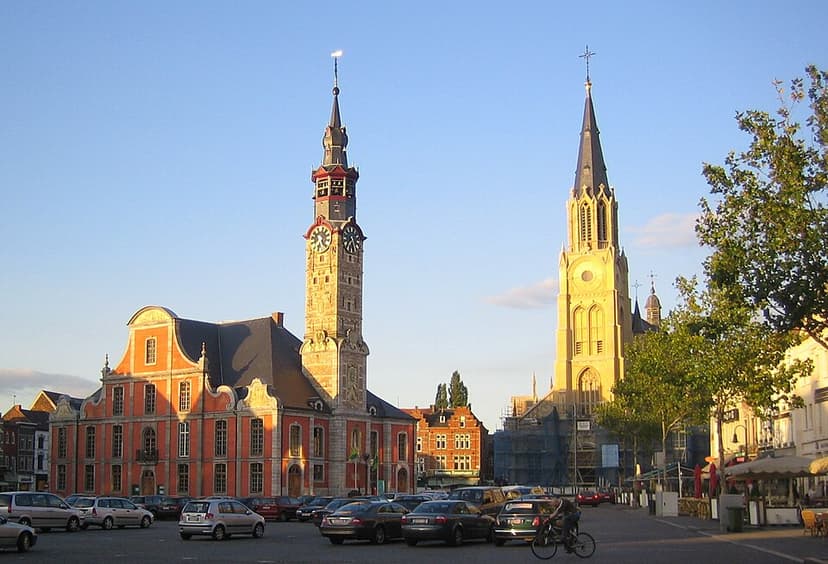
Sint-Truiden
Sint-Truiden is a Belgian city that developed around an abbey founded in the 7th century by St. Trudo. It grew into a significant pilgrimage center and prosperous town known for its linen industry and trade. After a period of decline, the city revitalized as the center of a fruit-producing region and has retained several historical and architectural landmarks.
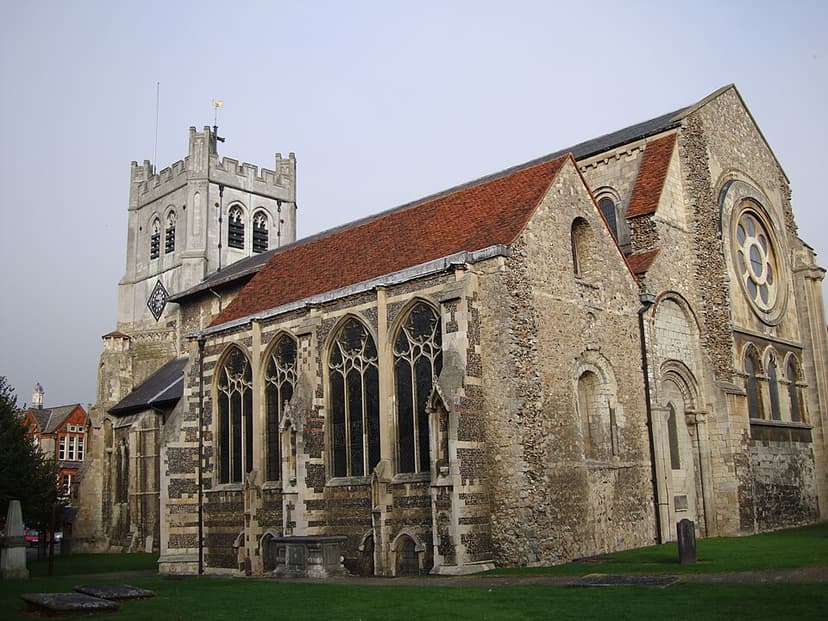
Waltham Abbey
Waltham Abbey, officially the Abbey Church of Waltham Holy Cross and St Lawrence, has a history of continuous worship dating back to the 7th century. Originally a monastic site, it was refounded as an Augustinian abbey in 1177 and became a major pilgrimage destination before its closure in 1540 during the Dissolution of the Monasteries. The present building primarily dates from the early 12th century, showcasing Norman architecture, and continues to serve as the parish church for the town of Waltham Abbey, England.