
Waltham Abbey
Waltham Abbey, officially the Abbey Church of Waltham Holy Cross and St Lawrence, has a history of continuous worship dating back to the 7th century. Originally a monastic site, it was refounded as an Augustinian abbey in 1177 and became a major pilgrimage destination before its closure in 1540 during the Dissolution of the Monasteries. The present building primarily dates from the early 12th century, showcasing Norman architecture, and continues to serve as the parish church for the town of Waltham Abbey, England.
Key Facts
- ›Worship has occurred on the site since the 7th century.
- ›The current building is largely from the early 12th century in Norman style.
- ›It was re-founded as an Augustinian abbey in 1177.
- ›Waltham Abbey was the last religious community to close during the Dissolution of the Monasteries in 1540.
- ›King Harold Godwinson is traditionally believed to be buried in the churchyard.
- ›The church is a Grade I listed building.
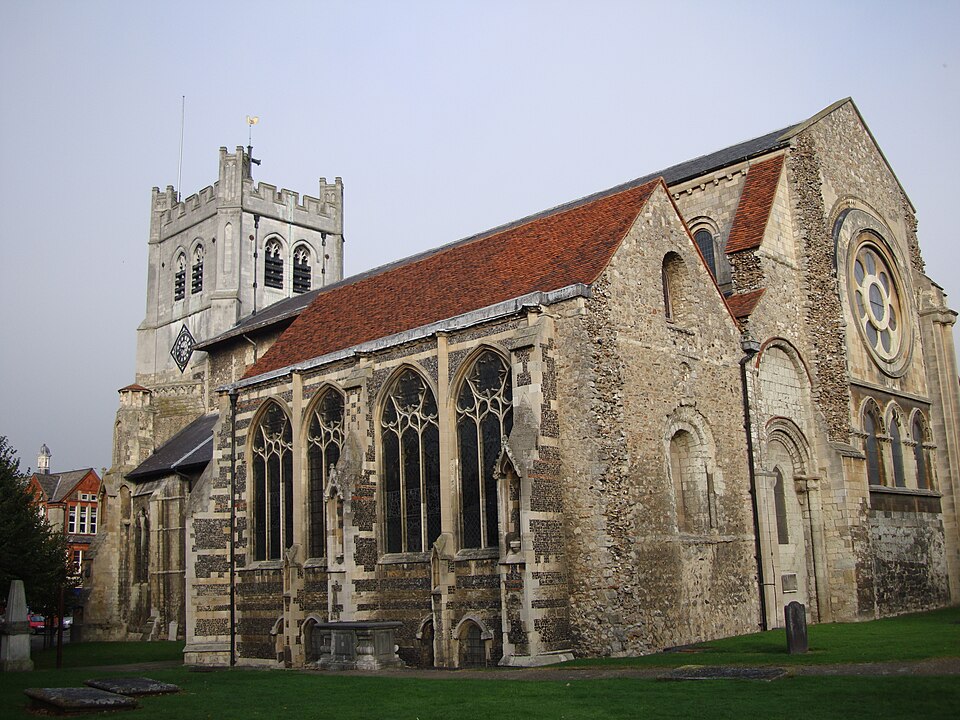
Norman, Early English, Gothic
- Norman Nave
- 14th-Century Lady Chapel
- 16th-Century West Tower
- Traces of Earlier Churches
- King Harold's Burial Site
- Stained Glass By Edward Burne-Jones and Archibald Keightley Nicholson
- Waltham Abbey Church
- Abbey Church of Waltham Holy Cross and St Lawrence
King Harold Godwinson, Tovi the Proud, Edward the Confessor, Henry Ii, Robert Fuller, Thomas Tallis, Sir Anthony Denny, Edward Denny, Baron Denny of Waltham, William Burges
First Church Construction, Rebuilding During King Offa's Reign, Legend of the Holy Cross Discovery, Rebuilding and Endowment By Harold Godwinson, Norman Rebuilding Began, Refoundation As An Augustinian Priory, Elevation To Abbey Status, Dissolution of the Monasteries, Collapse of Norman Tower, Construction of New West Tower, Restoration By William Burges, Discovery of 15th-Century Doom Painting, Bomb Damage During Wwii, Attack With Axes
About Waltham Abbey
Waltham Abbey, officially the Abbey Church of Waltham Holy Cross and St Lawrence, is a historic ecclesiastical site in Waltham Abbey, Essex, England, with a continuous history of worship extending back to the 7th century. The present church building, primarily dating from the early 12th century, stands as a significant example of Norman architecture. The site's monastic past is marked by its refoundation as an Augustinian priory in 1177 by King Henry II, which led to extensive rebuilding and expansion, making it one of the largest church buildings in England and a major pilgrimage destination. The abbey was the last religious community to be closed during the Dissolution of the Monasteries in 1540.
History and Development
Archaeological evidence reveals a long and layered history of worship at Waltham. The earliest structures include a 7th-century wooden church, followed by an 8th-century building of Barnack stone. A significant legend centers on the 11th-century discovery of a black crucifix, the Holy Rood, which became a focal point for pilgrimage. This era also saw the church and manor held by Tovi the Proud, and later rebuilt and endowed by Harold Godwinson, who was dedicated in 1060. A substantial Norman church with a crossing tower and transepts was begun around 1090, with its construction largely completed by 1150.
In 1177, King Henry II, as part of his penance for the murder of Thomas Becket, refounded Waltham as an Augustinian priory, initiating a period of significant enlargement in the Early English style. The abbey became a prestigious religious institution and a favored stopping place for royalty hunting in the nearby forest. However, its monastic life concluded in 1540 with the Dissolution, when the monastic buildings east of the crossing were demolished. The Norman nave was preserved to serve as the parish church for the town.
Architectural Evolution and Later History
The 11th-century Norman tower at the east end of the nave collapsed in 1553, leading to the construction of a new tower at the west end between 1556 and 1557, notable as the only church tower built in England during Queen Mary I's reign. The church has undergone significant restoration and refurbishment, most notably by architect William Burges in the late 19th century, which dramatically reshaped the interior. The Abbey's stained glass includes notable works by Edward Burne-Jones and Archibald Keightley Nicholson. Despite damage from wartime bombing and a later attack, Waltham Abbey continues to function as an active parish church, a Grade I listed building, and a testament to centuries of faith and architectural development.
Source: Wikipedia ↗
Frequently Asked Questions
When was Waltham Abbey first established?
Evidence suggests the site has been used for worship since the 7th century, with traces of a wooden church found from that period. The current building's Norman architecture dates primarily from the early 12th century.
What is the architectural style of Waltham Abbey?
The main body of the present church is an example of Norman architecture. Later additions include a 14th-century lady chapel and west wall, and a 16th-century west tower.
Is Waltham Abbey still an active monastery?
Waltham Abbey was dissolved in 1540 and is no longer an active monastic community. However, it continues to function as the parish church for the town of Waltham Abbey.
Is King Harold Godwinson buried at Waltham Abbey?
According to medieval accounts, King Harold Godwinson, who died at the Battle of Hastings in 1066, was brought to Waltham for burial. Visitors in the 18th century were shown a stone slab with the inscription 'Hic iacet Haroldus infelix' (Here lies Harold the unfortunate), though this has since been destroyed.
When was the abbey refounded as an Augustinian priory?
In 1177, King Henry II refounded the abbey as an Augustinian priory with 16 canons. Its status was raised to an abbey with an abbot and 24 canons in 1184.
What significant events happened at Waltham Abbey during the Dissolution of the Monasteries?
Waltham Abbey was the last religious house to be dissolved in England on March 23, 1540. The last abbot surrendered the abbey and its estates, and the monastic buildings east of the crossing were demolished.
Related Monasteries
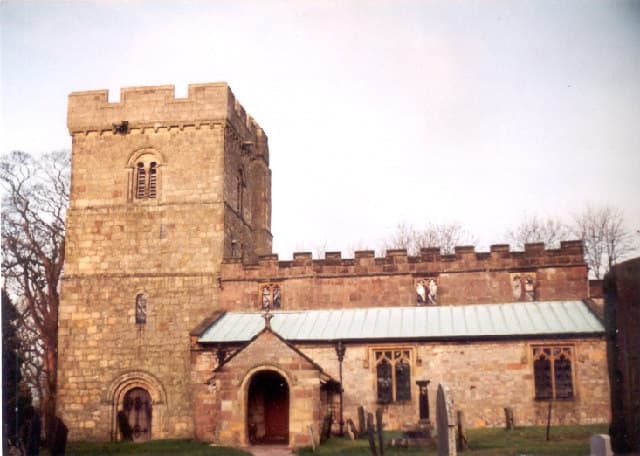
Bradbourne Priory
Bradbourne Priory was a monastic institution located in Bradbourne, Derbyshire, England, which included the main priory church and community, along with three associated chapelries. While its exact status as a priory in its earliest forms is unclear, it eventually became a "cell" of Dunstable Priory in the 13th century. The priory church itself survives today as All Saints Parish Church, a Grade I listed building with significant architectural history dating back to Saxon times.
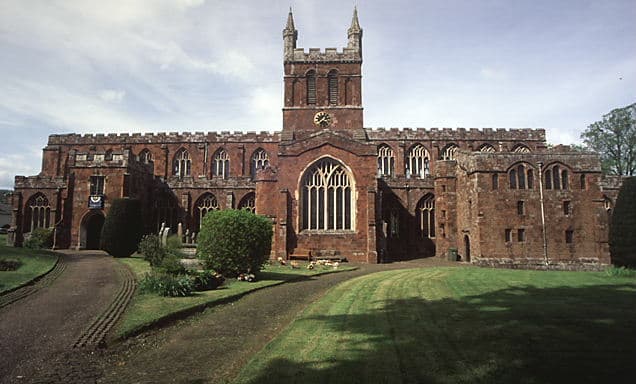
Crediton Monastery
Crediton Monastery, more formally known as the Collegiate Church of the Holy Cross and the Mother of Him Who Hung Thereon, was established in the early 10th century as the cathedral for Devon and Cornwall. Although the episcopal see was moved to Exeter in 1050, Crediton retained its status as a collegiate church with a college of canons. The current nave and chancel date from the 15th century, and after its surrender to Henry VIII in 1545, the church was purchased by the Crediton Town Corporation and continues to function as a parish church today.
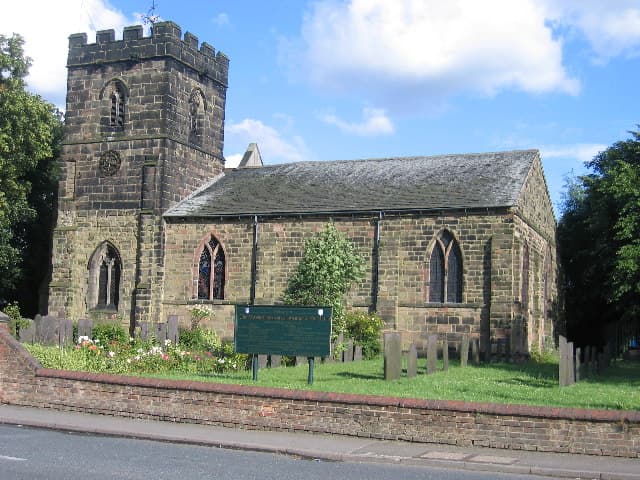
Gresley Priory
Gresley Priory was an Augustinian monastery founded in the 12th century in Church Gresley, Derbyshire, England. It played a significant role in the local community, with the Gresley family retaining influence over its direction for centuries. Following its dissolution in 1536, the priory church became the parish church of St George and St Mary, a role it continues to fulfill today, though much of the original monastic architecture has been lost to later rebuilding.