
Crediton Monastery
Crediton Monastery, more formally known as the Collegiate Church of the Holy Cross and the Mother of Him Who Hung Thereon, was established in the early 10th century as the cathedral for Devon and Cornwall. Although the episcopal see was moved to Exeter in 1050, Crediton retained its status as a collegiate church with a college of canons. The current nave and chancel date from the 15th century, and after its surrender to Henry VIII in 1545, the church was purchased by the Crediton Town Corporation and continues to function as a parish church today.
Key Facts
- ›Founded in the early 10th century as the cathedral for Devon and Cornwall.
- ›Became a collegiate church after the bishop's see was transferred to Exeter in 1050.
- ›The current nave and chancel were constructed in the 15th century.
- ›Surrendered to Henry VIII in 1545 during the English Reformation.
- ›Purchased by the Crediton Town Corporation and remains a parish church.
- ›Known for its association with the cult of St Boniface, who is firmly established as its birthplace.

Perpendicular Gothic
- Monument With Effigy of William Peryam
- Tuckfield Monument With Seated Effigy of Elizabeth Tuckfield
- De Sully Effigies of John De Sully and His Wife Isobel
- Memorial To General Redvers Buller
- Heraldic Window Bequeathed By W.M. Smith-Dorrien
- War Memorial Organ
- Collegiate Church of the Holy Cross and the Mother of Him Who Hung Thereon
- Crediton Church
Eadwulf of Crediton, Leofric, John De Grandisson, St Boniface, William Peryam, Elizabeth Tuckfield, John De Sully, Isobel De Sully, Redvers Buller, Harold Organ, Cyril Church
- Establishment As Cathedral For Devon and Cornwall
- Transfer of Episcopal See To Exeter
- Construction of Norman Church
- Addition of Lady Chapel and Chapter House
- Rebuilding of Nave and Chancel
- Surrender To Henry Viii
- Purchase By Crediton Town Corporation
- Signing of Charter Creating Governors of Crediton Church Corporation
About Crediton Monastery
Crediton Monastery, officially the Collegiate Church of the Holy Cross and the Mother of Him Who Hung Thereon, holds a significant place in the ecclesiastical history of Devon, England. Its origins trace back to the early 10th century when it was established as the cathedral for Devon and Cornwall, with a cathedral structure built around 910 AD. This status as a bishop's seat was relatively short-lived, as the see was transferred to Exeter in 1050. Despite this, Crediton retained a form of collegiate importance, housing a college of canons.
History and Development
Following the relocation of the bishop's seat, a Norman church was begun on the present site in the 1130s, and a collegiate church was formally established. This institution was distinctly secular, with its canons and vicars funded by tithes rather than communal monastic living. The church underwent expansions in the late 13th century with the addition of a Lady Chapel and Chapter House. Bishop John de Grandisson (1327–1369) played a notable role, influencing the church and firmly establishing Crediton as the birthplace of St Boniface, whose cult was revived at this time.
The current impressive scale of the church, particularly its nave and chancel, is largely due to a rebuilding program that commenced in the early 15th century, executed in the Perpendicular Gothic style. The collegiate churches were dissolved across England between 1545 and 1549. Crediton's collegiate church was surrendered to Henry VIII in 1545. Shortly thereafter, the townspeople successfully negotiated the purchase of the church from the Crown in 1547, preventing its potential demolition. A charter signed in the same year established a corporation of 12 governors, a body that continues to own and administer the church buildings today, making it one of only a few English parish churches with such a governance structure.
Source: Wikipedia ↗
Frequently Asked Questions
What was the original purpose of Crediton Monastery?
Crediton Monastery was originally founded in the early 10th century to serve as the cathedral for the dioceses of Devon and Cornwall. It was a significant ecclesiastical center in the region.
When did Crediton cease to be a cathedral?
The episcopal see was transferred to Exeter in 1050, meaning Crediton was no longer the seat of a bishop. However, it continued to function as a collegiate church.
What is the current status of Crediton Monastery?
Today, Crediton Monastery operates as the parish church of Crediton, known as the Church of the Holy Cross. It is administered by the Crediton Town Corporation and the parochial church council.
What architectural periods are represented in the current church building?
The current church building features a nave and chancel dating from the 15th century. Earlier Norman construction was also present on the site.
Is Crediton Monastery associated with any particular saints?
Yes, Crediton is firmly established as the birthplace of St Boniface, and his cult was revived and promoted there, with a new statue created in the 1970s.
Related Monasteries
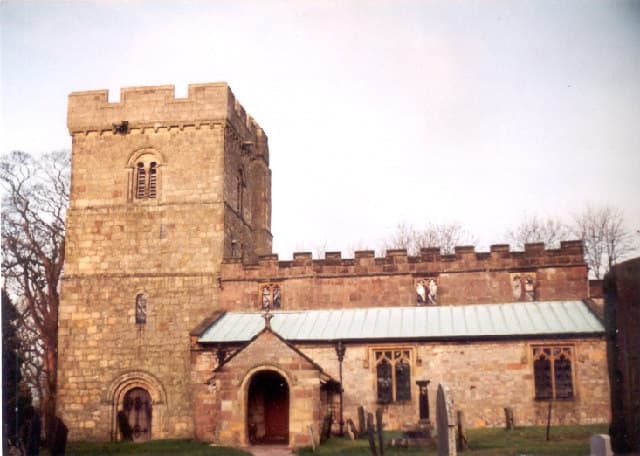
Bradbourne Priory
Bradbourne Priory was a monastic institution located in Bradbourne, Derbyshire, England, which included the main priory church and community, along with three associated chapelries. While its exact status as a priory in its earliest forms is unclear, it eventually became a "cell" of Dunstable Priory in the 13th century. The priory church itself survives today as All Saints Parish Church, a Grade I listed building with significant architectural history dating back to Saxon times.
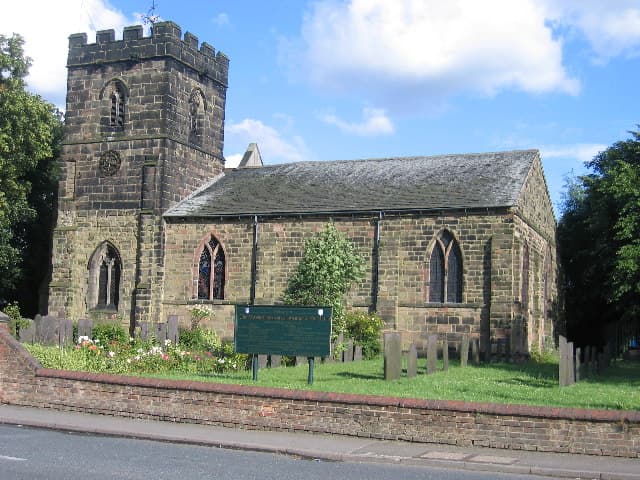
Gresley Priory
Gresley Priory was an Augustinian monastery founded in the 12th century in Church Gresley, Derbyshire, England. It played a significant role in the local community, with the Gresley family retaining influence over its direction for centuries. Following its dissolution in 1536, the priory church became the parish church of St George and St Mary, a role it continues to fulfill today, though much of the original monastic architecture has been lost to later rebuilding.
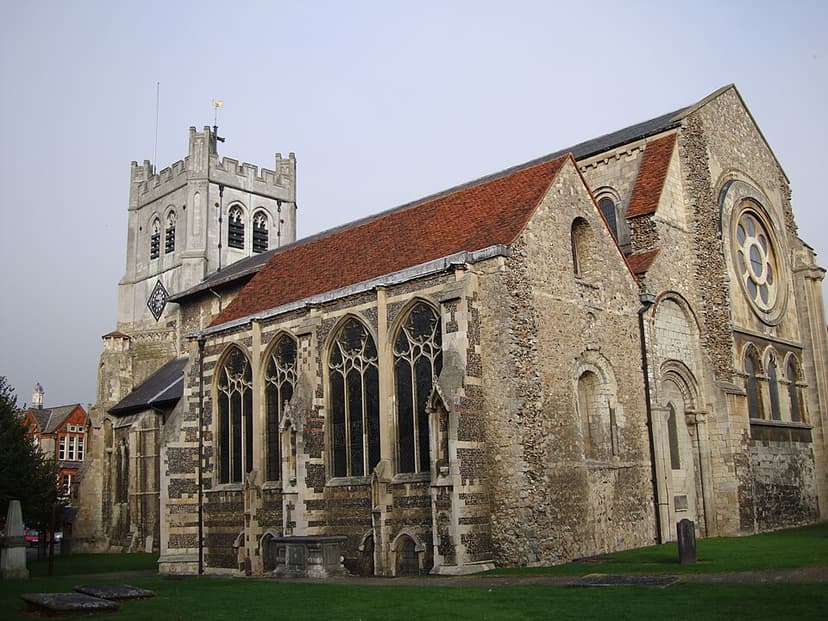
Waltham Abbey
Waltham Abbey, officially the Abbey Church of Waltham Holy Cross and St Lawrence, has a history of continuous worship dating back to the 7th century. Originally a monastic site, it was refounded as an Augustinian abbey in 1177 and became a major pilgrimage destination before its closure in 1540 during the Dissolution of the Monasteries. The present building primarily dates from the early 12th century, showcasing Norman architecture, and continues to serve as the parish church for the town of Waltham Abbey, England.