
Bradbourne Priory
Bradbourne Priory was a monastic institution located in Bradbourne, Derbyshire, England, which included the main priory church and community, along with three associated chapelries. While its exact status as a priory in its earliest forms is unclear, it eventually became a "cell" of Dunstable Priory in the 13th century. The priory church itself survives today as All Saints Parish Church, a Grade I listed building with significant architectural history dating back to Saxon times.
Key Facts
- ›The site of Bradbourne Priory has been religiously significant since at least Saxon times.
- ›The priory served as a "cell" to Dunstable Priory from the 13th century onwards.
- ›Bradbourne Priory included three chapelries at Tissington, Brassington, and Ballidon.
- ›All Saints Parish Church, the former priory church, is a Grade I listed building.
- ›Architectural remnants of the Norman priory church, including the tower and south porch, still exist.
- ›The priory's lands and advowson were eventually purchased and the vicarage replaced by Bradbourne Hall in the 17th century.

Norman, Gothic
- Bradbourne Cross
- Norman Tower and South Porch of All Saints Church
- All Saints Parish Church
Sir Geoffrey De Cauceis, Godard De Bradbourn, Roger De Meyland, Roger Northburgh, George Buxton, Thomas Buxton, Vincent Sexton, William Cokayne, Valentine Jackson, Dns Johes Barret, Thos Swetnam
- Sold Manor of Bradbourne To Godard De Bradbourn
- Advowson Gifted To Dunstable Priory
- Prior Had Suit In Court At the Vatican
- Over 800 Sheep Died Belonging To the Priory
- Priory Recorded Owning 1,200 Cattle and Sheep
- Bishop Roger De Meyland Confirmed Bradbourne Priory and Its Chapelries
- Priory Fell Into Poverty
- Wool Production Granted To Support Brethren
- Prior Took Roger Bradbourn To Court Over Lead Ore Mining
- Dunstable Priory Requested A Secular Vicar
- Visit By Commissioners of King Edward Vi For Inventory of Church Goods
- Glebe Lands and Advowson Purchased By George Buxton
- Church In Need of Serious Repairs
- Suit Taken To Chancery Regarding Atlow Parishioners' Contributions To Repairs
About Bradbourne Priory
Bradbourne Priory was a monastic establishment located in the village of Bradbourne in Derbyshire, England. Its history is intertwined with the development of the local church and parish, with the site holding religious significance since at least the Saxon era. The priory complex, as it eventually came to be known, encompassed the main priory church at Bradbourne along with three associated chapelries in Tissington, Brassington, and Ballidon.
Architectural History and Surviving Structures
The site of Bradbourne Priory has a long ecclesiastical history. Evidence suggests a church has existed on the site since Saxon times, with the Bradbourne Cross, an 8th-century depiction of the crucifixion, still present. A church was recorded in the Domesday Book of 1086, and a new Norman church was constructed in the early 12th century, noted for its considerable size. While no part of the Domesday-era church is thought to survive, the Norman church's tower and south porch remain largely unaltered. Architectural changes and rebuilding occurred in the early 13th century, with the chancel likely dating to around 1320. Today, the former priory church stands as All Saints Parish Church, a Grade I listed building. Adjacent to the church, Bradbourne Hall is believed to be built upon the foundations of the priory's former buildings.
Historical Development
The precise nature of the earliest religious structures on the site, whether priories or parish churches, is not clearly documented. However, in 1205, the Manor of Bradbourne was sold, and the advowson of Bradbourne Priory and its lands were gifted to Dunstable Priory in Bedfordshire, establishing Bradbourne as a "cell" of Dunstable. This affiliation meant that Bradbourne's income helped finance three canons. The priory faced various challenges, including disputes over its vicars and rector in the early 13th century and significant losses of livestock. By 1295, Bradbourne Priory had fallen into poverty, with its wool production being granted to support the brethren. A notable legal dispute in 1305 saw the prior successfully arguing against the lord of the manor's right to mine lead ore from church lands.
Around 1330, an arrangement was made with the Bishop of Coventry and Lichfield to provide a secular vicar for Bradbourne church, rather than retaining monks or canons from Dunstable. This shift effectively transformed Bradbourne from a traditional priory into a parish church, though it remained under Dunstable Priory's control. The vicar was endowed with tithes and mills, and a new hall was constructed for his residence. Following the Dissolution of the Monasteries, the vicarage eventually passed to the Cavendish family. In the 17th century, the former glebe lands and advowson were purchased, and the old vicarage was replaced by the present Bradbourne Hall. The church itself also faced periods of disrepair, requiring significant repairs in the 17th century, with legal action taken to ensure contributions from neighboring communities for its upkeep.
Source: Wikipedia ↗
Frequently Asked Questions
What is the current status of Bradbourne Priory?
The main priory church at Bradbourne is now All Saints Parish Church, which is still active and is a Grade I listed building. Much of the monastic complex has either been rebuilt or its original structures are no longer extant, with Bradbourne Hall believed to be built on the former priory buildings' foundations.
When was Bradbourne Priory founded?
While the site has been religiously significant since Saxon times, with churches existing before the Domesday Book of 1086, the exact founding date of Bradbourne Priory as a monastic institution is not precisely recorded. New churches were built in the early 12th century and underwent reconstruction in the early 13th century, but their specific status as priories or parish churches during these periods is uncertain.
What is the architectural history of the former priory church?
The site has a church from Saxon times, with the Bradbourne Cross dating to the 8th century. A Norman church was constructed in the early 12th century, of which the tower and south porch remain largely unaltered. The church saw partial rebuilding in the early 13th century, with the chancel likely constructed around 1320.
What was the relationship between Bradbourne Priory and Dunstable Priory?
In 1205, the advowson of Bradbourne Priory, along with its lands and chapels, was gifted to Dunstable Priory in Bedfordshire, making Bradbourne a "cell" to Dunstable. This arrangement meant that Dunstable Priory would often provide a vicar from their own monks or canons for the church at Bradbourne.
When did Bradbourne stop being a traditional priory?
Around 1330, an arrangement was made for a secular vicar to serve at Bradbourne church instead of monks or canons from Dunstable Priory. This effectively ended Bradbourne's role as a traditional priory and established it as a parish church, although it remained under the control of Dunstable Priory.
Related Monasteries
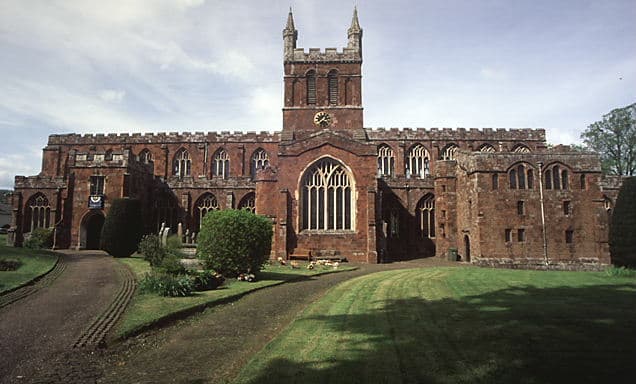
Crediton Monastery
Crediton Monastery, more formally known as the Collegiate Church of the Holy Cross and the Mother of Him Who Hung Thereon, was established in the early 10th century as the cathedral for Devon and Cornwall. Although the episcopal see was moved to Exeter in 1050, Crediton retained its status as a collegiate church with a college of canons. The current nave and chancel date from the 15th century, and after its surrender to Henry VIII in 1545, the church was purchased by the Crediton Town Corporation and continues to function as a parish church today.
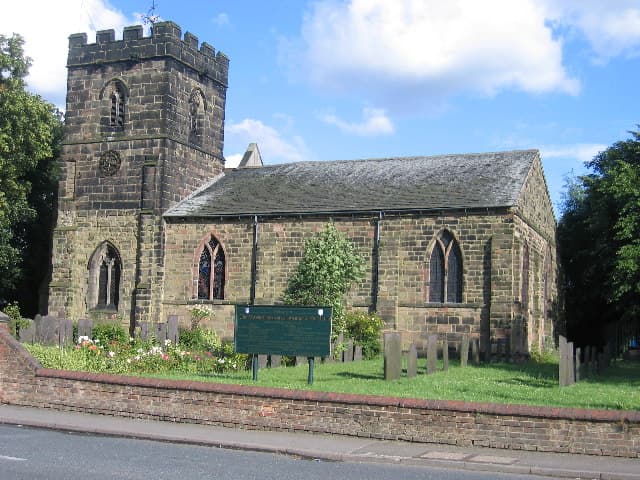
Gresley Priory
Gresley Priory was an Augustinian monastery founded in the 12th century in Church Gresley, Derbyshire, England. It played a significant role in the local community, with the Gresley family retaining influence over its direction for centuries. Following its dissolution in 1536, the priory church became the parish church of St George and St Mary, a role it continues to fulfill today, though much of the original monastic architecture has been lost to later rebuilding.
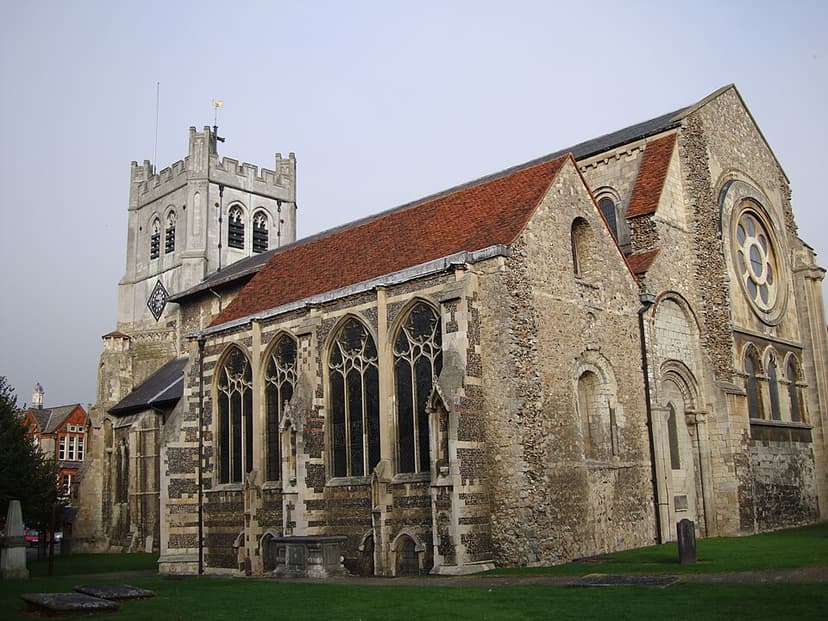
Waltham Abbey
Waltham Abbey, officially the Abbey Church of Waltham Holy Cross and St Lawrence, has a history of continuous worship dating back to the 7th century. Originally a monastic site, it was refounded as an Augustinian abbey in 1177 and became a major pilgrimage destination before its closure in 1540 during the Dissolution of the Monasteries. The present building primarily dates from the early 12th century, showcasing Norman architecture, and continues to serve as the parish church for the town of Waltham Abbey, England.