
Sint-Truiden
Christianity·Belgium·Active city and municipality·7th century
Sint-Truiden is a Belgian city that developed around an abbey founded in the 7th century by St. Trudo. It grew into a significant pilgrimage center and prosperous town known for its linen industry and trade. After a period of decline, the city revitalized as the center of a fruit-producing region and has retained several historical and architectural landmarks.
Key Facts
- ›Founded in the 7th century around an abbey established by St. Trudo.
- ›Became a center of pilgrimage and experienced significant growth in the 11th century.
- ›Fortified with stone walls, gates, and towers built in 1129.
- ›Was one of the 23 main cities belonging to the Bishopric of LIège in the 13th century.
- ›The city hall's belfry and the béguinage of Sint-Agnes are UNESCO World Heritage Sites.
- ›Currently situated in the heart of Belgium's fruit-producing region, Haspengouw.
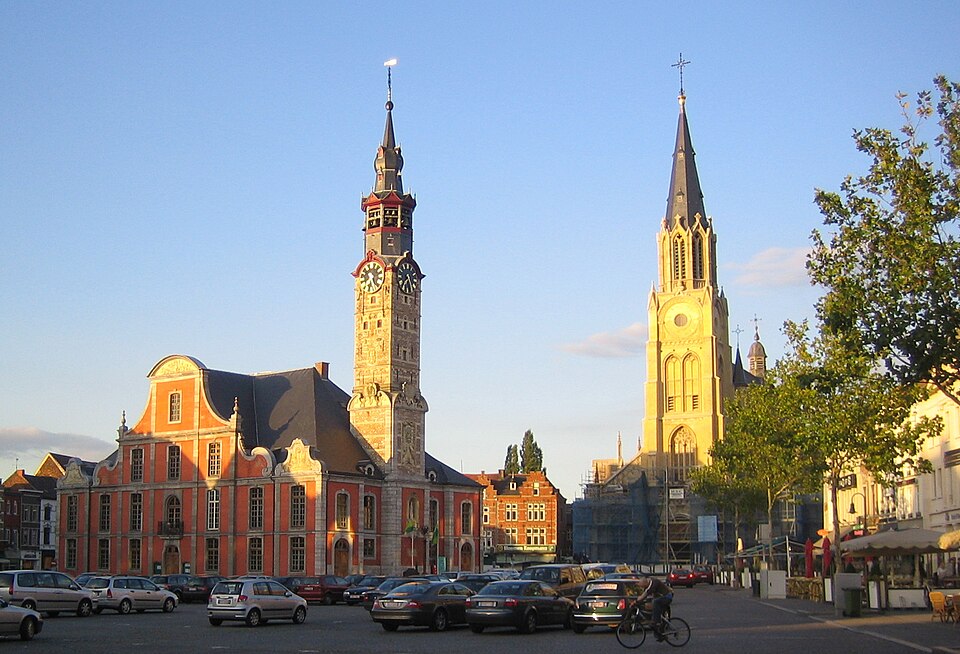
Romanesque, Baroque
- Town Hall With 17th-Century Belfry
- 15th-Century Church of Our Lady
- BéGuinage of Sint-Agnes
- 11th-Century Romanesque Tower and Crypt of the Old Abbey
- Statue of St Trudo Which Functions As A Sundial
- Limburg Regional Airport – Ebst
Saint-Trond, Sintruin
St. Trudo, Abbot Adelardus, Christina the Astonishing, Denis the Carthusian, Henri-Guillaume Hamal, BarthéLéMy De Theux De Meylandt, Aldous Huxley, Frank De Winne, Heinz-Wolfgang Schnaufer
- Founding of the Abbey By St. Trudo In the 7th Century.
- Construction of the Abbey's Main Church and Two Additional Churches In the 11th Century.
- Building of Stone Fortifications In 1129.
- Capture By Charles the Bold In 1467.
- Dismantling of City Fortifications In 1675.
- Disbanding of Religious Congregations Under the French Regime In the Late 18th Century.
- Execution of 20 Civilians and Destruction of Houses On August 9, 1914.
- Luftwaffe Night Fighter Squadron Njg1 Operating From the Airfield During World War Ii.
About Sint-Truiden
Sint-Truiden is a city and municipality in the province of Limburg, within Belgium's Flemish Region. With a population exceeding 41,500, it stands as one of Limburg's larger urban centers. The municipality encompasses numerous former communes, now integrated as districts.
History and Development
The origins of Sint-Truiden trace back to the 7th century with the founding of an abbey by St. Trudo, a Frankish nobleman. Legend credits Trudo with miraculous healing abilities and the discovery of spring water. Following his death, the abbey became a focal point for pilgrimage, attracting visitors and contributing to the town's prosperity. The 11th century marked a particularly flourishing period, with significant population growth and the construction of the abbey's main church, alongside two other churches in town: Our Lady (Lievenvrouwenkerk) and Sint-Gangulfus. Abbot Adelardus also oversaw the erection of defensive structures, including an earth wall and later, in 1129, a proper stone wall with gates and towers. The town's economy was robust, built upon the linen industry and successful trade with foreign lands such as England and Germany. By the 13th century, Sint-Truiden had been recognized as one of the 23 "bonnes villes" (main cities) of the Bishopric of Liège, featuring a market hall and a perron symbolizing local governmental authority.
A turning point occurred in 1467 when Charles the Bold captured the town, initiating a slow decline that persisted until the 19th century. The city's fortifications were dismantled in 1675, and many religious congregations were disbanded during the French regime at the end of the 18th century. In the post-1830 era, these vacated buildings were repurposed for educational and medical facilities. The city also evolved into the hub of a productive agricultural region, gaining renown from the late 19th century onwards for its fruit cultivation, particularly pears, apples, and sweet cherries.
During the 20th century, Sint-Truiden's strategic location led to recommendations for fortification. The onset of World War I saw the tragic execution of 20 civilians and the destruction of homes in August 1914. Reconstruction and the development of new neighborhoods accelerated throughout the century. During World War II, the city's airfield served as a base for the Luftwaffe's Night Fighter Squadron NJG1. The airport, EBST, remains operational today and was formerly a Belgian Air Force Base.
Places of Interest and Modern Significance
Sint-Truiden's historical heart features several notable landmarks. The town hall (Stadhuis) boasts a 17th-century belfry, which, along with other belfries across Belgium and France, is recognized as a UNESCO World Heritage Site. The 13th-century origins of the town hall's older sections are evident. Adjacent to it stands the 15th-century Church of Our Lady (Lievenvrouwenkerk). The béguinage of Sint-Agnes, complete with its 13th-century church, is also a UNESCO World Heritage Site, listed as part of the Flemish Beguinages.
Remnants of the original St. Trudo Abbey include an 11th-century Romanesque tower and crypt. Other Romanesque structures contributing to the town's historical character are the Sint-Pieterskerk, Sint-Gangulfuskerk, and the Guvelingen chapel. The abbey square is marked by a statue of St. Trudo, which, combined with a meridian line on the ground, functions as a sundial. The city also showcases examples of Baroque architecture, notably in the gable of the town hall and the Minderbroederkerk.
As a vibrant city, Sint-Truiden is the home of the professional football club Sint-Truidense V.V. (STVV), which competes in the top division of Belgian football. The city's location in the fertile Haspengouw region continues to define its identity as a center for fruit farming.
Source: Wikipedia ↗
Frequently Asked Questions
When was Sint-Truiden founded?
Sint-Truiden developed around an abbey that was founded in the 7th century by St. Trudo. This abbey became a central point for the town's origins and early growth.
What is Sint-Truiden known for historically?
Historically, Sint-Truiden was a significant pilgrimage center that experienced prosperity in the 11th century, driven by its linen industry and trade. In the 13th century, it was recognized as one of the main cities of the Bishopric of Liège.
What are some of the notable historical structures in Sint-Truiden?
Key historical structures include the town hall with its 17th-century belfry, the 15th-century Church of Our Lady, and the béguinage of Sint-Agnes. Remnants of the old abbey, such as an 11th-century Romanesque tower and crypt, are also present.
Is Sint-Truiden a UNESCO World Heritage Site?
Parts of Sint-Truiden are recognized by UNESCO. The belfry of the town hall is part of the UNESCO World Heritage Site of Belfries of Belgium and France, and the béguinage of Sint-Agnes is part of the UNESCO World Heritage Site of Flemish Beguinages.
What is the modern significance of Sint-Truiden's location?
Sint-Truiden is located in the center of Belgium's Haspengouw region, which is renowned for its fruit production. The city is also home to a regional airport.
Related Monasteries

Tournai
Tournai is one of Belgium's oldest cities, situated on the river Scheldt and historically significant as the first capital of the Frankish Empire. Its cultural heritage is marked by its Romanesque and Gothic cathedral and its influential role in medieval art and textiles. The city has experienced periods of French, English, and Spanish rule, reflecting its strategic importance throughout European history.

Lier
Lier is a Belgian municipality in the province of Antwerp, known for its historical significance, including its beguinage recognized as a UNESCO World Heritage Site. The city's history is marked by pivotal European events like a royal marriage and the selection of a livestock market over a university. Lier is also recognized by its nickname, "Sheep Heads," and the popular rhyme "Lierke Plezierke."

Maroilles Abbey
Maroilles Abbey was a significant Benedictine monastery located in Maroilles, France, founded around 650 by Count Chonebert. It played a notable role in the region for over a millennium, housing relics and following the Rule of St. Benedict. Despite periods of damage and repair, the abbey reached its zenith in the 18th century before being suppressed and largely destroyed during the French Revolution.