
Tournai
Tournai is one of Belgium's oldest cities, situated on the river Scheldt and historically significant as the first capital of the Frankish Empire. Its cultural heritage is marked by its Romanesque and Gothic cathedral and its influential role in medieval art and textiles. The city has experienced periods of French, English, and Spanish rule, reflecting its strategic importance throughout European history.
Key Facts
- ›Considered one of the oldest cities in Belgium.
- ›Served as the first capital of the Frankish Empire under King Childeric I.
- ›The Cathedral of our Lady and the city's Belfry are UNESCO World Heritage Sites.
- ›Known for its medieval textile and tapestry industry.
- ›Briefly ruled by England in the 16th century.
- ›Has experienced numerous sieges and changes in rule throughout its history.

Romanesque, Gothic, Art Nouveau
Cathedral of Our Lady, Belfry of Tournai, ChâSse De Notre-Dame Flamande, Pont Des Trous, Grand-Place, Oldest Private Houses In Europe, Museums
Tornacum, Tornai, Tornè, Doornik, Tournay
Clovis I, King Childeric I, Eleutherius, Charles the Bald, Odo of OrléAns, Edward Iii of England, Henry Viii of England, Charles V, Holy Roman Emperor, Duke of Parma, Duke of Marlborough, King Louis Xiv, Radbot Ii, Jean Delemer, Nicholas of Verdun, Robert Campin, Rogier Van Der Weyden, Jacques Daret
- Fortified Under Emperor Maximian
- Came Into Possession of the Salian Franks
- Capital of the Frankish Empire Under Childeric I
- Clovis I Moved the Center of Power To Paris
- Bishopric of Tournai Created
- Became Seat of the County of Flanders
- Participated In the 11th-Century Rise of Towns
- Rebuilding of the Cathedral Initiated
- Saint-Martin Abbey Flourished
- Commune's Drive For Independence Succeeded
- Besieged By Edward Iii of England
- Textile Trade Boomed
- Captured By Henry Viii of England
- Handed Back To French Rule
- Added To Possessions of Charles V
- Bulwark of Calvinism
- Conquered By the Duke of Parma
- Returned To France Under Louis Xiv
- Besieged By the Duke of Marlborough
- Came Into Possession of the Austrian Habsburgs
- Successfully Besieged By France
- Annexed By France During French Revolutionary Wars
- Part of the United Netherlands
- Part of Independent Belgium
- Damaged In World War Ii
About Tournai
Tournai is a historically rich city and municipality located in the Province of Hainaut, in the Wallonia region of Belgium. Situated on the river Scheldt, it is recognized as one of the oldest urban settlements in the country and has played a pivotal role in shaping Belgian cultural and political history. Its origins trace back to Roman times, serving as a strategic crossing point, and it was later fortified under Emperor Maximian in the 3rd century AD.
Historical Significance
Tournai's prominence grew significantly when it came into the possession of the Salian Franks in 432. Under King Childeric I, the city became the first capital of the Frankish Empire, a distinction that places it at the very foundation of Western European kingdoms. Although Clovis I later moved the center of power to Paris, Tournai's importance was cemented. In 862, it was made the seat of the County of Flanders, and by the 11th century, it had developed into a thriving commercial center, particularly known for its woollen cloth industry and later, its tapestries and painted arts.
Architectural and Cultural Heritage
The city boasts a significant architectural legacy, with the Cathedral of Our Lady and its Belfry being designated as UNESCO World Heritage Sites. The cathedral, a blend of Romanesque and Gothic styles, houses the ornate 13th-century Châsse de Notre-Dame flamande reliquary, a testament to the city's medieval wealth. Other notable structures include the 13th-century Pont des Trous (Bridge of the Holes) and ancient private houses dating back to the Romanesque period. Tournai was also a cradle for renowned Flemish Primitive painters such as Robert Campin, Rogier van der Weyden, and Jacques Daret.
Periods of Rule and Transformation
Throughout its history, Tournai has been a strategic prize, experiencing various changes in sovereignty. It was captured by Henry VIII of England in 1513, becoming the only Belgian city ever ruled by England, before being returned to France. It later fell under the dominion of Holy Roman Emperor Charles V, leading to periods of religious strife and economic hardship, notably becoming a stronghold of Calvinism before its conquest by the Spanish. The city subsequently passed through French, Austrian, and Dutch hands before becoming part of independent Belgium. Despite suffering damage during World War II, Tournai has been carefully restored, preserving its historical character for future generations.
Source: Wikipedia ↗
Frequently Asked Questions
What is Tournai most famous for historically?
Tournai is historically significant as the first capital of the Frankish Empire and has played a crucial role in the cultural history of Belgium. It was also a major center for the textile and tapestry industries during the Middle Ages.
What are the main UNESCO World Heritage Sites in Tournai?
The mixed Romanesque- and Gothic-style Cathedral of Our Lady and the city's Belfry, which is noted as the oldest in Belgium, have been designated as UNESCO World Heritage Sites.
Which empires or kingdoms have ruled Tournai?
Tournai has been ruled by various powers, including the Salian Franks, France, England (briefly), the Spanish Habsburgs, and Austria. It became part of Belgium after the Napoleonic Wars.
What artistic traditions are associated with Tournai?
Tournai was a flourishing center for painting, with notable artists like Robert Campin, Rogier van der Weyden, and Jacques Daret hailing from the city. It also excelled in tapestry production and its reliquaries showcase significant medieval craftsmanship.
Are there any ancient private houses still standing in Tournai?
Yes, on Rue Barre-St-Brice, there are two of the oldest private houses in Europe, dating from between 1175 and 1200 and built in the Romanesque style.
Related Monasteries

Diocese of Bourges
The Archdiocese of Bourges, historically a significant metropolitan see in France, was founded in the 3rd century and played a crucial role in ecclesiastical administration and synodal councils throughout the Middle Ages. Once holding primatial jurisdiction over several provinces, it now functions as a suffragan see within the ecclesiastical province of Tours. The archdiocese encompasses the modern departments of Cher and Indre, with its cathedral dedicated to Saint Stephen located in Bourges.

St. Anthony Coptic Orthodox Monastery
The Monastery of Saint Anthony is a prominent Coptic Orthodox monastery located in the Eastern Desert of Egypt, considered one of the most significant institutions in Coptic monasticism. Established by followers of Anthony the Great, it has influenced many Coptic institutions and promoted monasticism generally. The modern monastery functions as a self-contained village and is a popular destination for religious retreats and cultural excursions.
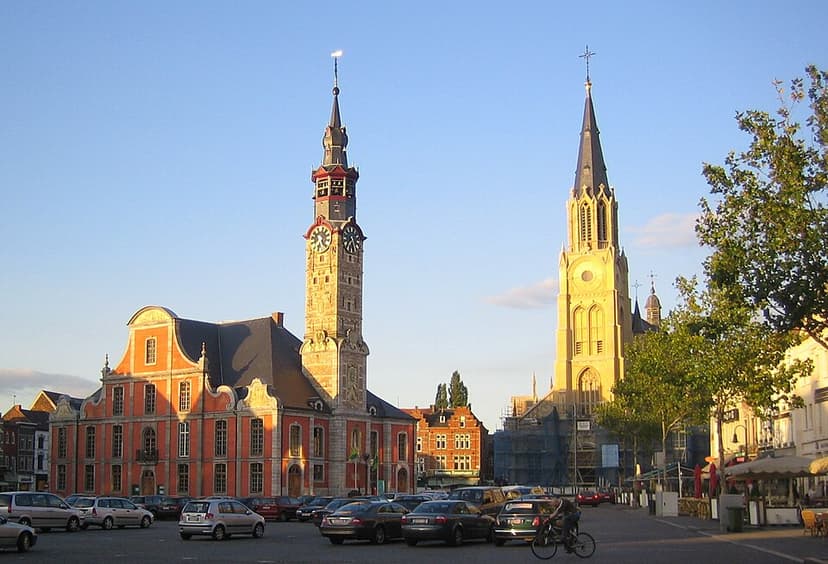
Sint-Truiden
Sint-Truiden is a Belgian city that developed around an abbey founded in the 7th century by St. Trudo. It grew into a significant pilgrimage center and prosperous town known for its linen industry and trade. After a period of decline, the city revitalized as the center of a fruit-producing region and has retained several historical and architectural landmarks.