
Marast
Christian·France·Holiday home (requiring renovation)·12th century
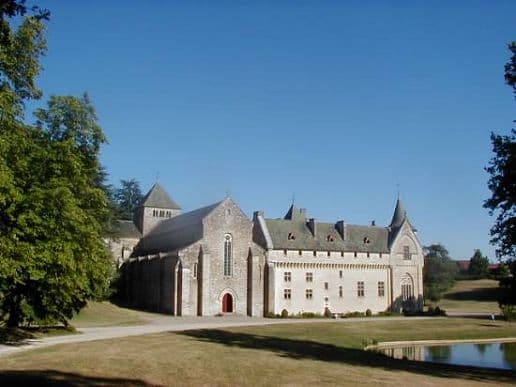
The Priory of Marast is a historic structure located in the village of Marast, France. It is notable for its association with Humbert of Villersexel and Marguerite de Charny, who are buried there and were known to possess the Shroud of Turin. While currently functioning as a holiday home requiring renovation, its status as a "monument classé" offers significant tax incentives for restoration.
Key Facts
- ›The Priory of Marast is located in the Haute-Saône department of eastern France.
- ›It was owned by Humbert of Villersexel and his wife Marguerite de Charny, who are interred on the property.
- ›The priory features 20 rooms, two attics, and a 12th-century vaulted cellar.
- ›It is situated on a 3,630 square meter property.
- ›The priory is a designated "monument classé" (protected historical monument).
- ›It lies along the Route of Santiago de Compostela.

Romanesque
- 12th-Century Vaulted Cellar
- Proximity To A State-Owned Church
- Location On the Route of Santiago De Compostela
Humbert of Villersexel, Marguerite De Charny
About Marast
Priory of Marast
The Priory of Marast is a historically significant structure situated in the village of Marast, within the Haute-Saône department of eastern France. Its rich past is closely intertwined with notable figures such as Humbert of Villersexel, Count of La Roche-en-Montagne, and his wife Marguerite de Charny, who are recognized for their possession of the Shroud of Turin and are interred on the property.
Architectural and Property Details
The priory itself is a substantial property, spanning 3,630 square meters and featuring 20 rooms, two expansive attics, and a remarkable 12th-century vaulted cellar, indicative of its medieval origins. While the priory presently functions as a holiday home, it is described as requiring renovation. Its designation as a "monument classé," or protected historical monument, presents a unique financial incentive for prospective owners, as investments made toward its restoration are fully tax-deductible in France.
Location and Significance
Adjacent to the priory stands a state-owned church that draws visitors as a tourist attraction. Both the priory and the church share a significant geographical marker: their placement along the celebrated Route of Santiago de Compostela, a renowned pilgrimage path. The priory's combination of architectural merit, historical associations, and strategic location offers substantial potential for future development or preservation initiatives.
Source: Wikipedia ↗
Frequently Asked Questions
Where is the Priory of Marast located?
The Priory of Marast is situated in the quiet village of Marast, within the Haute-Saône department in the Bourgogne-Franche-Comté region of eastern France.
What is the historical significance of the Priory of Marast?
The priory is historically significant due to its former owners, Humbert of Villersexel and his wife Marguerite de Charny. This couple is known for possessing the Shroud of Turin and is buried on the priory grounds.
What are the architectural features of the Priory of Marast?
The priory comprises 20 rooms and two spacious attics. A notable feature is its 12th-century vaulted cellar, showcasing its historical architecture.
What is the current status of the Priory of Marast?
Currently, the Priory of Marast serves as a holiday home. It is in need of renovation but is a designated "monument classé", offering tax benefits for restoration efforts.
Is the Priory of Marast on a famous route?
Yes, the priory and its adjacent state-owned church are located along the renowned Route of Santiago de Compostela, a significant pilgrimage route.
Related Monasteries

Abbaye Blanche
The Abbaye Blanche was a Benedictine nunnery founded in 1112 in Mortain, France, by Saint Vitalis. It was established for women with his sister, Adelina, as its first abbess. The community followed a strict interpretation of the Rule of Saint Benedict and later joined the Cistercian order in 1147. Though much has been lost to time, remnants of its Romanesque and Early Gothic architecture endure.

Abbaye du Paraclet
The Abbaye du Paraclet was a Benedictine monastery initially founded by Peter Abelard near Ferreux-Quincey, France. It was later transformed into a nunnery under the leadership of Héloïse, his wife, who served as its abbess for the remainder of her life. Though a significant portion of the abbey was demolished during the French Revolution, surviving structures and monuments continue to acknowledge its historical and religious importance.
Abbey of Loc-Dieu
Abbey of Loc-Dieu is a Cistercian abbey situated in Aveyron, France, founded in 1123 on a site historically known as "devil's place" before being renamed "place of God" by its monastic inhabitants. Despite facing destruction and rebuilding, it became a significant Gothic architectural site and, during World War II, served as a safe haven for artworks from the Louvre, including the Mona Lisa. Today, the abbey and its park are open to the public.