
Makravank Monastery
Makravank Monastery is an Armenian church complex located in Hrazdan, Armenia, within the Kotayk Province. The complex features a 13th-century church dedicated to Surb Astvatsatsin (Holy Mother of God) and a half-ruined 11th-century chapel, along with remnants of a gavit and a medieval cemetery. Its architecture showcases traditional Armenian elements like circular tambours, conical cupolas, and distinctive cross carvings.
Key Facts
- ›The monastic complex includes a 13th-century church dedicated to Surb Astvatsatsin.
- ›An older, half-ruined 11th-century chapel is also part of the complex.
- ›Architectural features include a circular tambour and conical cupola on the main church.
- ›The site contains the lower walls of a gavit and a medieval cemetery with khachkars.
- ›The church's altar is made of wood and painted in various colors.

Armenian
- 13th-Century Church of Surb Astvatsatsin
- 10th/11th-Century Holy Redeemer Chapel
- Circular Tambour and Conical Cupola
- Bolnisi Style Crosses
- Wooden Altar Painted In Multiple Colors
- Medieval Cemetery With Khachkars and Tombstones
մաքրավանք
About Makravank Monastery
Makravank Monastery, known in Armenian as Մաքրավանք, is a historical church complex situated in the Makravan district of Hrazdan, within Armenia's Kotayk Province. The monastic site comprises several structures, reflecting different periods of construction and religious activity.
History and Architecture
The complex includes a significant 13th-century church dedicated to Surb Astvatsatsin, meaning Holy Mother of God. This church is distinguished by its circular tambour supporting a conical cupola, a characteristic feature of Armenian ecclesiastical architecture. Adjacent to this main church is a half-ruined chapel, identified as the Holy Redeemer chapel, dating back to the 10th or 11th century. This older chapel is a simpler structure with a gable roof.
Further elements of the monastery include the lower walls of a gavit, which served as a narthex or porch, now forming a courtyard wall. A medieval cemetery is located to the east of the complex, featuring several khachkars (cross-stones) and tombstones, indicative of the long history of religious settlement at the site.
Architectural details are notable, such as the narrow windows with bell-style arches on the Surb Astvatsatsin church. The southern window's arch is flanked by Bolnisi-style crosses, a decorative motif also found on the adjacent chapel. The main church has a single portal, while the chapel possesses a separate entry. Above the entrance to Surb Astvatsatsin, a semi-circular tympanum bears a single-line Armenian inscription and four Armenian-style crosses in bas-relief. The altar within the Surb Astvatsatsin church is constructed of wood and is notable for its vibrant, multi-colored painted decoration in hues of red, green, and blue.
Source: Wikipedia ↗
Frequently Asked Questions
What is Makravank Monastery?
Makravank Monastery is an Armenian church complex situated in the Makravan district of Hrazdan, the capital of Kotayk Province, Armenia. It is a historical and architectural site featuring religious structures and a cemetery.
What are the main structures at Makravank Monastery?
The primary structures include a 13th-century church dedicated to Surb Astvatsatsin (Holy Mother of God), which has a circular tambour and conical cupola. It is accompanied by a half-ruined 11th-century chapel, the lower walls of a gavit, and a medieval cemetery.
What architectural styles are present at Makravank?
The architecture is characteristic of Armenian church design, featuring a circular tambour supporting a conical dome on the Surb Astvatsatsin church. The adjacent chapel has a simple gable roof. The site also showcases instances of Bolnisi style crosses.
When was Makravank Monastery founded?
The complex includes structures from different periods. The chapel is dated to the 10th/11th century, while the main church dedicated to Surb Astvatsatsin was built in the 13th century.
Are there any notable artistic elements at Makravank?
Yes, the wooden altar of the Surb Astvatsatsin church is painted in various hues of red, green, and blue. The church also features Armenian-style crosses in bas-relief above its entry, and the adjacent chapel has khachkars in front.
Related Monasteries

Neuwiller-lès-Saverne
Neuwiller-lès-Saverne is a commune in northeastern France, historically significant for its Benedictine abbey founded in 723 by Saint Sigibald. The abbey church, dedicated to Saints Peter and Paul, is a notable landmark with Romanesque elements and is classified as a monument historique. The relics of Saint Adelphus, brought to the abbey in 826, attracted numerous pilgrims, leading to the construction of a separate shrine church.
Lesmahagow Priory
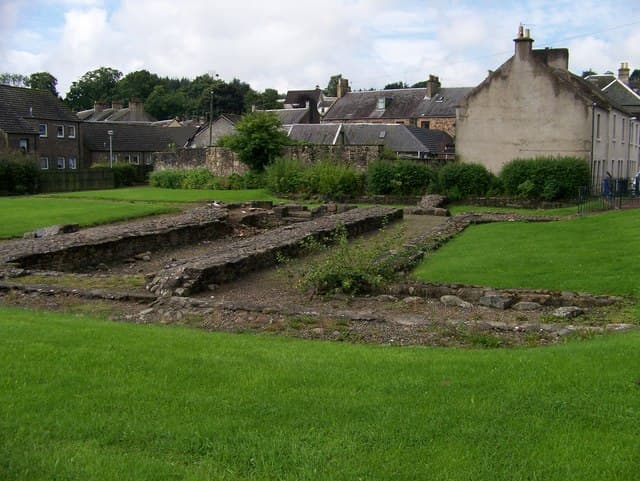
Lesmahagow Priory was a medieval Tironensian monastic community situated in Lesmahagow, Scotland. Founded by grants from John, Bishop of Glasgow, and King David I, it served as a dependency of Kelso Abbey. The priory's control was secularized in the 16th century and it was transformed into a secular lordship in 1607, eventually passing to the Hamilton family.
Oost-Eekloo Abbey
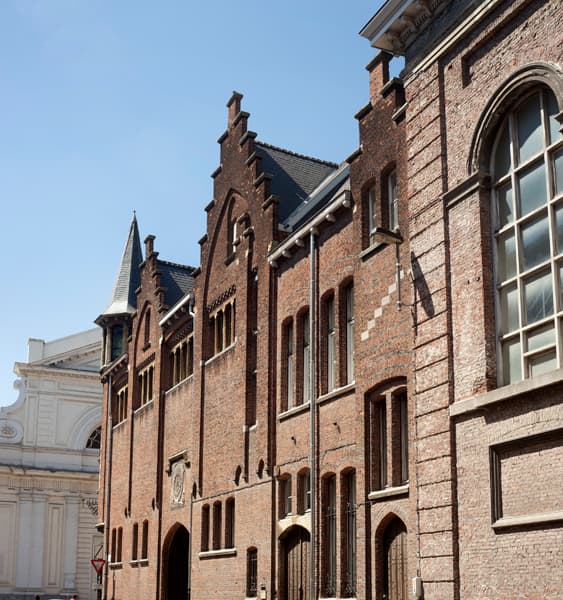
Oost-Eekloo Abbey was a Cistercian nunnery founded in Oosteeklo in 1217, later relocating to Ghent after being plundered during the Dutch Revolt. The abbey played a role in the agricultural development of its original locale and, after its move to Ghent, saw the construction of its church, refectory, chapter house, and infirmary. Though suppressed in 1796, the community continued clandestinely until officially recognized again in 1814, eventually dying out by the mid-19th century.