
Le Reposoir
Le Reposoir is a commune in the Haute-Savoie department of south-eastern France, known for its picturesque Savoyard Pre-Alps setting and the historic Chartreuse monastery. Founded in 1151, the monastery has a complex history, transitioning from its Carthusian origins through periods of destruction and even a stint as a hotel, before becoming a Carmelite convent in 1932. The village itself is a hub for outdoor activities and has hosted significant national celebrations.
Key Facts
- ›The commune's name, Le Reposoir, translates to 'the Resting Place'.
- ›The Chartreuse monastery was founded in 1151 by Jean D'Espagne at the request of Aymon I de Faucigny.
- ›The monastery was expelled of monks in 1901 and later became a hotel before being bought and converted to a Carmelite convent in 1932.
- ›Le Reposoir is a departure point for hiking, including to the summit of Pointe Percée.
- ›The village is a popular route for cyclists and has been a thoroughfare for the Tour de France.
- ›Former French President Valéry Giscard D'Estaing chose Le Reposoir for a presidential anniversary celebration.
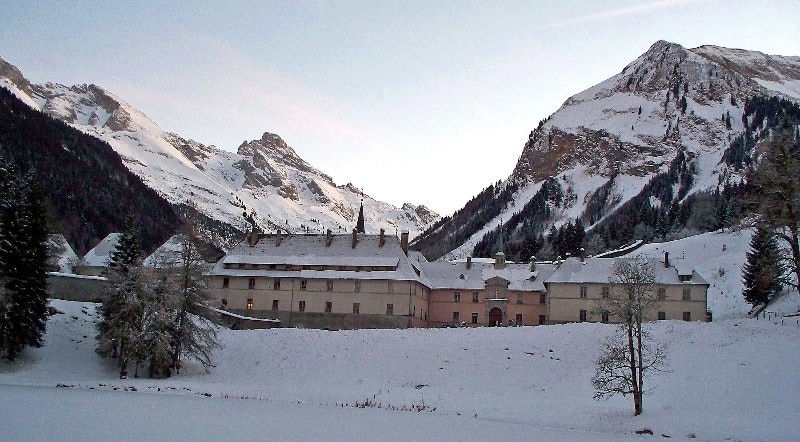
Chartreuse Monastery, Picturesque Lake, Wooded Cirque
Le Rpojeû
Aymon I De Faucigny, Jean D'Espagne, Antonio Starabba, Marchese Di Rudinì, Alessandra Di Rudinì, Pierre Bonte, ValéRy Giscard D'Estaing
- Foundation of the Chartreuse Monastery In 1151
- French Revolution
- Expulsion of Monks In 1901
- Transformation Into A Hotel
- Purchase and Conversion To Carmelite Convent In 1932
- Celebrations For the Fourth Anniversary of ValéRy Giscard D'Estaing's Election
About Le Reposoir
Le Reposoir (Savoyard: Le Rpojeû) is a commune situated in the Haute-Savoie department of south-eastern France, nestled at the foot of the Col de la Colombière within the picturesque Savoyard Pre-Alps. The commune is perhaps best known for its historic Chartreuse monastery, which, despite its name suggesting a place of rest, has a long and often turbulent history. The Foron River flows through the valley, contributing to the area's natural beauty.
History and Monastery
The history of Le Reposoir village is closely intertwined with the foundation of its Chartreuse monastery in 1151. Established at the behest of Aymon I de Faucigny, the monastery's monks were instrumental in developing the land for pastoral and agricultural life, which in turn attracted inhabitants seeking a life of work and prayer. The monastery itself, located in a wooded cirque overlooking a lake, has endured numerous challenges. These included periods of destruction and pillaging, and notably, the expulsion of its monks in 1901, after which it was converted into a hotel. In 1922, Alessandra di Rudinì purchased the monastery, and after converting to Catholicism and joining the Carmelite order, she oversaw its restoration. By 1932, the Chartreuse was re-established as a Carmelite convent, and it currently houses approximately twenty nuns.
Activities and Significance
Beyond its religious heritage, Le Reposoir is a vibrant center for outdoor pursuits. The village serves as a prime departure point for hikers aiming for the summit of Pointe Percée in the Aravis Ranges, as well as numerous other regional trails. The area is also a popular destination for skiing, with its own ski lift and proximity to the Le Grand-Bornand resort. The surrounding cliffs offer excellent opportunities for rock climbing. Cyclists also frequent Le Reposoir, which has been a notable route for the Tour de France. The commune gained national attention when former French President Valéry Giscard d'Estaing chose it as the site for celebrations marking his fourth anniversary in office.
Source: Wikipedia ↗
Frequently Asked Questions
When was the Chartreuse monastery in Le Reposoir founded?
The Chartreuse monastery was founded in 1151. It was established at the behest of Aymon I de Faucigny.
What happened to the Chartreuse monastery after the monks were expelled?
Following the expulsion of the monks in 1901, the Chartreuse monastery was transformed into a hotel. It was later purchased and restored, becoming a Carmelite convent in 1932.
What activities are popular in Le Reposoir?
Le Reposoir is popular for outdoor activities such as hiking, particularly to the summit of Pointe Percée. Skiing is also a major attraction, with the village having its own ski lift and proximity to Le Grand-Bornand. The surrounding cliffs are popular for rock climbing.
Is Le Reposoir known for cycling?
Yes, Le Reposoir is a very popular route for cyclists and has served as a thoroughfare for the Tour de France.
What is the meaning of the name 'Le Reposoir'?
The name Le Reposoir means 'The Resting Place'.
Related Monasteries

Burnham Norton Friary
Burnham Norton Friary was a Carmelite friary located near Burnham Market in Norfolk, England. Founded in 1241 by Sir William Calthorp and Sir Ralph Hemenhale, it was the first Carmelite monastery established after the order's expulsion from Mount Carmel. The friary was dissolved in 1538 during the Dissolution of the Monasteries and is now a ruin, though significant parts of its structure, including the gatehouse and precinct wall, still stand.
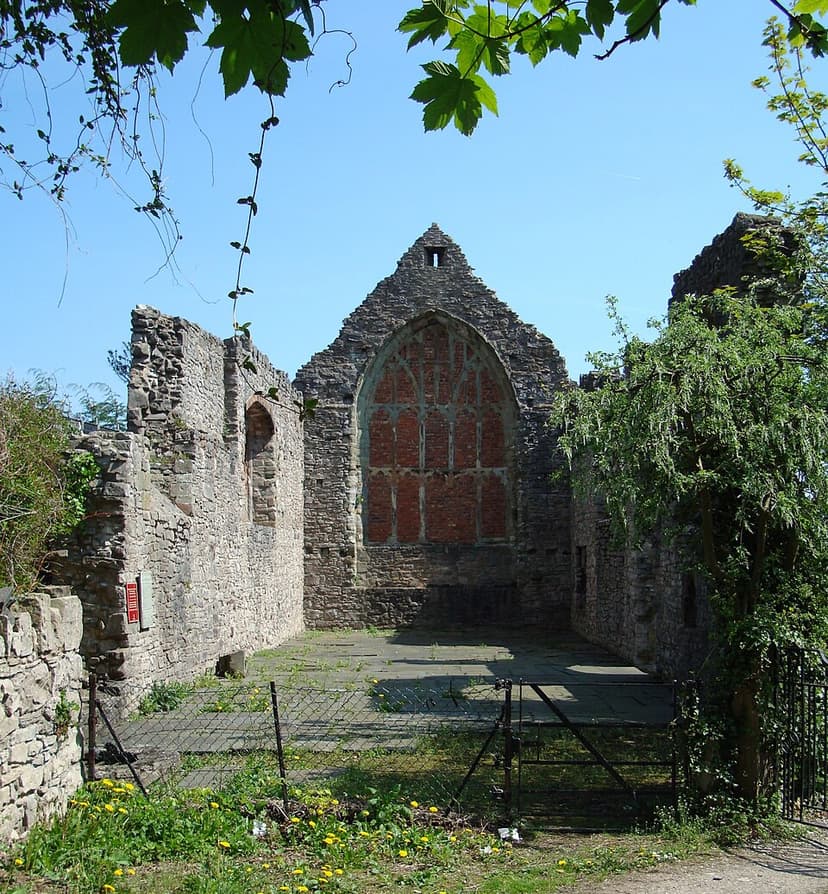
Denbigh Friary
Denbigh Friary, also known as Henllan Friary, was a Carmelite monastic house located in the River Clwyd valley in Wales. Founded between the late 13th century and the mid-14th century, it was dedicated to St Mary. After its dissolution, the friary suffered damage and has been in ruins since an 1898 fire, with its surviving structures primarily dating from the 13th and 15th centuries.

Gloucester Whitefriars
Gloucester Whitefriars, also referred to as the White Friars or The College of Carmelites, was a Carmelite friary in Gloucester, England. Founded around 1268 or 1269, it experienced a decline by the time of the dissolution of the monasteries, with much of its structure later destroyed and materials repurposed for military use. Today, no remains of the friary survive.