
Gloucester Whitefriars
Gloucester Whitefriars, also referred to as the White Friars or The College of Carmelites, was a Carmelite friary in Gloucester, England. Founded around 1268 or 1269, it experienced a decline by the time of the dissolution of the monasteries, with much of its structure later destroyed and materials repurposed for military use. Today, no remains of the friary survive.
Key Facts
- ›Founded circa 1268-1269, likely by Queen Eleanor, Sir Thomas Gifford, and Sir Thomas Berkeley.
- ›By 1337, the friary housed 31 friars.
- ›Produced notable figures such as Nicholas Cantelow and David Bois.
- ›Suffered significant destruction around 1567, with building materials used to fortify Gloucester during the English CIVIL War.
- ›Parts were used as the county House of Correction during the reign of Elizabeth I.
- ›Archaeological discoveries in 2020 revealed evidence of the friary's existence after the demolition of a car park.

Founder's Lodgings
White Friars, the College of Carmelites, Gloucester
Queen Eleanor, Sir Thomas Gifford, Sir Thomas Berkeley, Nicholas Cantelow, David Bois
Dissolution of the Monasteries, English Civil War, Reign of Elizabeth I
About Gloucester Whitefriars
Gloucester Whitefriars, also identified as the White Friars or The College of Carmelites, was a Carmelite friary situated in Gloucester, England. Its existence is primarily known through historical records, as no physical structures of the friary remain today.
Founding and Early History
The friary was established outside the northern gate of the city. Historical accounts place its founding around 1268 or 1269, with Queen Eleanor, Sir Thomas Gifford, and Sir Thomas Berkeley credited as its probable founders. By 1337, the community had grown to include 31 friars.
Decline and Dissolution
Over time, Gloucester Whitefriars experienced a period of decline. By the era of the dissolution of the monasteries, its resident population had dwindled to just three friars. Subsequent events further impacted the site; much of the friary was reportedly destroyed around 1567. During the English Civil War, materials salvaged from the friary's buildings were used in the fortification of Gloucester. The founder's lodgings, specifically, were repurposed as a barn during this conflict. Furthermore, during the reign of Elizabeth I, portions of the friary complex served as the county's House of Correction. The area eventually became known as Friars' Ground.
Modern Discoveries
In October 2020, archaeological investigations uncovered evidence of the friary. These findings occurred after the demolition of the Bruton Way multi-storey car park in 2019, as part of the broader Kings Quarter development project.
Source: Wikipedia ↗
Frequently Asked Questions
When was Gloucester Whitefriars founded?
Gloucester Whitefriars was founded around 1268 or 1269. The founding was likely a collaborative effort by Queen Eleanor, Sir Thomas Gifford, and Sir Thomas Berkeley.
What happened to Gloucester Whitefriars after the dissolution of the monasteries?
After the dissolution, the friary experienced a decline. Much of it was destroyed around 1567, and its materials were utilized to fortify Gloucester during the English Civil War. The founder's lodgings were converted into a barn.
Are there any remains of Gloucester Whitefriars today?
Currently, nothing survives of Gloucester Whitefriars. However, archaeological work in October 2020 uncovered parts of the friary site following the demolition of a multi-storey car park.
Who were some notable individuals associated with Gloucester Whitefriars?
Gloucester Whitefriars produced some important men of its time. Among them were Nicholas Cantelow, also known as Cantelupe of Gloucester, and David Bois.
Related Monasteries

Burnham Norton Friary
Burnham Norton Friary was a Carmelite friary located near Burnham Market in Norfolk, England. Founded in 1241 by Sir William Calthorp and Sir Ralph Hemenhale, it was the first Carmelite monastery established after the order's expulsion from Mount Carmel. The friary was dissolved in 1538 during the Dissolution of the Monasteries and is now a ruin, though significant parts of its structure, including the gatehouse and precinct wall, still stand.

Hitchin Whitefriars
Hitchin Priory, originally a Carmelite friary founded in 1317, was closed during the Dissolution of the Monasteries. The current hotel building, constructed around 1700, incorporates parts of the original structure and is recognized as a Grade I listed building. Despite significant rebuilding in the late 18th century, remnants of the medieval priory are integrated into the modern complex.
Denbigh Friary
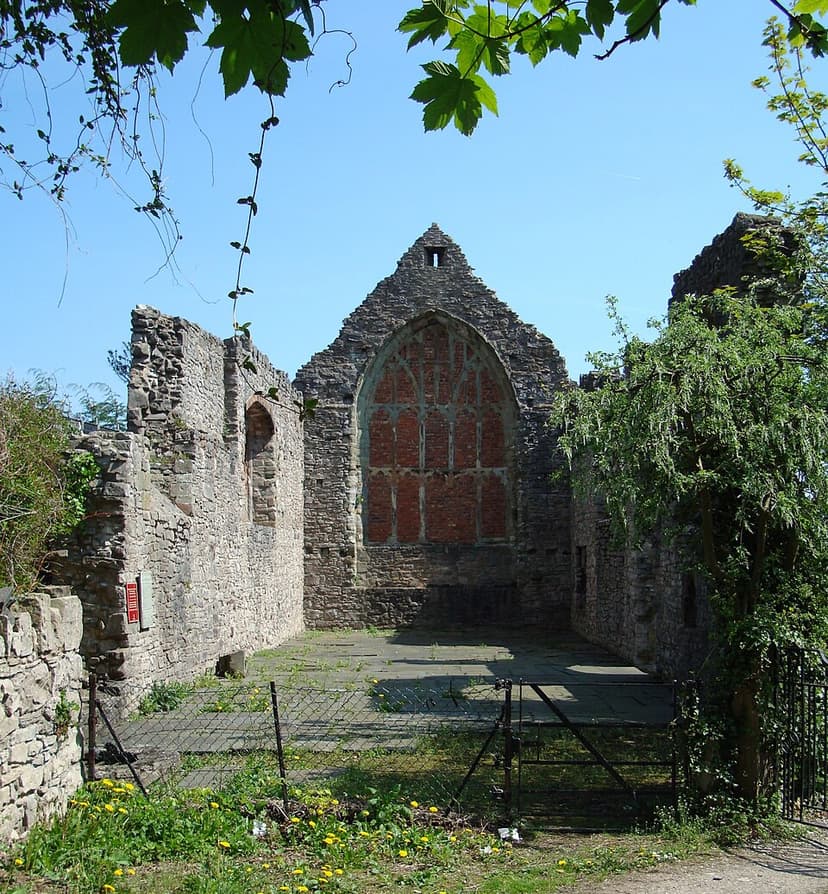
Denbigh Friary, also known as Henllan Friary, was a Carmelite monastic house located in the River Clwyd valley in Wales. Founded between the late 13th century and the mid-14th century, it was dedicated to St Mary. After its dissolution, the friary suffered damage and has been in ruins since an 1898 fire, with its surviving structures primarily dating from the 13th and 15th centuries.