
Laon
Laon is a historically significant city in northern France, perched atop a strategic plateau in the Picardy plain. Its origins as a fortified Gallic and Roman settlement, known then as Alaudanum or Lugdunum Clavatum, mark it as a site of enduring military importance. Over centuries, Laon served as a key town in the Frankish kingdom, a royal seat for Carolingian kings, and a center of intellectual life, most notably with the renowned theological school of Anselm of Laon. The city is distinguished by its impressive Gothic cathedral and numerous medieval structures, reflecting its rich past as a bishopric and its involvement in pivotal French historical events.
Key Facts
- ›Strategically important upper town fortified by Romans and defended against various invasions.
- ›Instituted as a bishopric at the end of the 5th century by Archbishop Remigius of Reims.
- ›Served as a principal city for late Carolingian kings, starting with Louis IV.
- ›Site of a major revolt in 1112 resulting in the burning of the episcopal palace and Laon Cathedral.
- ›Captured by Philip, Duke of Burgundy, during the Hundred Years' War and later by Henry IV during the French Wars of Religion.
- ›Known for the Gothic Laon Cathedral (Notre-Dame of Laon) dating mostly from the 12th and 13th centuries.

Gothic, Romanesque
Laon Cathedral, Upper Town Plateau With Strategic Importance, Medieval Architecture, Former Episcopal Palace, Church of St Martin, Templar Chapel
Alaudanum, Lugdunum Clavatum
Archbishop Remigius of Reims, John Scotus Eriugena, Anselm of Laon, Bertrada of Laon, Jacques Marquette, Le Nain Brothers, Pierre MéChain
- Fortified By Romans
- Bishopric of Laon Instituted
- John Scotus Eriugena At Court of Charles the Bald
- Communal Charter Secured and Revoked, Leading To Revolt
- Laon Cathedral Burned
- Commune Abolished
- Captured By Philip, Duke of Burgundy
- Retaken By Charles Vii of France
- Used As Base By Catholic League
- Retaken By Henry Iv
- Lost Bishopric Status
- Battle of Laon
- Powder Magazine Explosion
- German Occupation
About Laon
Laon: A City of Strategic Heights and Historical Depth
Laon is a city in northern France, located in the Aisne department of the Hauts-de-France region. Its historical significance is deeply rooted in its commanding position atop a plateau, a feature that has provided strategic advantage since ancient times. Originally a Gallic settlement known as Bibrax, it was fortified by the Romans and later bore the names Alaudanum and Lugdunum Clavatum. Throughout its history, Laon has been a crucial defensive point, resisting invasions from various peoples, including the Franks, Burgundians, Vandals, Alans, and Huns.
Spiritual and Intellectual Center
The establishment of the bishopric of Laon at the end of the 5th century by Archbishop Remigius of Reims marked the beginning of Laon's prominence as a religious center within the Frankish kingdom. In the 9th century, the Irish philosopher John Scotus Eriugena was associated with the court of Charles the Bald, likely spending time in Laon. Later, in the early 12th century, Laon became a renowned intellectual hub with the theological school of Anselm of Laon, which attracted scholars from across Europe. This period also saw significant civic unrest, including a major revolt in 1112 that resulted in the burning of the episcopal palace and damage to Laon Cathedral.
Architectural Heritage and Historical Events
Laon is celebrated for its rich architectural heritage, dominated by the magnificent Gothic Laon Cathedral (Notre-Dame of Laon), primarily constructed in the 12th and 13th centuries. The city also features numerous other medieval buildings, such as the old episcopal palace, now serving as a courthouse, the church of St Martin, and a 12th-century Templar Chapel. Laon has been a focal point in numerous historical conflicts, including the Hundred Years' War, the French Wars of Religion, Napoleon's campaigns, and both World War I and the Franco-Prussian War, reflecting its enduring strategic importance throughout French history.
Source: Wikipedia ↗
Frequently Asked Questions
What was Laon called in Roman times?
In Roman times, Laon was known by two names: Alaudanum and Lugdunum Clavatum. These names reflect its establishment as a fortified settlement by the Romans on a strategically important elevated site.
What is the significance of Laon's location?
Laon's location is highly strategic, situated on an upper town that rises a hundred meters above the flat Picardy plain. This elevated position has historically made it a defensible stronghold and a place of enduring military importance.
When did the commune of Laon revolt?
The commune of Laon revolted early in the 12th century, specifically in 1112. This revolt was a response to oppressive measures by Bishop Gaudry and led to the burning of the episcopal palace and the bishop's death, with the fire also damaging Laon Cathedral.
What notable religious and educational figures are associated with Laon?
Archbishop Remigius of Reims, who instituted the bishopric of Laon, was born in the Laonnais. The philosopher John Scotus Eriugena spent time at the court of Charles the Bald, likely in Paris and Laon. Furthermore, Anselm of Laon's renowned school for theology and exegesis was located in Laon, making it a prominent center of European learning.
What historical conflicts have impacted Laon?
Laon has been central to various conflicts, including invasions checked by the Romans, disputes during the Frankish kingdom, and struggles for control during the Hundred Years' War where it was captured by the Duke of Burgundy and later by Charles VII. It also served as a base for the Catholic League and was retaken by Henry IV. More recently, it was a site of fighting during Napoleon's campaigns and was occupied by German forces in both World War I and the Franco-Prussian War.
What are the main architectural sights in Laon?
Laon is renowned for its numerous medieval buildings, most notably the Gothic Laon Cathedral (Notre-Dame of Laon), with structures dating primarily from the 12th and 13th centuries. Other significant sites include the old episcopal palace, now a courthouse, the church of St Martin, and the 12th-century Templar Chapel in the museum's garden.
Related Monasteries
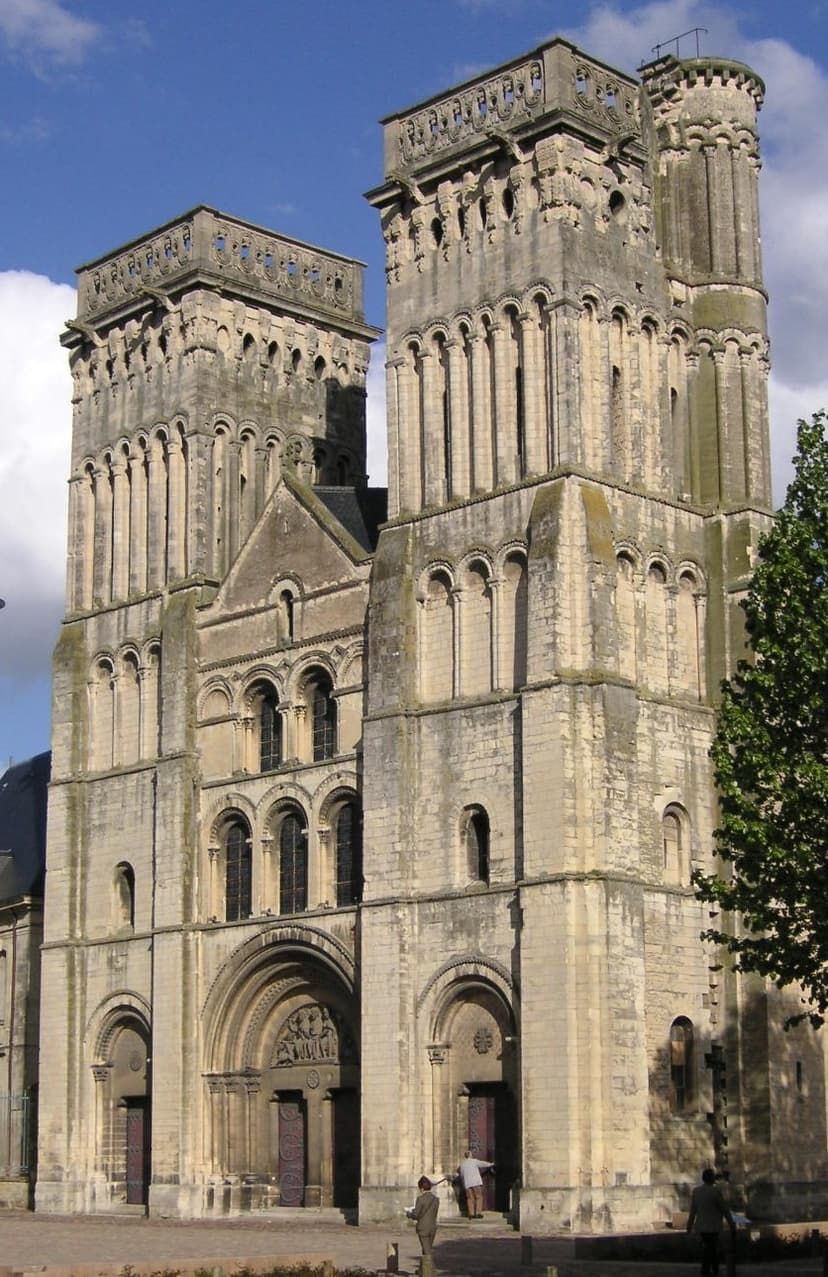
Caen
Caen is a historic city in Normandy, known for its significant role during the reign of William the Conqueror, who was buried there, and for the devastating Battle for Caen in 1944. It boasts impressive medieval architecture, including the Château de Caen and two significant abbeys, Sainte-Trinité and Saint-Étienne. Despite extensive destruction during World War II, Caen has been rebuilt and now serves as a modern urban center with a memorial dedicated to peace.

Reims
Reims is a historically significant city in northeastern France, renowned as the traditional coronation site for French kings. Its heritage spans from Roman times to Art Deco, with its Cathedral, Palace of Tau, and Abbey of Saint-Remi recognized as a UNESCO World Heritage Site for their architectural and historical importance. The city is also a central hub for Champagne production, with extensive chalk caves dating back to Roman times used for aging the renowned wine.

Tarragona
Tarragona is a historic city in Catalonia, Spain, renowned for its extensive Roman heritage, designated as a UNESCO World Heritage site. Founded by the Romans as Tarraco, it became a crucial administrative and military center in Roman Hispania. Over centuries, it experienced periods of Visigothic, Muslim, and Catalan rule, evolving into a significant bishopric seat and later a key part of the Crown of Aragon.