
Tarragona
Tarragona is a historic city in Catalonia, Spain, renowned for its extensive Roman heritage, designated as a UNESCO World Heritage site. Founded by the Romans as Tarraco, it became a crucial administrative and military center in Roman Hispania. Over centuries, it experienced periods of Visigothic, Muslim, and Catalan rule, evolving into a significant bishopric seat and later a key part of the Crown of Aragon.
Key Facts
- ›Tarragona was the Roman capital of Hispania Citerior and Hispania Tarraconensis.
- ›The city is home to the Archaeological Complex of Tàrraco, a UNESCO World Heritage Site.
- ›Its origins may trace back to an Iberian settlement, and it was also referred to as Tarchon by the Phoenicians.
- ›Tarragona served as a vital port and military stronghold for the Romans against the Carthaginians.
- ›The city has a long history of Jewish settlement, with evidence dating back to the Roman era.
- ›It was a significant border city during periods of Muslim rule in Hispania.

Roman, Romanesque, Gothic
Roman Walls, Roman Amphitheater, Roman Circus, Les Ferreres Aqueduct, Tower of the Scipios, Tarragona Cathedral, National Archaeological Museum of Tarragona
Tarraco, TarkūNah
Publius Cornelius Scipio, Gnaeus Cornelius Scipio Calvus, Augustus, Tiberius Claudius Candidus, Septimius Severus, Ramon Berenguer Iv, Count of Barcelona
Second Punic War, Roman Campaigns In Hispania, Umayyad Conquest of Hispania, Reapers' War, War of the Spanish Succession, Peninsular War, Spanish Civil War
About Tarragona
Tarragona is a historic city in Catalonia, Spain, situated on the Costa Daurada along the Mediterranean coast. Its strategic location and favorable geography led to its development by ancient Romans, transforming it into a critical center of Roman Hispania. The city's rich past is evident in its extensive Roman ruins, which have earned it recognition as a UNESCO World Heritage Site.
History and Significance
The city's origins are believed to trace back to an Iberian settlement, possibly named Kesse, before its significant development by the Romans during the Second Punic War. Renamed Tarraco, it became a vital Roman colony, serving successively as the capital of Hispania Citerior and Hispania Tarraconensis. It was a major administrative, military, and economic hub, with a significant population and a thriving port. Following the decline of the Western Roman Empire, Tarragona experienced periods of Vandal, Visigothic, and Muslim rule, being known as Tarkūnah under the latter. It later became part of the County of Barcelona and the Principality of Catalonia within the Crown of Aragon.
Roman Heritage
The most enduring legacy of Tarragona is its well-preserved Roman heritage. The Archaeological Complex of Tàrraco includes impressive structures such as Roman walls, an amphitheater, a circus, and the Les Ferreres Aqueduct. The city also boasts the Tower of the Scipios, a monumental tomb, and the remains of various public buildings like the Praetorium and provincial fora. The National Archaeological Museum of Tarragona further showcases artifacts from this era.
Religious and Cultural Heritage
Beyond its Roman past, Tarragona is home to the Tarragona Cathedral, a blend of Romanesque and Gothic architectural styles dating from the 12th–13th centuries. The city has also been a significant religious center throughout its history, with various convents and churches. Its cultural identity is also marked by traditions like the building of human towers (castells), particularly visible during the Santa Tecla Festival, the city's patron saint celebration. The city also has a historical association with the production of Chartreuse liqueur.
Source: Wikipedia ↗
Frequently Asked Questions
What is Tarragona most famous for historically?
Tarragona is most famous for its extensive Roman remains, which have been recognized as a UNESCO World Heritage Site. It served as a crucial Roman administrative and military center, known as Tarraco, playing a pivotal role in the Roman conquest and control of the Iberian Peninsula.
When was Tarragona founded?
The exact founding date of Tarragona is unknown. While Catalan legends attribute its naming to Tubal's son around 2407 BC, and other sources suggest a seventh-century BC Ethiopian pharaoh, its origins are likely rooted in an earlier Iberian settlement. The Romans significantly developed the city during the Second Punic War.
What was Tarragona's significance during the Roman Empire?
During the Roman Republic and Empire, Tarragona, then known as Tarraco, was highly significant. It was a Roman colony, fortified and enlarged by the Scipio brothers, and served as the capital of the province of Hispania Citerior and later Hispania Tarraconensis. Augustus himself wintered there and bestowed honors upon the city.
What architectural styles are present in Tarragona?
The most prominent architectural style represented in Tarragona is Roman, evident in its walls, amphitheater, circus, and aqueduct. Later periods have contributed Romanesque and Gothic elements, particularly in the Tarragona Cathedral, which combines these styles.
Is the Archaeological Complex of Tàrraco a UNESCO World Heritage Site?
Yes, the Archaeological Complex of Tàrraco, which encompasses the Roman ruins of Tarragona, is designated as a UNESCO World Heritage Site. This recognition highlights the exceptional preservation and historical importance of its ancient Roman structures and urban layout.
What religions or monastic orders have been historically associated with Tarragona?
Tarragona has been a significant bishopric seat for centuries. Historically, it has seen various religious presences, including early Christian communities, and later housed religious orders such as the Poor Clares, Capuchins, Dominicans, and Jesuits. The Knights Templar also had a presence near the Roman amphitheater.
Related Monasteries

Reims
Reims is a historically significant city in northeastern France, renowned as the traditional coronation site for French kings. Its heritage spans from Roman times to Art Deco, with its Cathedral, Palace of Tau, and Abbey of Saint-Remi recognized as a UNESCO World Heritage Site for their architectural and historical importance. The city is also a central hub for Champagne production, with extensive chalk caves dating back to Roman times used for aging the renowned wine.
Caen
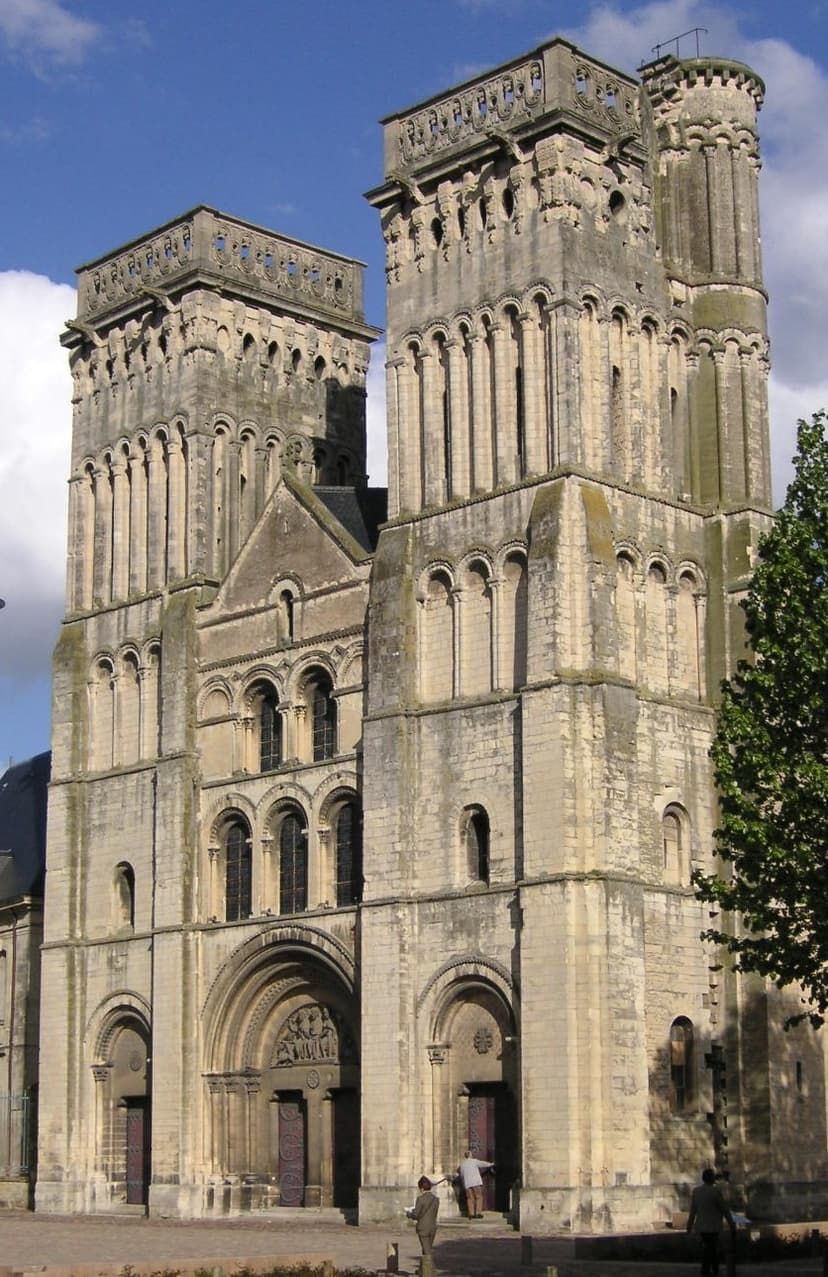
Caen is a historic city in Normandy, known for its significant role during the reign of William the Conqueror, who was buried there, and for the devastating Battle for Caen in 1944. It boasts impressive medieval architecture, including the Château de Caen and two significant abbeys, Sainte-Trinité and Saint-Étienne. Despite extensive destruction during World War II, Caen has been rebuilt and now serves as a modern urban center with a memorial dedicated to peace.

Laon
Laon is a historically significant city in northern France, perched atop a strategic plateau in the Picardy plain. Its origins as a fortified Gallic and Roman settlement, known then as Alaudanum or Lugdunum Clavatum, mark it as a site of enduring military importance. Over centuries, Laon served as a key town in the Frankish kingdom, a royal seat for Carolingian kings, and a center of intellectual life, most notably with the renowned theological school of Anselm of Laon. The city is distinguished by its impressive Gothic cathedral and numerous medieval structures, reflecting its rich past as a bishopric and its involvement in pivotal French historical events.