
Krušedol Monastery
Krušedol Monastery is a Serbian Orthodox monastery located on Fruška Gora mountain, founded between 1509 and 1514 by Saint Maksim Branković and Saint Angelina of Serbia. It served as the spiritual center for the Branković family and later became the seat of the Metropolitanate of Krušedol. The monastery has endured numerous ransackings and fires throughout its history, particularly during Ottoman conflicts and World War II, but has been repeatedly rebuilt, preserving its rich artistic and historical legacy.
Key Facts
- ›Founded between 1509 and 1514 by Saint Maksim Branković and Saint Angelina of Serbia.
- ›Intended as the mausoleum for the Branković family, the last Serbian despot family.
- ›Served as the seat of the Metropolitanate of Krušedol starting in 1708.
- ›Once housed the largest brotherhood on Fruška Gora with 90 monks and 12 elders in 1670.
- ›Burial site for members of the Branković family, two Serbian Orthodox Patriarchs, and other notable historical figures.
- ›Declared a Monument of Culture of Exceptional Importance in Serbia in 1990.
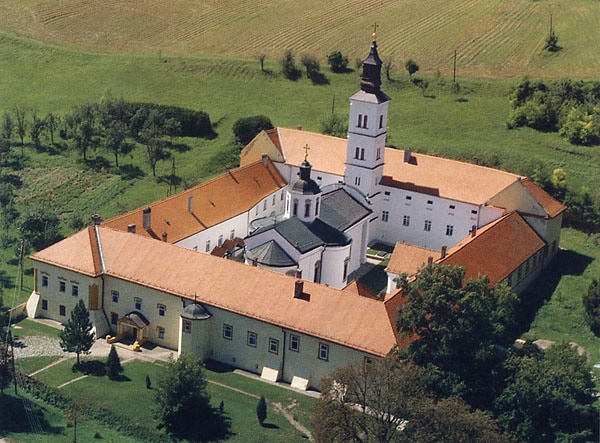
Morava Architectural School, Baroque
- Flower Garden
- Loans
- Park
- Sundial Above A Window
- Iconostasis With Icons From the 16th To 19th Centuries
- Frescoes From 1545, Overpainted 1745-1757
- Voluminous Library
- Burial Sites of Notable Figures
Manastir KrušEdol
Saint Maksim Branković, Saint Angelina of Serbia, Neagoe Basarab, Milica Despina of Wallachia, Grand Prince Vasili Iii of Russia, Arsenije Iii čArnojević, Arsenije Iv Jovanović šAkabenta, Princess Ljubica Obrenović, King Milan Obrenović, Count đOrđE Branković, Voivode Stevan šUpljikac, Isaija đAković, Vikentije Popović-HadžIlavić, Nikanor Melentijević, Laza Kostić, Dejan Medaković, Jov Vasiljevich, Stefan Tenecki, Amfilohije
- Founded Between 1509 and 1514
- Became Seat of the Metropolitanate of KrušEdol In 1708
- Monks Fled During the Great Serbian Migration In 1690 and Returned In 1697
- Ransacked and Burned By Ottomans During the Austro-Turkish War of 1716-1718
- Looted and Damaged During World War Ii
- Declared A Monument of Culture of Exceptional Importance In 1990
About Krušedol Monastery
Krušedol Monastery is a significant Serbian Orthodox monastic complex situated on the picturesque Fruška Gora mountain in the Syrmia region of northern Serbia, within the province of Vojvodina. Its establishment between 1509 and 1514 marks it as a legacy of the illustrious Branković family, the last Serbian despot dynasty to rule in Syrmia. The monastery is dedicated to the Annunciation to the Theotokos and is revered as the "spiritual beacon" of Fruška Gora, often compared to the historical significance of the Studenica Monastery for medieval Serbia.
Founding and Early History
The monastery's foundation is attributed to Saint Maksim Branković, Metropolitan of Belgrade and Srem, and his mother, Saint Angelina of Serbia. Their vision was for Krušedol to serve as the mausoleum for the Branković family. Early on, it received financial backing from influential figures such as Neagoe Basarab, married to Serbian princess Milica Despina of Wallachia, and Grand Prince Vasili III of Russia. In 1708, Krušedol Monastery ascended to prominence by becoming the seat of the Metropolitanate of Krušedol, a crucial administrative and spiritual center.
Resilience Through Adversity
Throughout its history, Krušedol Monastery has demonstrated remarkable resilience in the face of conflict and destruction. In 1670, it boasted the largest monastic brotherhood on Fruška Gora, comprising 90 monks and 12 elders. However, the Great Serbian Migration of 1690 forced the monks to flee to Szentendre, taking with them invaluable relics and artifacts. They returned to Krušedol in 1697. The monastery suffered significantly during the Austro-Turkish War of 1716-1718 when Ottoman forces ransacked and burned it, though it was later rebuilt. During World War II, the monastery was looted and damaged, though it was spared from burning.
Architectural and Artistic Heritage
The architectural evolution of Krušedol Monastery reflects its tumultuous past and periods of reconstruction. Originally built in the style of the Morava architectural school, the church underwent significant transformations, particularly after the 18th-century reconstructions, which introduced Baroque elements, notably in the reworking of seven church windows. A unique sundial is present above one of these windows. The monastery grounds also feature a flower garden, loans, and a park. The interior is adorned with icons spanning from the 16th to the 19th centuries, with original frescoes from 1545 having been overpainted in oil technique between 1745 and 1757 by artists like Jov Vasiljevich and Stefan Tenecki. The monastery's rich vault, though looted multiple times, contained valuable artifacts originally belonging to the Branković and other Serbian noble families. A significant library also contributes to its cultural importance, housing old church books brought from Russia.
Resting Place of Dignitaries
Krušedol Monastery holds deep historical and religious significance as the final resting place for numerous prominent figures. The entire Branković family is interred here, alongside two Patriarchs of the Serbian Orthodox Church: Arsenije III Čarnojević and Arsenije IV Jovanović Šakabenta. Other notable individuals buried at Krušedol include Princess Ljubica Obrenović, wife of Prince Miloš Obrenović, Serbian King Milan Obrenović, count Đorđe Branković, voivode Stevan Šupljikac, and several metropolitans and bishops.
Enduring Importance and Recognition
The monastery's importance extends beyond its religious functions. It has been a center for scholarship, with many scholars, including the poet Laza Kostić, visiting and residing there. Author Dejan Medaković extensively documented the monastery's paintings. In recognition of its profound cultural and historical value, Krušedol Monastery was declared a Monument of Culture of Exceptional Importance in 1990 and is protected by the state. Its significance is further highlighted by its depiction on the 5 Dinar coin and its past status as an Imperial lavra, having received the Order of St. Sava, 1st grade.
Source: Wikipedia ↗
Frequently Asked Questions
When was Krušedol Monastery founded?
Krušedol Monastery was founded between 1509 and 1514. It was established by Saint Maksim Branković, Metropolitan of Belgrade and Srem, and his mother Saint Angelina of Serbia.
Who is buried at Krušedol Monastery?
The Branković family, for whom the monastery was intended as a mausoleum, are buried there. Additionally, two Patriarchs of the Serbian Orthodox Church, Arsenije III Čarnojević and Arsenije IV Jovanović Šakabenta, are interred at Krušedol.
What is the architectural style of Krušedol Monastery?
The church was originally built in the Morava architectural school style. However, subsequent reconstructions in the 18th century incorporated Baroque elements, particularly in the reworking of seven church windows.
Has Krušedol Monastery faced damage or looting?
Yes, the monastery has been ransacked and burned by the Ottomans during the Austro-Turkish War and was looted and damaged during World War II. Despite these events, it has been rebuilt.
What is the significance of Krušedol Monastery?
It is considered the spiritual beacon of Fruška Gora and has been described as "Second Studenica." Its importance is recognized by its designation as a Monument of Culture of Exceptional Importance and its depiction on the 5 Dinar coin.
What notable features does Krušedol Monastery possess?
The monastery houses a rich vault, a voluminous library with old church books, and its iconostasis features icons spanning from the 16th to the 19th centuries. The interior frescoes were originally painted in 1545 and later overpainted in the 18th century.
Related Monasteries
Vrdnik-Ravanica Monastery
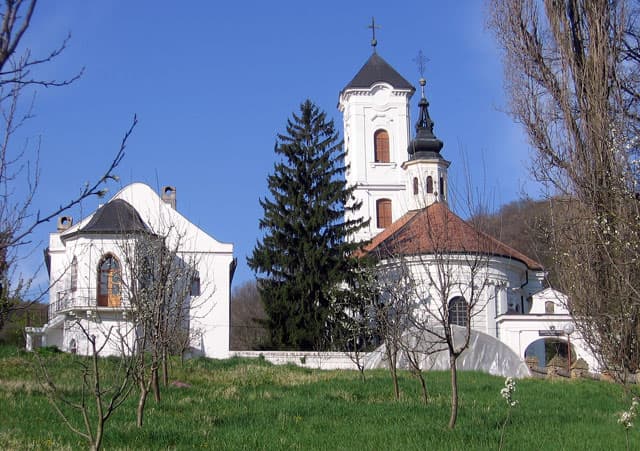
Vrdnik-Ravanica Monastery, also known as Little Ravanica, is a Serbian Orthodox monastery located in the Fruška Gora mountains of Vojvodina, Serbia. While its exact founding date is unknown, historical records suggest the original church was built in the latter half of the 16th century. The present-day church was constructed between 1801 and 1811, and its interior features were adorned with paintings by Dimitrije Avramović in 1853. The monastery was recognized for its cultural significance and declared a Monument of Culture of Exceptional Importance in 1990.

Grnčarica Monastery
Grnčarica Monastery is a Serbian Orthodox women's monastery dedicated to Saint Nicholas, located in the village of Prnjavor, Serbia. While legend places its founding in the late 13th or early 14th century, historical consensus suggests a mid-16th century construction. The monastery has endured significant destruction and rebuilding throughout its history, notably during Turkish invasions, Kočina Krajina, and both World Wars, before re-establishing itself as a women's community in 1946.

Lapušnja Monastery
Lapušnja Monastery is a Serbian Orthodox monastery located on the slopes of Rtanj mountain, near the village of Lukovo. Founded in 1500/1501 by Duke Jovan Radul and Prefect Gergina, its church of St. Nicholas was painted in 1510. Although it fell into ruin over centuries, its preserved remains are recognized today as a cultural monument of great importance to Serbia.